


Give Yourself a Raise
Dealers who meet or exceed industry benchmarks in fixed operations all subscribe to the same formula: The right people plus proper training equals record profits.

Take a moment to look back on the performance put in by your fixed operations team last year. As a dealer, general manager or fixed ops director, you might want to start with the “Operating profit” line on your financial statement. Measure your team’s performance against the following industry benchmarks: Your service department’s operating profit should equal 20% of the dealership’s gross profit, and your parts department’s operating profit should equal 30% of gross profit.
If you are exceeding those benchmarks, then congratulate your team for a job well done! If not, you obviously have some work to do. Let’s begin by asking a simple question: Are your expenses too high or are your gross profits too low?
I have asked this question of hundreds of dealers. In most cases, the fixed operations team is doing a good job controlling expenses. But they’re missing out on huge opportunities to increase their gross profits. You know you can’t save your way into increased profitability, so why are so many dealers falling short of the level of gross profits they deserve?
The answer is simple: personnel! To succeed in fixed ops, you must have the right people in the right positions, they must be properly trained, and they must be rewarded — and held accountable — for their performance.
New Hires
Take a look at the individual members of your fixed operations team, from technicians and service advisors to service managers, parts managers and warranty administrators. Then ask yourself this question: “If I knew then what I know now, would I hire this person?”
Remember, there are only two reasons why any employee is not a top performer: They don’t know how to do it or they don’t want to. The former can be solved with training; the latter can be cured with an aggressive recruiting campaign that will attract those who want to do what you hire them to do.
If you answered the above question honestly, my guess is you are now in recruitment mode. I want to give you some ideas for recruiting the right people. Let’s start with the service advisor. This is a key position for building gross profits because these people speak with more customers on the phone and face to face than just about anybody in your dealership. For that reason alone, they have the best opportunities to improve customer retention and produce upwards of $500,000 in gross profit per year.
As such, the service advisor position requires a definitive plan for recruiting qualified candidates. Here are some simple rules to follow:
• Do not hire an experienced service advisor who has not exceeded 2.0 hours per repair order (HPRO). You don’t need to hire someone else’s underachiever.
• Recruit aftermarket advisors and managers. They have had proper training and tend to be more accountable for their own performance.
• Recruit aggressively for women. More on this in a moment.
• Be willing to take on good people who are new to the position. No experience means no bad habits to break.
• Your ad doesn’t have to say “service advisor.” Use titles that will appeal to higher number of applicants, such as customer service representative, service secretary or administrative assistant.
Your goal is to interview as many applicants as possible. I actually got the “service secretary” idea from a GM dealer. He ran an ad with that title and more than 50 applicants showed up, most of them women. We interviewed and profiled each applicant, then hired a young lady and put her on a performance-based pay plan.
She had no technical skills and no bad habits to overcome. After five days of training, she went to work. She finished her first month at 1.8 HPRO. By the end of her second month, it was 2.1. She loves her new job, her customers love doing business with her and, as you can imagine, the dealer is thrilled.
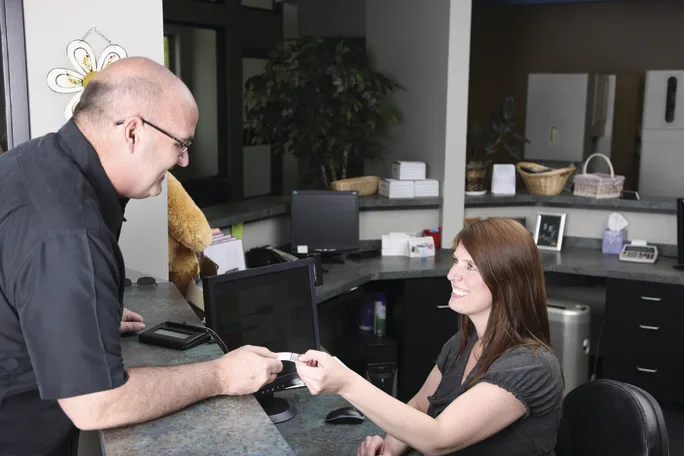
Your next service advisor doesn’t have to be an experienced technician, and they certainly don’t have to be male. Your recruitment strategy should be focused on finding applicants with excellent customer service skills and no bad habits.
Next, you must determine how many service secretaries you need on staff. Twelve to 15 repair orders per day per person is a reasonable number. That’s customer-pay and warranty ROs, not including internal. If your advisors are working with more than 15 customers a day and you want to grow your gross profits, then you will need to start planning to hire more staff, quickly.
If you are successful in growing your traffic and fail to add staff, your sales per RO will immediately begin to decline. More customers should never result in less gross profit. Each advisor should be free to spend 15 minutes with each customer during the writeup and another five to 10 minutes at delivery. Hire that additional advisor the moment your traffic begins to increase.
Production Concerns
The industry benchmark for shop productivity is 120%. To meet that standard, your technicians must produce 48 flat-rate hours for every 40 clock hours worked. If your productivity is already at 100% or above, then you need to start recruiting additional techs. Your advisors will stop selling if they believe the techs are too overwhelmed to get the work done.
You will most likely need to recruit “C”-level techs, since that skill level represents the majority of your sales growth opportunities, including vehicle maintenance and light mechanical repairs. The aftermarket segment thrives in that area as well (about 80% market share), so why not try to take some of that business back? Every dealer has the opportunity to compete with the aftermarket shops and win.
And remember: You do yourself a disservice by failing to recruit from the aftermarket ranks. Those techs are already accustomed to inspecting every vehicle for additional repairs and maintenance needs.
Now, if your shop productivity is below 100%, you have to determine the cause. Ask your service director to prepare a 24-month trend analysis of your customer-pay RO count, tracked month by month. Is your traffic going up or down or flatlining? The only good answer is “up.” If your traffic is flat or going down, you can assume that your customers don’t like doing business with your fixed operations team and prefer to go elsewhere.
Study those CSI reports carefully and evaluate what your customers are telling you. Plant your management team in the service drive during the morning rush hours to observe how your customers are being received. Have them go back to observe the return process. At both stages, your customers should be given a clear and precise presentation on the repairs or services performed.
Low productivity is a direct result of a lack of selling and subpar advising by advisors as well as technicians. Advisors who are not trained to effectively communicate with their customers will not sell enough hours to maximize technician productivity. Technicians will not inspect 100% of vehicles serviced when they believe their advisors won’t sell the work — another reason why your advisors should not be servicing more than 15 customers per day. Each of your technicians has the ability to produce more hours. It’s a team effort.
Focus on building gross profit by utilizing customer-driven processes that will exceed their expectations on each and every visit to your service department. Make sure you have the right number of employees at the right time to support your plans for growing your operating income. Make sure everyone is continually trained on doing the right things the right way. If you’re successful, you will have given yourself the pay raise you deserve.
Don Reed is the CEO of DealerPro Training and one of the industry’s leading experts in maximizing profits from fixed operations.
DReed@AutoDealerMonthly.com
More Dealer Ops
How to Avoid Phone Scams | Dealer Debrief 09/10/2026
Are you taking the necessary steps to protect your dealership and customer data from phone-based scams? This week's Dealer Debrief breaks down how!
Read More →
Dealer Debrief: August Auto Sales
Gas-powered engines still dominate the U.S. vehicle market, but hybrids are gaining ground as consumers look for ways to cut their gas costs.
Read More →
Dealership Profits Decline
While new and used retail sales stagnated, dealerships have been particularly supported by fixed operations and finance-and-insurance profits, according to a new report.
Read More →
Dealer Debrief: Defection Data & EV Updates
In this week's debrief, host Lauren Lawrence discusses how to use defection data to your advantage and the latest on EV sales and charging infrastructure.
Read More →
How Defection Data is Bridging the Dealership Conversion Gap
Lead volume is flat, cross-shopping is up and brand loyalty is in retreat. As confident sales teams keep losing buyers they thought they had, daily industry sales data is showing dealers exactly where their funnel is breaking and how to fix it without buying a single new lead.
Read More →
Dealer Debrief: Where are you losing customers?
In this week's debrief, host Lauren Lawrence discusses the hidden leaks in dealerships where you might be losing customers without even realizing it.
Read More →
Dealer Debrief: Improving Your Inventory Management
In this week's debrief, host Lauren Lawrence covers a new survey that shows what service technicians really want and two launches that could help improve your inventory and vehicle life cycle management.
Read More →
Ladies and Gentlemen, This Is a Dealership: Why the Fundamentals Still Decide Who Wins
A teaching moment by a legendary football coach happens to apply perfectly in the auto retail space. Learn what it is and how to use it to your store’s advantage.
Read More →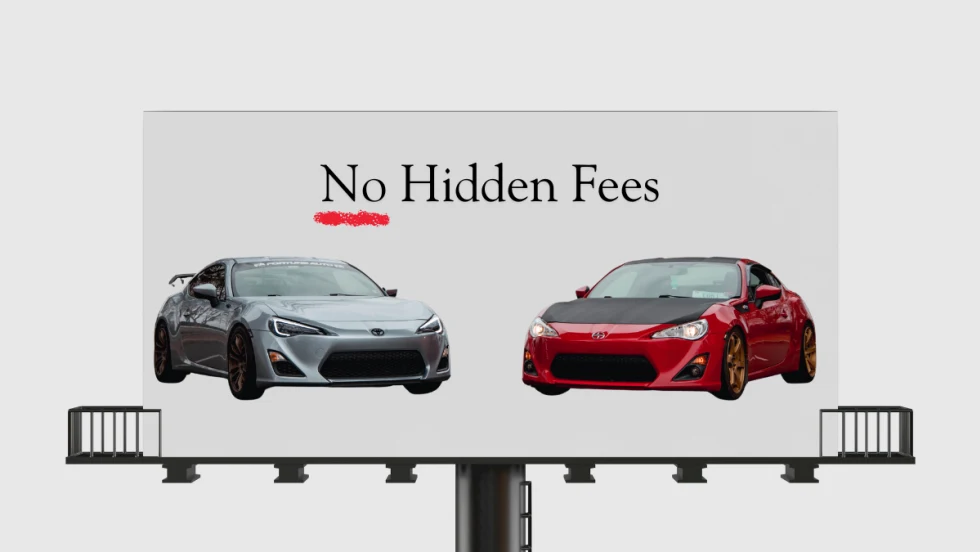
Dealer Ads and the FTC
The agency has made it clear in recent enforcement actions and warnings, in auto retail and other industries, that advertised prices must include all nonoptional costs to the consumer.
Read More →
Used Autos Supply Dwindles
The March shopping surge, despite high prices, cut into inventory by the most since the thick of the pandemic, Cox Automotive analysts calculated.
Read More →