



How Not to Respond to a Harassment Claim
When sexual harassment claims arise, dealers must respond appropriately — not by treating bad behavior as a joke or an enduring showroom tradition.
Photo by blickpixel via Pixabay
Six months after more than 80 women publicly accused Hollywood producer Harvey Weinstein of sexual harassment, it’s safe to say the #MeToo movement has changed the world. Powerful people with a pattern of mistreating others have lost their jobs. Employees across industries are speaking up about unwanted sexual advances, intimidation, predatory conduct, and other forms of misbehavior they’ve experienced or witnessed. Workplace harassment — a problem many people ignored or were ignorant of, a problem whose victims largely felt helpless against — is finally getting the attention it deserves.
As a result, many organizations are handling record numbers of harassment complaints — and many employers and human resources personnel are finding that the resolution process isn’t always simple. From conducting investigations to managing discipline and terminations, developing and following through on an anti-harassment initiative takes time, work, determination, and likely some help in the form of a legal partner.
One complex issue related to harassment claims starts at the very beginning: Is there any defense against a claim? What possible excuse could an organization give to justify an alleged harasser’s behavior?
We brought in attorney Stephen J. Roppolo, managing partner of Fisher Phillips in Houston, to answer the question. He told us that there are several “non-defenses” he has seen organizations give in responses to sexual harassment claims. Here is some insight from Roppolo about a few things a manager should never say:
1. “It was just a joke!”
“The idea that it’s a joke or ‘I didn’t mean anything by it’ is not a valid defense to a claim of sex harassment. It is not going to convince a jury. It’s not going to convince a judge, or the [Equal Opportunity Employment Commission], that it was just something that was intended as a joke, even if you’re able to show that the complainant was also joking. That can certainly help, but when we get into a circumstance where we say, ‘Hey, listen, everybody joked about sex at work,’ that’s not a really good defense.”
2. “She didn’t complain before” or “No one else has ever complained.”
“The idea that the employee never complained before isn’t a real defense here, because it very well may be that the employee just didn’t feel comfortable, or the policy wasn’t clear about who they should report to. It’s never a good idea, either, to make excuses for the top performers. Even if you feel like the company can be harmed by losing some of your best people, if the best people are also the ones who are harassing others, you will want to make sure that that person understands clearly that harassment isn’t permitted, won’t be tolerated, and that their performance won’t be a defense internally to any kind of disciplinary action that might come from violating your policy.”
3. “Technically, it didn’t happen in the workplace.”
“One excuse that deserves mentioning is ‘Well, you know, you can’t govern offsite conduct,’ or ‘You can’t take action against me because I was off the clock when I made that comment.’ The reality is that’s not the case. If there’s some connection with work, then it is going to be something that can be subject to an EEOC charge or lawsuit.”
4. “I didn’t actually mean it.”
“Even if the conduct was not ‘sexual’ — and I sometimes hear this when I have a case where someone says, ‘Sure, I teased about sex, but I didn’t really want to have sex with that person,’ as if the harasser’s intent to actually consummate the arrangement is what matters. It’s not really what matters. It’s what the complainant is receiving in terms of harassing behavior that matters.”
5. “We can’t be held accountable for something a customer says or does.”
“We often talk about the actions of employees, but the reality is that you can be responsible for the bad behaviors of customers as well. Employers have a legal duty to make sure that their employees are not being harassed even by third parties. You’re responsible, as an employer, for your employees being harassed by customers, clients, and vendors.
“Those circumstances can get particularly awkward, because if you have to have a conversation with a customer, for example, you may find yourself unwilling or anxious to speak to somebody who generates revenue for the company. But there is a responsibility to do so.”
6. “She wanted it.”
“This is the ‘The harassment was not unwelcome’ defense. The truth is that this is technically a legal defense. If we can’t prove in a court of law that the alleged sexually offensive conduct was in fact welcomed conduct, then it can be a defense, ultimately — legally — to the question of sex harassment. But that is a very difficult thing to prove, and you wind up having a very messy litigation strategy where you’re basically saying, ‘She wanted it. She gave as good as she got.’ That can backfire terribly.”
According to Roppolo, the best defense against a harassment claim and a dispute in court is to prevent harassment in the first place. Dealers should develop and educate their workers on an anti-harassment policy, take responsibility for building a professional culture, and never engage in such behavior yourself. Handle complaints in a timely, consistent, and documented manner.
“This is probably the most important from a litigation standpoint because it puts us in a position potentially to have an affirmative defense that otherwise might not exist if we don’t have a good, robust complaint handling process. Also, just from an employee relations standpoint, it’s critical that employees know that their complaints are going to be taken seriously, because otherwise, you won’t have those complaints made at all.”
Kynzie Sims is an attorney and certified compliance and ethics professional who serves as legal content product manager for Compli.
More Dealer Ops

How to Avoid Phone Scams | Dealer Debrief 09/10/2026
Are you taking the necessary steps to protect your dealership and customer data from phone-based scams? This week's Dealer Debrief breaks down how!
Read More →
Dealer Debrief: August Auto Sales
Gas-powered engines still dominate the U.S. vehicle market, but hybrids are gaining ground as consumers look for ways to cut their gas costs.
Read More →
Dealership Profits Decline
While new and used retail sales stagnated, dealerships have been particularly supported by fixed operations and finance-and-insurance profits, according to a new report.
Read More →
Dealer Debrief: Defection Data & EV Updates
In this week's debrief, host Lauren Lawrence discusses how to use defection data to your advantage and the latest on EV sales and charging infrastructure.
Read More →
How Defection Data is Bridging the Dealership Conversion Gap
Lead volume is flat, cross-shopping is up and brand loyalty is in retreat. As confident sales teams keep losing buyers they thought they had, daily industry sales data is showing dealers exactly where their funnel is breaking and how to fix it without buying a single new lead.
Read More →
Dealer Debrief: Where are you losing customers?
In this week's debrief, host Lauren Lawrence discusses the hidden leaks in dealerships where you might be losing customers without even realizing it.
Read More →
Dealer Debrief: Improving Your Inventory Management
In this week's debrief, host Lauren Lawrence covers a new survey that shows what service technicians really want and two launches that could help improve your inventory and vehicle life cycle management.
Read More →
Ladies and Gentlemen, This Is a Dealership: Why the Fundamentals Still Decide Who Wins
A teaching moment by a legendary football coach happens to apply perfectly in the auto retail space. Learn what it is and how to use it to your store’s advantage.
Read More →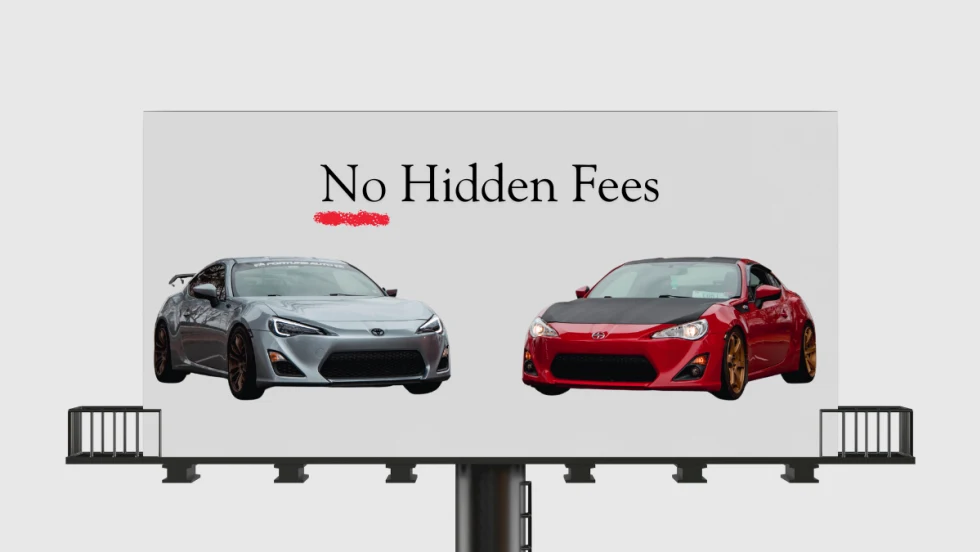
Dealer Ads and the FTC
The agency has made it clear in recent enforcement actions and warnings, in auto retail and other industries, that advertised prices must include all nonoptional costs to the consumer.
Read More →
Used Autos Supply Dwindles
The March shopping surge, despite high prices, cut into inventory by the most since the thick of the pandemic, Cox Automotive analysts calculated.
Read More →