



7 Financial Organizations Back Disparate Impact Amendment
Seven financial organizations issued a letter to the U.S. House of Representatives on May 29 in support of an amendment to an appropriations bill that would limit Justice Department litigation relying on the disparate impact theory of discrimination.

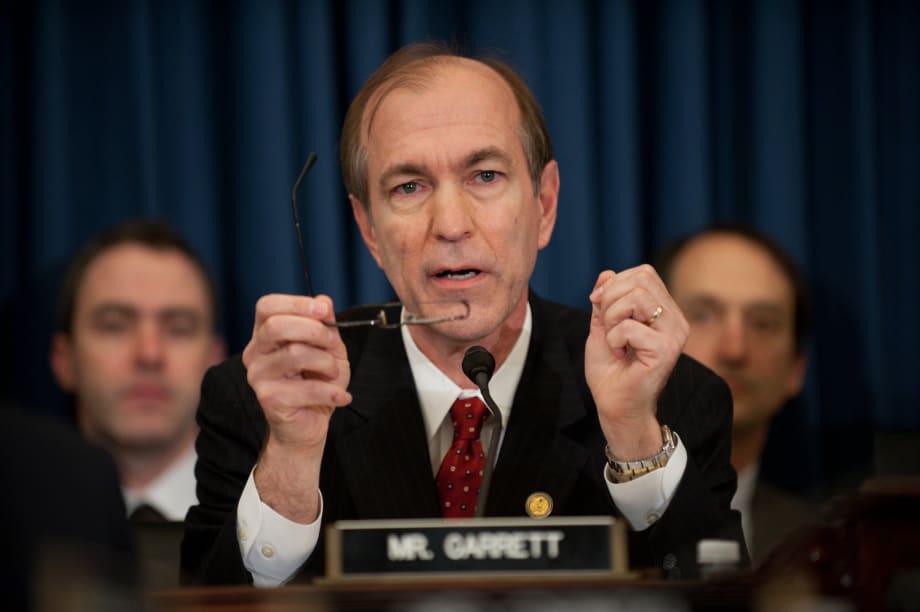
Rep. Scott Garrett’s amendment to H.R. 4660 would prohibit funds made available by the act from being used for litigation that relies on the disparate impact theory.
WASHINGTON, D.C. — Seven financial organizations issued a letter to the U.S. House of Representatives on May 29 in support of an amendment to the Commerce, Justice, Science and Related Agencies Appropriations Act for Fiscal Year 2015. The amendment would prohibit funds made available by the act from being used for litigation that relies on the “disparate impact” theory to prove discrimination.
The Consumer Financial Protection Bureau and the U.S. Department of Justice have used the legal theory in recent months to penalize auto lenders. In December, the agencies reached a $98 million settlement with Ally Financial and Ally Bank over allegations that it discriminated against minority borrowers in its auto lending program.
Under the disparate theory, lenders can be held responsible for discriminatory practices — even if the discrimination was not intentional.
“…even when a lender takes every step to prevent discrimination and treats all consumers fairly and equally, a neutral policy can serve as a basis for very serious and harmful claims in the absence of intentional discrimination,” the letter read, in part. “Smaller lenders, in particular, will find it difficult to manage this type of litigation risk.
“Left unchecked, disparate impact enforcement could increase the cost and undermine the availability of credit throughout the economy.”
The American Bankers Association, the American Financial Services Association, the Consumer Mortgage Coalition, the Credit Union National Association, the Independent Community Bankers of America, the Mortgage Bankers Association, and the National Association of Federal Credit Unions asked that members of the House of Representatives vote in favor of Rep. Scott Garrett’s (R-N.J.) amendment to H.R. 4660. It passed the House on May 30 by a 216-to-190 vote.
The appropriations bill funds the Department of Commerce, the Department of Justice, the National Aeronautics and Space Administration, the National Science Foundation, and other related agencies.
Originally posted on F&I and Showroom
More Dealer Ops
How to Avoid Phone Scams | Dealer Debrief 09/10/2026
Are you taking the necessary steps to protect your dealership and customer data from phone-based scams? This week's Dealer Debrief breaks down how!
Read More →
Dealer Debrief: August Auto Sales
Gas-powered engines still dominate the U.S. vehicle market, but hybrids are gaining ground as consumers look for ways to cut their gas costs.
Read More →
Dealership Profits Decline
While new and used retail sales stagnated, dealerships have been particularly supported by fixed operations and finance-and-insurance profits, according to a new report.
Read More →
Dealer Debrief: Defection Data & EV Updates
In this week's debrief, host Lauren Lawrence discusses how to use defection data to your advantage and the latest on EV sales and charging infrastructure.
Read More →
How Defection Data is Bridging the Dealership Conversion Gap
Lead volume is flat, cross-shopping is up and brand loyalty is in retreat. As confident sales teams keep losing buyers they thought they had, daily industry sales data is showing dealers exactly where their funnel is breaking and how to fix it without buying a single new lead.
Read More →
Dealer Debrief: Where are you losing customers?
In this week's debrief, host Lauren Lawrence discusses the hidden leaks in dealerships where you might be losing customers without even realizing it.
Read More →
Dealer Debrief: Improving Your Inventory Management
In this week's debrief, host Lauren Lawrence covers a new survey that shows what service technicians really want and two launches that could help improve your inventory and vehicle life cycle management.
Read More →
Ladies and Gentlemen, This Is a Dealership: Why the Fundamentals Still Decide Who Wins
A teaching moment by a legendary football coach happens to apply perfectly in the auto retail space. Learn what it is and how to use it to your store’s advantage.
Read More →
Dealer Ads and the FTC
The agency has made it clear in recent enforcement actions and warnings, in auto retail and other industries, that advertised prices must include all nonoptional costs to the consumer.
Read More →
Used Autos Supply Dwindles
The March shopping surge, despite high prices, cut into inventory by the most since the thick of the pandemic, Cox Automotive analysts calculated.
Read More →