



Appeals Court Rules CFPB Structure Is Constitutional
On Wednesday, the D.C. Court of Appeals ruled 7-3 that a provision in the Dodd-Frank Act that says the CFPB director can only be removed for cause does not unconstitutionally constrain the president.

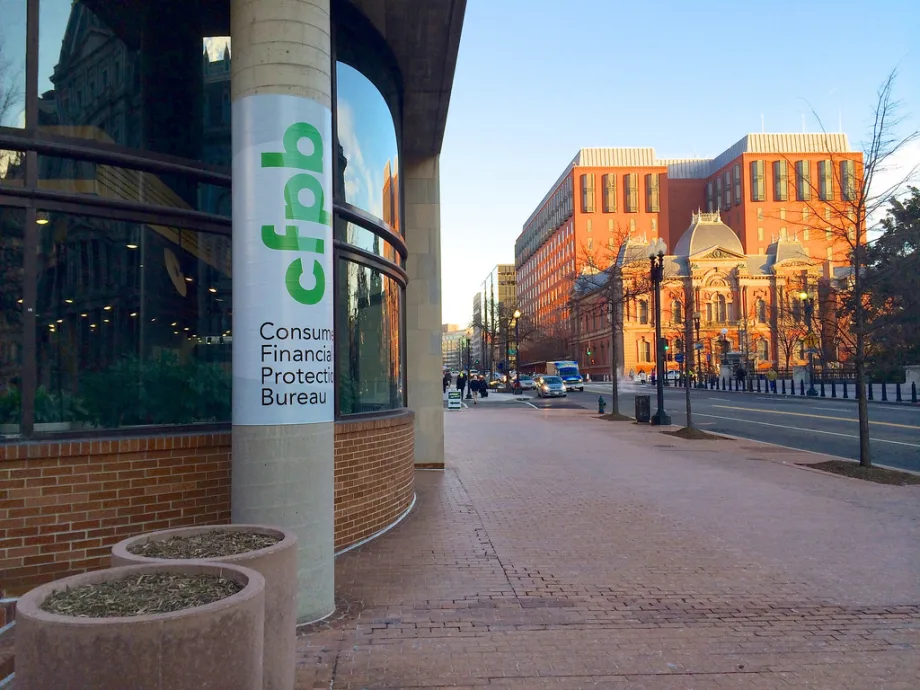
Photo courtesy of Flickr user Ted Eytan
WASHINGTON, D.C. — Nineteen days after the deputy director of the Consumer Financial Protection Bureau kicked off the next phase in her battle for control of the bureau, a federal appeals court upheld the constitutionality of the CFPB’s structure.
On Jan. 31, the D.C. Court of Appeals ruled 7-3 that a provision in the Dodd-Frank Act that says the CFPB director can only be removed for cause does not unconstitutionally constrain the president. The court also noted in its ruling, written by Judge Cornelia Pillard, that the way the CFPB is funded “fits within the tradition of independent financial regulators.”
“Applying binding Supreme Court precedent, we see no constitutional defect in the statute preventing the president from firing the CFPB director without cause. We thus uphold Congress’ choice,” Pillard wrote, adding that “no relevant consideration gives us reason to doubt the constitutionality of the independent CFPB’s single-member structure.”
The decision reverses the court’s October 2016 decision that declared the CFPB’s leadership unconstitutional by a 2-1 ruling and vacated a $103 million fine the bureau levied against New Jersey-based PHH Corp. in 2015 for allegedly accepting kickbacks from mortgage insurers.
The court did reject the bureau’s penalty against PHH in its ruling.
That same court will now hear CFPB Deputy Director Leandra English’s appeal of last month’s ruling by U.S. District Timothy J. Kelly, who sided with the White House for a second time and denied the bureau official’s request for a preliminary injunction to remove Mick Mulvaney as acting head of the CFPB.
English, who has requested an expedited review of her case, argues that she is the rightful acting director, having been appointed as deputy director by former CFPB Director Richard Cordray the same day he officially resigned from his post on Nov. 24.
Citing his authority through the Federal Vacancies Act (FVRA), President Trump appointed Mulvaney as acting director hours after Cordray elevated the title of his former chief of staff. English filed suit two days later to block the appointment, arguing that a successor statute in the Dodd-Frank Act made her the lawful acting director until the Senate confirms Trump’s permanent appointee.
On Nov. 28, Judge Kelly denied English’s request for a temporary restraining order to block Mulvaney’s appointment on grounds that the FVRA gives the president the authority to appoint a replacement. English’s attorneys then filed an amended complaint on Dec. 6 requesting a preliminary injunction.
Unlike the temporary restraining order, an injunction can be appealed to the U.S. Court of Appeals if not granted. That’s what English’s attorneys did just two days after Judge Kelly denied her request.
“The President has designated Mulvaney the CFPB’s acting director, the CFPB has recognized him as the acting director, and it is operating with him as acting director,” Kelly wrote in his Jan. 11 ruling. “Granting English an injunction would not bring about more clarity; it would only serve to muddy the waters.”
Originally posted on F&I and Showroom
More Dealer Ops

How to Avoid Phone Scams | Dealer Debrief 09/10/2026
Are you taking the necessary steps to protect your dealership and customer data from phone-based scams? This week's Dealer Debrief breaks down how!
Read More →
Dealer Debrief: August Auto Sales
Gas-powered engines still dominate the U.S. vehicle market, but hybrids are gaining ground as consumers look for ways to cut their gas costs.
Read More →
Dealership Profits Decline
While new and used retail sales stagnated, dealerships have been particularly supported by fixed operations and finance-and-insurance profits, according to a new report.
Read More →
Dealer Debrief: Defection Data & EV Updates
In this week's debrief, host Lauren Lawrence discusses how to use defection data to your advantage and the latest on EV sales and charging infrastructure.
Read More →
How Defection Data is Bridging the Dealership Conversion Gap
Lead volume is flat, cross-shopping is up and brand loyalty is in retreat. As confident sales teams keep losing buyers they thought they had, daily industry sales data is showing dealers exactly where their funnel is breaking and how to fix it without buying a single new lead.
Read More →
Dealer Debrief: Where are you losing customers?
In this week's debrief, host Lauren Lawrence discusses the hidden leaks in dealerships where you might be losing customers without even realizing it.
Read More →
Dealer Debrief: Improving Your Inventory Management
In this week's debrief, host Lauren Lawrence covers a new survey that shows what service technicians really want and two launches that could help improve your inventory and vehicle life cycle management.
Read More →
Ladies and Gentlemen, This Is a Dealership: Why the Fundamentals Still Decide Who Wins
A teaching moment by a legendary football coach happens to apply perfectly in the auto retail space. Learn what it is and how to use it to your store’s advantage.
Read More →
Dealer Ads and the FTC
The agency has made it clear in recent enforcement actions and warnings, in auto retail and other industries, that advertised prices must include all nonoptional costs to the consumer.
Read More →
Used Autos Supply Dwindles
The March shopping surge, despite high prices, cut into inventory by the most since the thick of the pandemic, Cox Automotive analysts calculated.
Read More →