



Evergreen Bank Moves to Flat Fees Due to Regulatory Pressures
Earlier this month, Evergreen Bank Group issued a statement about its decision to move to a flat fee pricing model. The move was in response to a low FDIC rating and alleged violations of the ECOA.

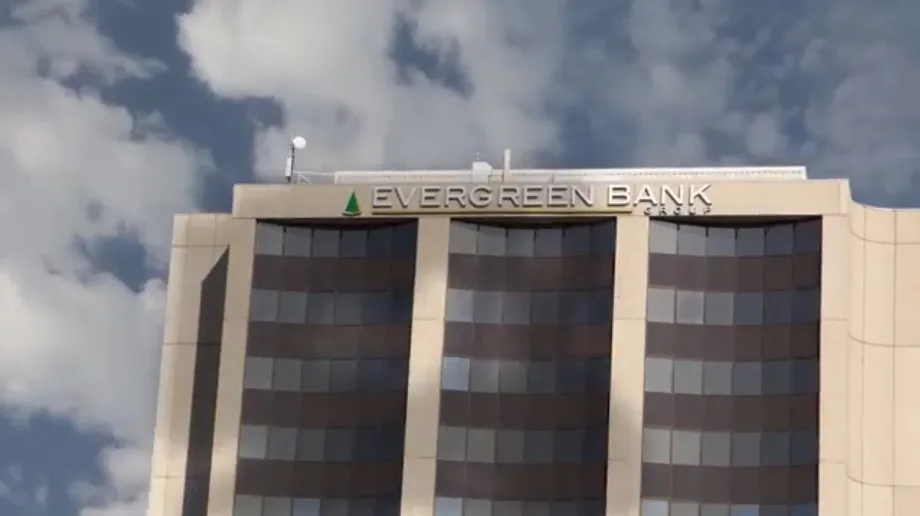
CHICAGO — Evergreen Bank Group became one of the first finance sources to adopt a flat-fee compensation model due to regulatory pressures. In a statement issued on March 4, the finance source said it eliminated discretionary pricing options for dealerships.
The statement was issued after the Federal Deposit Insurance Corp. issued the bank a low rating for its compliance with the Community Reinvestment Act (CRA). According to a public disclosure, Evergreen Bank Group’s CRA rating was “Substantial Noncompliance” due to “a substantially deficient record of helping to meet the credit needs of its assessment area, including low- and moderate-income neighborhoods, in a manner consistent with its resources and capabilities.”
The group was also charged with violations of Regulation B of the Equal Credit Opportunity Act. In a statement, the bank said the FDIC “based its findings of an alleged ECOA violation upon the much publicized and criticized theory called ‘disparate impact.’” The theory is being used by the Consumer Financial Protection Bureau (CFPB) in its investigation of the auto finance industry.
“Although the bank’s board of directors and management strongly disagree with the FDIC’s allegations that the Bank violated the ECOA and Regulation B, the bank recently opted to change its variable pricing model to a flat-fee pricing model within its indirect dealership lending program, even though variable pricing is the standard in the industry, making the bank one of the first lenders across the country to eliminate discretionary pricing options previously made available to dealerships,” the statement read, in part.
Industry associations and members of Congress have criticized the CFPB’s push for a flat fee compensation model in recent months, saying it would reduce competition and ultimately hurt consumers’ ability to secure affordable rates. At a public forum on auto lending held at the bureau’s headquarters in November, the CFPB’s Assistant Director of Fair Lending and Equal Opportunity Patrice Ficklin said the bureau does not see flat fees as an end-all solution.
The evaluation of Evergreen Bank Group covered the period between Jan. 1, 2010 and Dec. 31, 2011. It was based on a review of motorsport lending, home mortgage lending, home equity lines of credit and small business lending activities. Motorsport lending represented the largest portion of the bank’s lending activity, and such loans are originated through FreedomRoad Financial, for which Evergreen is the parent group.
“The bank’s record of motorsport lending reflects very poor penetration among individuals of different income levels,” the disclosure read. “This conclusion is based upon the very low number of motorsport loans made by the bank within its assessment area during 2010 and 2011.
“[Evergreen Bank Group] originated only one motorsport loan ($3,900) to an upper-income borrower in 2010 and one ($11,836) loan to an upper-income borrower in 2011. As this is the bank’s largest portion of the loan portfolio, it is expected that more than two loans would be originated inside the assessment area.”
Currently, the bank is in the final stages of procuring an approval for a CRA Strategic Plan to address the concerns raised about its dealership lending program.
Originally posted on F&I and Showroom
More Dealer Ops

How to Avoid Phone Scams | Dealer Debrief 09/10/2026
Are you taking the necessary steps to protect your dealership and customer data from phone-based scams? This week's Dealer Debrief breaks down how!
Read More →
Dealer Debrief: August Auto Sales
Gas-powered engines still dominate the U.S. vehicle market, but hybrids are gaining ground as consumers look for ways to cut their gas costs.
Read More →
Dealership Profits Decline
While new and used retail sales stagnated, dealerships have been particularly supported by fixed operations and finance-and-insurance profits, according to a new report.
Read More →
Dealer Debrief: Defection Data & EV Updates
In this week's debrief, host Lauren Lawrence discusses how to use defection data to your advantage and the latest on EV sales and charging infrastructure.
Read More →
How Defection Data is Bridging the Dealership Conversion Gap
Lead volume is flat, cross-shopping is up and brand loyalty is in retreat. As confident sales teams keep losing buyers they thought they had, daily industry sales data is showing dealers exactly where their funnel is breaking and how to fix it without buying a single new lead.
Read More →
Dealer Debrief: Where are you losing customers?
In this week's debrief, host Lauren Lawrence discusses the hidden leaks in dealerships where you might be losing customers without even realizing it.
Read More →
Dealer Debrief: Improving Your Inventory Management
In this week's debrief, host Lauren Lawrence covers a new survey that shows what service technicians really want and two launches that could help improve your inventory and vehicle life cycle management.
Read More →
Ladies and Gentlemen, This Is a Dealership: Why the Fundamentals Still Decide Who Wins
A teaching moment by a legendary football coach happens to apply perfectly in the auto retail space. Learn what it is and how to use it to your store’s advantage.
Read More →
Dealer Ads and the FTC
The agency has made it clear in recent enforcement actions and warnings, in auto retail and other industries, that advertised prices must include all nonoptional costs to the consumer.
Read More →
Used Autos Supply Dwindles
The March shopping surge, despite high prices, cut into inventory by the most since the thick of the pandemic, Cox Automotive analysts calculated.
Read More →