



J.D. Power: In-Car Tech Impacting Dependability, Brand Loyalty
Bluetooth connectivity and voice recognition issues are the most frequently reported problems after three years of ownership, according to J.D. Power's 2015 U.S. Vehicle Dependability Study.
WESTLAKE VILLAGE, Calif. — Bluetooth connectivity and voice recognition issues are the most frequently reported problems after three years of ownership, according to the J.D. Power 2015 U.S. Vehicle Dependability Study released at the end of February.
Study findings show that technology is playing an increasingly critical role in owners’ perceptions of overall vehicle reliability, which, in turn, is impacting their likelihood to repurchase the same brand next time around.
The study, now in its 26th year, examines problems experienced during the past 12 months by original owners of 2012 model-year vehicles. Overall dependability is determined by the number of problems experienced per 100 vehicles (PP100), with a lower score reflecting higher quality. The study has been enhanced in 2015 to better measure the quality of today’s vehicles, particularly related to new technologies and features now being offered. The study covers 177 specific problem symptoms grouped into eight major vehicle categories.
The top two problems reported by owners are Bluetooth pairing/connectivity and built-in voice recognition systems misinterpreting commands. These are also the most frequent problems reported by owners at 90 days, according to the J.D. Power 2014 U.S. Initial Quality Study.
“As we’ve seen in our Initial Quality Study, owners view in-vehicle technology issues as significant problems, and they typically don’t go away after the ownership honeymoon period is over,” said Renee Stephens, vice president of U.S. automotive at J.D. Power. “Furthermore, early indications from our upcoming 2015 U.S. Tech Choice Study show that vehicle owner expectations of advanced technology capabilities are growing. Owners clearly want the latest technology in their vehicles, and they don’t hesitate to express their disapproval when it doesn’t work. Their definition of dependability is increasingly influenced by usability.”
Because issues with technology impact overall dependability, they also impact repurchase intent. The study finds that 56% of owners who report no problems with their vehicle say they “definitely will” purchase the same brand next time, compared with 43% of those who report three or more problems. Together with the fact that 15% of new-vehicle buyers indicate they avoided a model because it lacked the latest technological features—up from just 4% in 2014—technology clearly plays a key role in affecting future purchase decisions.
Among owners who experienced a Bluetooth pairing/connectivity problem, 55% said that their vehicle would not recognize their phone, and 31% said the phone would not automatically connect when entering their vehicle. Also, the number of engine/transmission problems remains high. Nearly 30% of the reported powertrain problems are a result of automatic transmission hesitation and rough shifting. Six of the top 10 problems are design related as opposed to defects or malfunctions.
By vehicle category, the most frequently reported problems are related to exterior, followed by engine/transmission and audio/communication/entertainment/navigation. Overall vehicle dependability industry-wide averages 147 PP100, or approximately 1.5 problems per vehicle.
“At the three-year point, many owners are thinking about replacing their vehicles, and we find that how they feel about their current vehicle’s quality and dependability impacts their intent to consider purchasing the same brand again,” said Stephens. “Oftentimes, the issues owners experience can be resolved with a software update or, in the case of Bluetooth pairing problems, dealers can step in to help. In cases such as these, proactively reaching out to owners presents an opportunity for automakers and their dealers to engage with customers in a positive way.”
When it came to brands, Lexus ranked highest in vehicle dependability among all nameplates for a fourth consecutive year, with a score of 89 PP100. Buick (110 PP100) follows Lexus in the rankings, moving up three rank positions from 2014, and next were Toyota (111 PP100), Cadillac (114 PP100), and Honda and Porsche in a tie (116 PP100 each).
Notable rank improvements from 2014 include Scion (121 PP100), improving by 13 rank positions from 2014; Ram (134 PP100), improving 11 rank positions; and Mitsubishi (140 PP100), improving 10 rank positions.
General Motors Company and Toyota Motor Corporation each received seven segment awards: GM models receiving an award include the Buick LaCrosse; Chevrolet Camaro; Chevrolet Malibu; Chevrolet Silverado HD; GMC Sierra LD; GMC Terrain; and GMC Yukon. Toyota awardees include the Lexus ES; Lexus GX; Scion tC; Scion xB; Scion xD; Toyota Corolla; and Toyota Sienna.
The 2015 U.S. Vehicle Dependability Study is based on responses from more than 34,000 original owners of 2012 model-year vehicles after three years of ownership. The study was fielded in November and December 2014.
Originally posted on F&I and Showroom
More Dealer Ops
How to Avoid Phone Scams | Dealer Debrief 09/10/2026
Are you taking the necessary steps to protect your dealership and customer data from phone-based scams? This week's Dealer Debrief breaks down how!
Read More →
Dealer Debrief: August Auto Sales
Gas-powered engines still dominate the U.S. vehicle market, but hybrids are gaining ground as consumers look for ways to cut their gas costs.
Read More →
Dealership Profits Decline
While new and used retail sales stagnated, dealerships have been particularly supported by fixed operations and finance-and-insurance profits, according to a new report.
Read More →
Dealer Debrief: Defection Data & EV Updates
In this week's debrief, host Lauren Lawrence discusses how to use defection data to your advantage and the latest on EV sales and charging infrastructure.
Read More →
How Defection Data is Bridging the Dealership Conversion Gap
Lead volume is flat, cross-shopping is up and brand loyalty is in retreat. As confident sales teams keep losing buyers they thought they had, daily industry sales data is showing dealers exactly where their funnel is breaking and how to fix it without buying a single new lead.
Read More →
Dealer Debrief: Where are you losing customers?
In this week's debrief, host Lauren Lawrence discusses the hidden leaks in dealerships where you might be losing customers without even realizing it.
Read More →
Dealer Debrief: Improving Your Inventory Management
In this week's debrief, host Lauren Lawrence covers a new survey that shows what service technicians really want and two launches that could help improve your inventory and vehicle life cycle management.
Read More →
Ladies and Gentlemen, This Is a Dealership: Why the Fundamentals Still Decide Who Wins
A teaching moment by a legendary football coach happens to apply perfectly in the auto retail space. Learn what it is and how to use it to your store’s advantage.
Read More →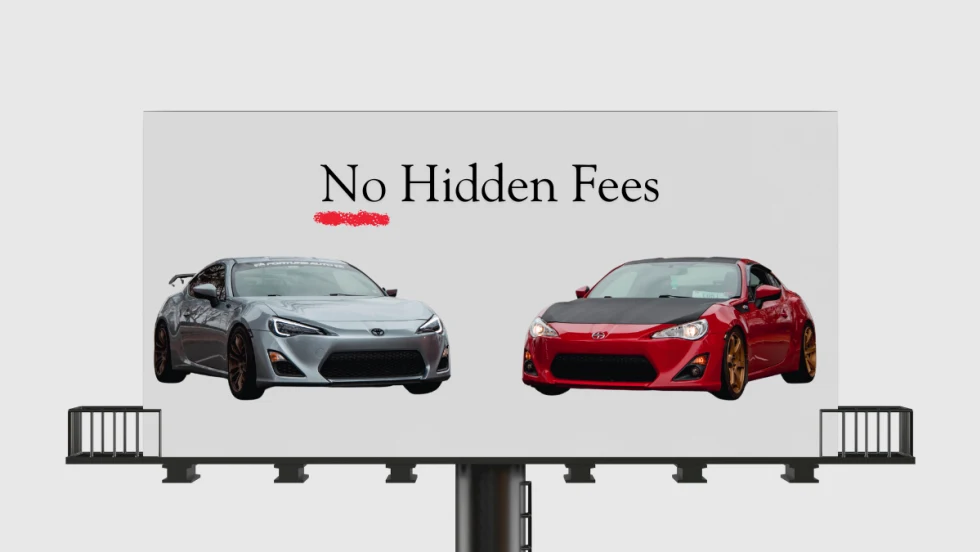
Dealer Ads and the FTC
The agency has made it clear in recent enforcement actions and warnings, in auto retail and other industries, that advertised prices must include all nonoptional costs to the consumer.
Read More →
Used Autos Supply Dwindles
The March shopping surge, despite high prices, cut into inventory by the most since the thick of the pandemic, Cox Automotive analysts calculated.
Read More →