


Manheim: Wholesale Prices Slipped in January
Manheim's Tom Webb believes the 0.3% year-over-year decrease could have been much worse considering the "sharply rising" supply of used units.
ATLANTA — Wholesale used-vehicle prices fell slightly in January, registering a 0.3% decline from the prior year, according to Manheim Chief Economist Tom Webb.
Webb stressed that wholesale prices remained remarkably stable despite “sharply rising” supplies of used vehicles, a trend that began in early 2016 and shows no signs of abating.
“Give credit to a retail used-vehicle market that enabled dealers to quickly and profitably sell their auction purchases,” he wrote.
Sales of certified pre-owned (CPO) units continue to outpace new-vehicle sales. The four-year trend continued into January, when CPO sales rose by a modest 0.8%. Sales of new cars and light-duty trucks remained flat at a seasonally adjusted annual rate (SAAR) of 17.5 million units.
Webb indicated that most analysts predicted a drop in January new-vehicle sales after a strong December. He said incentives, reduced fleet sales and higher transaction prices — thanks to model mix shifts and the growing popularity of higher trim levels — helped prop up sales. But he said the imminent impact of unsold new-vehicle inventory could not yet be calculated.
“The topline days’ supply numbers were scary, but less so after accounting for seasonal issues, mode shifts, temporary factors and reduced fleet volumes,” Webb wrote. “Still, production cuts seem warranted.”
Finally, the report noted that the U.S. unemployment rate continues to fall. The market added 227,000 jobs in January for a total of 14.5 million new jobs added since 2011. Although January wage growth failed to impress, Webb said the stability of the labor market “suggests that consumers will be willing to take on more used-vehicle loans and that lenders will be willing to lend.”
To read the full report, click here.
Originally posted on F&I and Showroom
More Dealer Ops
Surface-Level Vehicle Inspections Don’t Do the Job
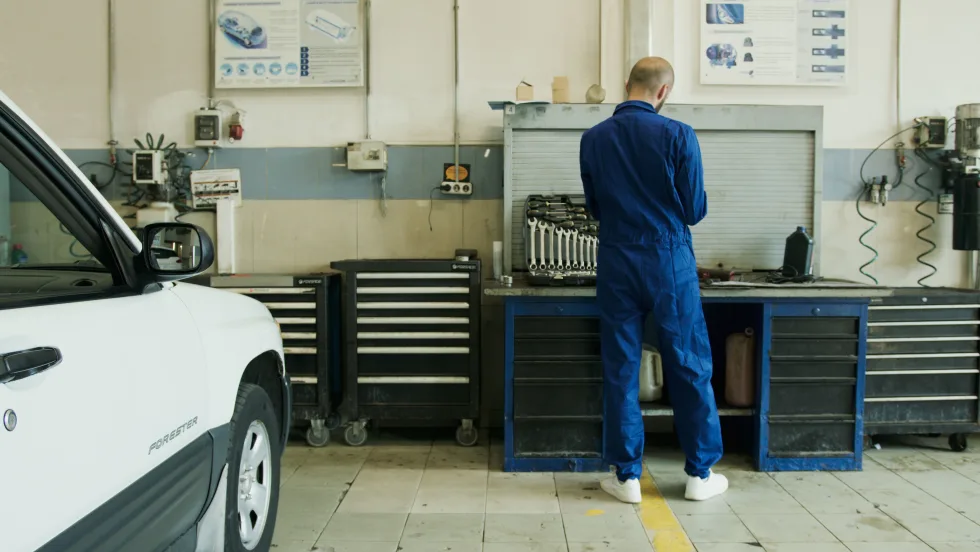
The approach is an easily avoided costly mistake for dealerships that could otherwise catch problems on the front end with easily obtained data.

How to Avoid Phone Scams | Dealer Debrief 09/10/2026
Are you taking the necessary steps to protect your dealership and customer data from phone-based scams? This week's Dealer Debrief breaks down how!

Dealer Debrief: August Auto Sales
Gas-powered engines still dominate the U.S. vehicle market, but hybrids are gaining ground as consumers look for ways to cut their gas costs.

Dealership Profits Decline
While new and used retail sales stagnated, dealerships have been particularly supported by fixed operations and finance-and-insurance profits, according to a new report.
Dealer Debrief: Defection Data & EV Updates
In this week's debrief, host Lauren Lawrence discusses how to use defection data to your advantage and the latest on EV sales and charging infrastructure.

How Defection Data is Bridging the Dealership Conversion Gap
Lead volume is flat, cross-shopping is up and brand loyalty is in retreat. As confident sales teams keep losing buyers they thought they had, daily industry sales data is showing dealers exactly where their funnel is breaking and how to fix it without buying a single new lead.

Dealer Debrief: Where are you losing customers?
In this week's debrief, host Lauren Lawrence discusses the hidden leaks in dealerships where you might be losing customers without even realizing it.
Dealer Debrief: Improving Your Inventory Management
In this week's debrief, host Lauren Lawrence covers a new survey that shows what service technicians really want and two launches that could help improve your inventory and vehicle life cycle management.

Ladies and Gentlemen, This Is a Dealership: Why the Fundamentals Still Decide Who Wins
A teaching moment by a legendary football coach happens to apply perfectly in the auto retail space. Learn what it is and how to use it to your store’s advantage.
Dealer Ads and the FTC
The agency has made it clear in recent enforcement actions and warnings, in auto retail and other industries, that advertised prices must include all nonoptional costs to the consumer.