



Peak SUV: Red-Hot Segment Poised for Slowdown
A new report from Edmunds says bloated inventories and escalating incentives could signal a market correction for booming SUV sales.
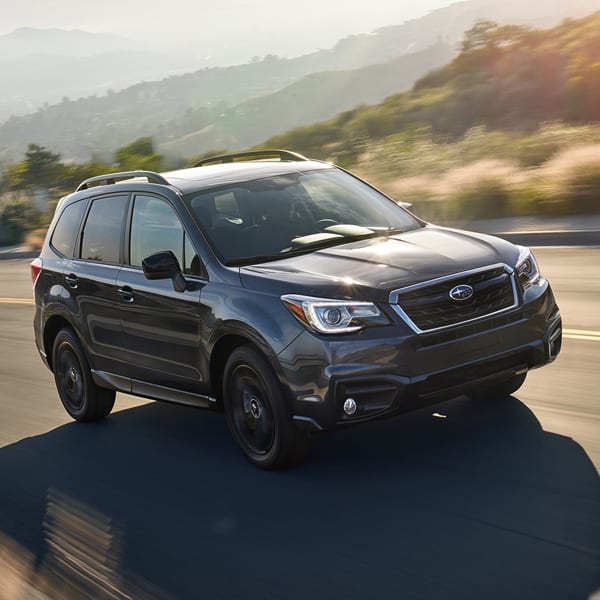
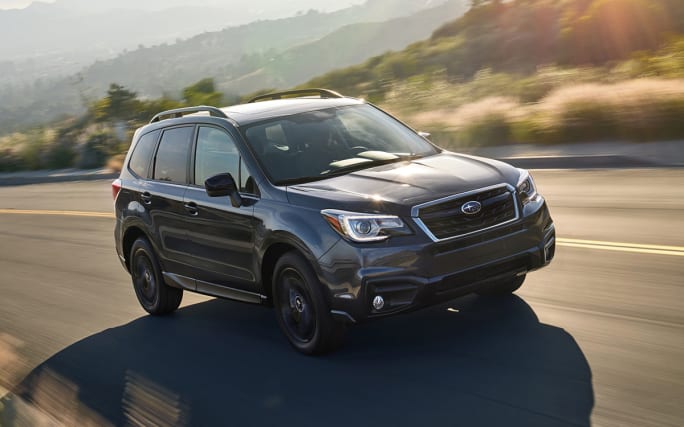
SUVs such as the Subaru Forester have enjoyed five consecutive years of market-share gains, but Edmunds analysts fear demand for the segment may have reached its peak. Photo courtesy Subaru of America Inc.
SANTA MONICA, Calif. — After five straight years of market-share gains, the SUV segment may be poised for a slowdown, according to a new analysis from Edmunds.
While incentive spending overall is up 23% so far in 2017 compared to 2016, incentives on SUVs are up as much as 47%. And despite these attractive offers and relatively strong demand, SUVs are now starting to linger longer in the showroom. Between January and May of 2017, an SUV sat for an average of 61 days on the dealer lot before it was sold, compared to 56 days for the same time period in 2016.
“For the last few years, SUVs almost seemed to sell themselves. But as the market starts to level off, automakers are having to work a little harder and make the deals a little bit sweeter to hit their sales targets,” said Jessica Caldwell, Edmunds’ executive director of industry analysis. “The silver lining is that SUV demand isn’t completely hitting the wall, but even this hot segment isn’t immune to the dip the entire market is experiencing this year.”
Even though the auto sales are softening, Edmunds expects that strong economic conditions and enticing deals will be enough to rally sales in the back half of the year. The firm's analysts maintain their sales forecast of 17.2 million vehicles for 2017, representing a 2% decline from 2016’s record high and the fourth-best auto sales year in U.S. history.
Edmunds forecasts that 1,479,042 new cars and trucks will be sold in the U.S. in June for an estimated seasonally adjusted annual rate (SAAR) of 16.6 million. This reflects a 2.3% decrease in sales from May 2017 and a 2.3% decrease from June 2016.
“While six straight months of sales declines sounds troubling, June is sandwiched between two major holiday sales events, which makes it a bit of a gloomy month historically,” Caldwell said. “Car shoppers are savvy enough to know automakers push the deals on holiday weekends and are willing to hold off on buying until they know they’re getting a hot bargain.”
Originally posted on F&I and Showroom
More Dealer Ops

How to Avoid Phone Scams | Dealer Debrief 09/10/2026
Are you taking the necessary steps to protect your dealership and customer data from phone-based scams? This week's Dealer Debrief breaks down how!
Read More →
Dealer Debrief: August Auto Sales
Gas-powered engines still dominate the U.S. vehicle market, but hybrids are gaining ground as consumers look for ways to cut their gas costs.
Read More →
Dealership Profits Decline
While new and used retail sales stagnated, dealerships have been particularly supported by fixed operations and finance-and-insurance profits, according to a new report.
Read More →
Dealer Debrief: Defection Data & EV Updates
In this week's debrief, host Lauren Lawrence discusses how to use defection data to your advantage and the latest on EV sales and charging infrastructure.
Read More →
How Defection Data is Bridging the Dealership Conversion Gap
Lead volume is flat, cross-shopping is up and brand loyalty is in retreat. As confident sales teams keep losing buyers they thought they had, daily industry sales data is showing dealers exactly where their funnel is breaking and how to fix it without buying a single new lead.
Read More →
Dealer Debrief: Where are you losing customers?
In this week's debrief, host Lauren Lawrence discusses the hidden leaks in dealerships where you might be losing customers without even realizing it.
Read More →
Dealer Debrief: Improving Your Inventory Management
In this week's debrief, host Lauren Lawrence covers a new survey that shows what service technicians really want and two launches that could help improve your inventory and vehicle life cycle management.
Read More →
Ladies and Gentlemen, This Is a Dealership: Why the Fundamentals Still Decide Who Wins
A teaching moment by a legendary football coach happens to apply perfectly in the auto retail space. Learn what it is and how to use it to your store’s advantage.
Read More →
Dealer Ads and the FTC
The agency has made it clear in recent enforcement actions and warnings, in auto retail and other industries, that advertised prices must include all nonoptional costs to the consumer.
Read More →
Used Autos Supply Dwindles
The March shopping surge, despite high prices, cut into inventory by the most since the thick of the pandemic, Cox Automotive analysts calculated.
Read More →