



Reuters: U.S. Senate Panel Plans to Scrap CFPB’s Dealer Participation Guidance
U.S. Senate Banking Committee Republican Pat Toomey said on Tuesday the panel plans to scrap the CFPB’s guidance on dealer participation and leverage lending.
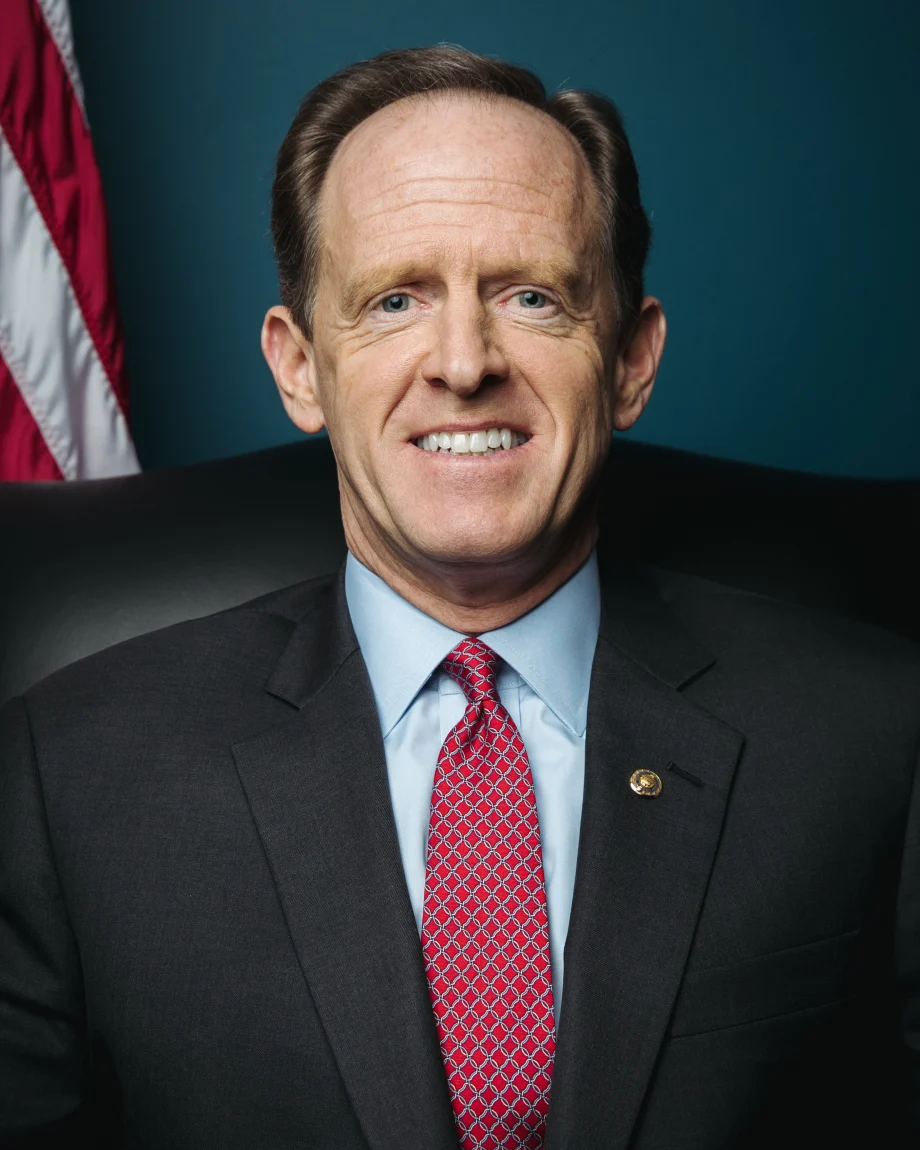
WASHINGTON, D.C. — Less than five months after the Government Accountability Office (GAO) agreed with his view that Congress has the power to repeal two Consumer Financial Protection Bureau (CFPB) rules, including its controversial guidance on dealer participation, U.S. Senator Banking Committee Republican Pat Toomey said the panel plans to do just that in the coming weeks, according to a Reuters report.
Toomey, who was addressing community bankers in Washington to lobby lawmakers to vote in favor of a bill that would reduce compliance obligations for smaller financial institutions, had asked the GAO last March whether the CFPB’s guidance on dealer participation and leveraged lending falls under the Congressional Review Act. The GAO said they did, setting the table for the Republican-controlled Congress to pass joint resolutions of disapproval under the CRA to repeal both rules — a process similar to the one used to repeal the bureau’s rule on forced arbitration last October.
“GAO’s decision is an important reminder that agencies have a responsibility to live up to their obligations under the law. When they don’t, Congress should hold them accountable,” Toomey said in December after the GAO delivered its response. “I intend to do everything in my power to repeal this ill-conceived rule using the Congressional Review Act.”
On Tuesday, according to the Reuters’ report, Toomey said the Senate Banking Committee would scrap the rule, referring to the bureau’s March 2013 auto lending rule.
The CFPB alleged in its five-page fair lending guidance that bank policies which allow auto dealers to mark up interest rates on retail installment sale transactions as compensation for services rendered create a significant risk of unintentional, disparate impact discrimination. It also warned lenders active in the indirect auto finance channel that they would be held liable for unlawful, discriminatory markups.
Auto finance trade groups have argued that the bureau used its guidance to indirectly regulate the activities of dealers, which are mostly exempt from the bureau’s oversight under the Dodd-Frank Act. Since issuing its guidance, the bureau has imposed millions of dollar in fines on auto finance sources, including Ally Financial, American Honda Finance Corp., and Fifth Third Bank.
Congress has attempted to kill the bureau’s guidance through the legislative route. In November 2015, the House of Representatives approved the Reforming CFPB Indirect Auto Finance Guidance Act by a 332-96 vote. The bill, however, was not acted upon by the Senate before the end of the 114th Congress.
When it initially issued its guidance, the bureau argued that because it had no legal effect on regulated entities, the CRA does not apply. The GAO, however, stated in its response to Toomey’s request that the bulletin “fits squarely within the Supreme Court’s definition of a statement of policy,” because it provides information on the manner in which the bureau planned to exercise its discretionary enforcement power.
And according to the GAO, the CRA “establishes special expedited procedures under which Congress may pass a joint resolution of disapproval that, if enacted into law, overturns the rule. Legal insiders, however, say the GAO’s findings give the bureau’s acting director all the authority he needs to rescind the guidance. Mick Mulvaney, who was appointed acting director this past November after Richard Cordray stepped down as the bureau’s director, has yet to act on that authority.
Originally posted on F&I and Showroom
More Dealer Ops
How to Avoid Phone Scams | Dealer Debrief 09/10/2026
Are you taking the necessary steps to protect your dealership and customer data from phone-based scams? This week's Dealer Debrief breaks down how!
Read More →
Dealer Debrief: August Auto Sales
Gas-powered engines still dominate the U.S. vehicle market, but hybrids are gaining ground as consumers look for ways to cut their gas costs.
Read More →
Dealership Profits Decline
While new and used retail sales stagnated, dealerships have been particularly supported by fixed operations and finance-and-insurance profits, according to a new report.
Read More →
Dealer Debrief: Defection Data & EV Updates
In this week's debrief, host Lauren Lawrence discusses how to use defection data to your advantage and the latest on EV sales and charging infrastructure.
Read More →
How Defection Data is Bridging the Dealership Conversion Gap
Lead volume is flat, cross-shopping is up and brand loyalty is in retreat. As confident sales teams keep losing buyers they thought they had, daily industry sales data is showing dealers exactly where their funnel is breaking and how to fix it without buying a single new lead.
Read More →
Dealer Debrief: Where are you losing customers?
In this week's debrief, host Lauren Lawrence discusses the hidden leaks in dealerships where you might be losing customers without even realizing it.
Read More →
Dealer Debrief: Improving Your Inventory Management
In this week's debrief, host Lauren Lawrence covers a new survey that shows what service technicians really want and two launches that could help improve your inventory and vehicle life cycle management.
Read More →
Ladies and Gentlemen, This Is a Dealership: Why the Fundamentals Still Decide Who Wins
A teaching moment by a legendary football coach happens to apply perfectly in the auto retail space. Learn what it is and how to use it to your store’s advantage.
Read More →
Dealer Ads and the FTC
The agency has made it clear in recent enforcement actions and warnings, in auto retail and other industries, that advertised prices must include all nonoptional costs to the consumer.
Read More →
Used Autos Supply Dwindles
The March shopping surge, despite high prices, cut into inventory by the most since the thick of the pandemic, Cox Automotive analysts calculated.
Read More →