



Subprime Car Buyers to Feel Fed's Rate Hike, Analyst Says
For the second time in 10 years, the Federal Reserve's Federal Open Market Committee unanimously voted to raise the federal interest rate on Dec. 14. The impact of the rate hike should be minimal for all but one consumer segment, a Black Book analyst says.
WASHINGTON, D.C. — For the second time in 10 years, the Federal Reserve's Federal Open Market Committee unanimously voted to raise the federal interest rate on Wednesday, Dec. 14, increasing it by a quarter of a point to a range of 0.50% to 0.75%.
Although most car buyers aren’t expected to feel the impact, there is a subset of consumers that will feel the brunt of the interest rate hike: subprime borrowers, said Anil Goyal, senior vice president of operations for Black Book.
“In the overall scheme of things, a quarter point is not going to increase the monthly payment as much, but it is just another addition to increasing costs in the system," he said. "So when dealers buy a car, they floorplan it. They have additional costs as the interest rates rise, and when the consumer buys it, they have more to pay in interest rates.".
Goyal said he expects prime and captive finance sources who support new-vehicle and certified pre-owned sales to buy down the slightly higher rates in order to continue offering zero percent financing. That means prime consumers who qualified for those offers will continue to do so in the coming year.
“The impact will be more on the subprime market, where they’re very sensitive to monthly payment. There’s not a lot of subvention in that market," he noted. "And with delinquencies rising and mortgage rates already rising, it becomes just another increase in the cost of living for that subprime customer."
The most interesting part of Wednesday’s interest rate hike is the timing, Goyal noted. The increase comes at a time when most finance sources are tightening their credit criteria, especially in the subprime market where delinquency rates are rising. Had this hike happened six months ago, when the credit market was still expanding, the effects would be minimal.
The good news is credit is widely available. However, if delinquencies continue to rise and the Fed raises interest rates at a faster pace next year, the auto finance industry may begin to see a drop in consumer demand.
Goyal doesn’t see that happening in the near term, however. He believes there is enough uncertainty in the economy that the Fed will raise rates in baby steps in the coming year. One thing to keep in mind, he added, is that any hike will impact all forms of credit, from credit cards to mortgages. That means the combined burgen of higher interest rates accross all consumer credit lines could limit how much money consumers can put toward a new-vehicle purchase.
“The fed's interest rate hike is not that much, but the environment as a whole is tightening for that subprime customer,” Goyal said.
Goyal , however, said there's a positive side to the Fed's decision. "We’ve been relying too much on monetary policy to keep our economy going, so this is a positive thing because we have to get back to normal interest rates,” he said.
In its announcement on Wednesday, the fed committee cited a stronger labor market, improving economic activity, a declining unemployment rate, and projected economic growth in the coming year as reasons for their decision to increase rates.
“In view of realized and expected labor market conditions and inflation, the committee decided to raise the target range for the federal funds rate to 1/2 to 3/4 percent,” wrote the committee in a statement. “The stance of monetary policy remains accommodative, thereby supporting some further strengthening in labor market conditions and a return to 2% inflation.”
The voting members of the committee were Chair Janet L. Yellen; Vice Chairman William C. Dudley; Lael Brainard; James Bullard; Staneley Fischer; Esther L. George; Loretta J. Mester; Jerome H. Powell; Eric Rosengren; and Daniel K. Tarullo.
The Fed committee is forecasting three interest rate hikes in 2017.
Originally posted on F&I and Showroom
More Dealer Ops

How to Avoid Phone Scams | Dealer Debrief 09/10/2026
Are you taking the necessary steps to protect your dealership and customer data from phone-based scams? This week's Dealer Debrief breaks down how!
Read More →
Dealer Debrief: August Auto Sales
Gas-powered engines still dominate the U.S. vehicle market, but hybrids are gaining ground as consumers look for ways to cut their gas costs.
Read More →
Dealership Profits Decline
While new and used retail sales stagnated, dealerships have been particularly supported by fixed operations and finance-and-insurance profits, according to a new report.
Read More →
Dealer Debrief: Defection Data & EV Updates
In this week's debrief, host Lauren Lawrence discusses how to use defection data to your advantage and the latest on EV sales and charging infrastructure.
Read More →
How Defection Data is Bridging the Dealership Conversion Gap
Lead volume is flat, cross-shopping is up and brand loyalty is in retreat. As confident sales teams keep losing buyers they thought they had, daily industry sales data is showing dealers exactly where their funnel is breaking and how to fix it without buying a single new lead.
Read More →
Dealer Debrief: Where are you losing customers?
In this week's debrief, host Lauren Lawrence discusses the hidden leaks in dealerships where you might be losing customers without even realizing it.
Read More →
Dealer Debrief: Improving Your Inventory Management
In this week's debrief, host Lauren Lawrence covers a new survey that shows what service technicians really want and two launches that could help improve your inventory and vehicle life cycle management.
Read More →
Ladies and Gentlemen, This Is a Dealership: Why the Fundamentals Still Decide Who Wins
A teaching moment by a legendary football coach happens to apply perfectly in the auto retail space. Learn what it is and how to use it to your store’s advantage.
Read More →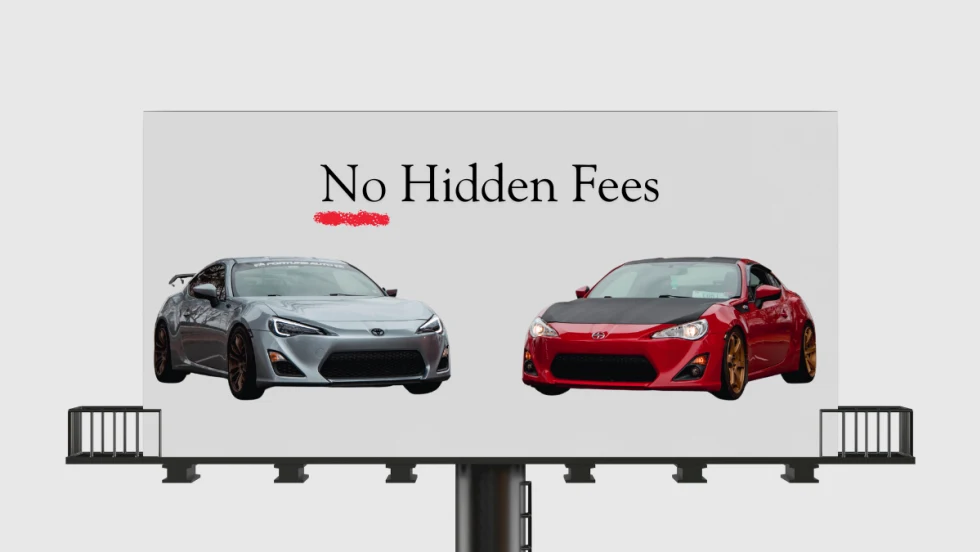
Dealer Ads and the FTC
The agency has made it clear in recent enforcement actions and warnings, in auto retail and other industries, that advertised prices must include all nonoptional costs to the consumer.
Read More →
Used Autos Supply Dwindles
The March shopping surge, despite high prices, cut into inventory by the most since the thick of the pandemic, Cox Automotive analysts calculated.
Read More →