



Supreme Court Rules in Favor of Dealers in Overtime Pay Dispute
In a 6-2 decision, the Supreme Court vacated the 9th U.S. Circuit Court of Appeals' ruling that service advisors qualified for overtime pay because they were not considered “salesmen” under the Fair Labor Standard’s Act (FLSA).
WASHINGTON, D.C. — In a 6-2 decision issued this week, the Supreme Court vacated the 9th U.S. Circuit Court of Appeals' ruling that service advisors qualified for overtime pay because they were not considered “salesmen” under the Fair Labor Standard’s Act (FLSA).
With this decision, the court has both dismissed the Court of Appeals' decision and punted the verdict on whether service advisors should be exempt from overtime pay back to the lower courts. In Justice Anthony Kennedy’s delivery of the court’s opinion, he stated that “the judgement of the Court of Appeals is vacated, and the case is remanded for further proceedings consistent with this opinion.”
Chief Justice John G. Roberts, Justice Ruth Bader Ginsburg, Justice Stephen G. Breyer, Justice Sonia Sotomayor and Justice Elena Kagan joined Kennedy in the court’s opinion.
Justice Clarence Thomas — joined by Justice Samuel A. Alito — dissented from the court’s opinion. In his dissenting opinion, Thomas wrote that he disagreed with the court’s “ultimate decision to punt on the issue before it.” Instead, he thought the court had an “obligation … to decide the merits of the questions presented.”
Additionally, he said service advisors should fall into the definition of a salesman under the FLSA and therefore be exempt from overtime pay.
In a statement delivered to F&I and Showroom, Jared Allen, spokesperson for the National Automobile Dealers Association, expressed the association’s approval of the Supreme Court’s ruling.
“We are pleased that the Supreme Court expressly rejected a 2011 U.S. Department of Labor interpretative regulation that service writers/advisors are not 'salesmen' exempt from overtime, and that the Court vacated the Ninth Circuit’s ruling and sent the case back for a more appropriate review of the statute,” Allen said.
The Court of Appeals' decision in question pertained to the case of Encino Motorcars LLC v. Navarro. According to the case, five employees filed a suit against their employer, Mercedes-Benz of Encino, for violating the FLSA by not providing overtime pay when they exceeded 40 hours of labor per week.
According to their suit, they were required to work from 7 a.m. to 6 p.m. at least 5 days a week, and also be available during their breaks and their vacations, even though they were paid on commission.
Encino Motorcars moved to dismiss the complaint by citing a 1970 Department of Labor ruling that stated that service advisors did not qualify for overtime. The District Court agreed and dismissed the employees’ motion.
However, the Court of Appeals reversed that motion, citing a 2011 decision by the U.S. Department of Labor. The department stated that service advisors did not qualify as “salesmen” because they did not fall into the 1970 regulation that defined salesmen as “an employee who is employed for the purpose of and is primarily engaged in making sales or obtaining orders or contracts for sales of vehicles … which the establishment is primarily engaged in selling.”
This 1970 regulation excluded service advisors from the exemption because it stated that they sell repair and maintenance services but not vehicles. However, the decision was rejected by several courts, and in 1978 the Department of Labor issued an opinion letter stating that service advisors should qualify for the same exemption as salesmen. In 1987, the department amended its Field Operations Handbook to clarify that service advisors would qualify for overtime exemption.
With its decision on the case, the Court of Appeals effectively changed a decades-old practice of dealerships creating compensation plans based on service advisors being exempt from overtime.
In ruling to vacate the Court of Appeal decision, the high court stated that before the Court of Appeal decision, dealers and service advisors had based their compensation plans on the fact that service advisors were exempt from overtime pay.
In the court's opinion, the Department of Labor “gave little explanation for its decision to abandon its decades-old practice of treating service advisors as exempt” when it issued its 2011 decision. It further said that “one basic procedural requirement of administrative rulemaking is that an agency must give adequate reasons for its decisions. Where the agency has failed to provide even a minimal level of analysis, its action is arbitrary and capricious and so cannot carry the force of law.”
The high court also applied those principles to the Court of Appeals' decision. The court stated that the Department needed more reasoned explanation to make the decision that it did. “The Department instead said almost nothing," read the Supreme Court's opinion. "It did not analyze or explain why the statute should be interpreted to exempt dealership employees who sell vehicles but not dealership employees who sell services.”
Originally posted on F&I and Showroom
More Dealer Ops

How to Avoid Phone Scams | Dealer Debrief 09/10/2026
Are you taking the necessary steps to protect your dealership and customer data from phone-based scams? This week's Dealer Debrief breaks down how!
Read More →
Dealer Debrief: August Auto Sales
Gas-powered engines still dominate the U.S. vehicle market, but hybrids are gaining ground as consumers look for ways to cut their gas costs.
Read More →
Dealership Profits Decline
While new and used retail sales stagnated, dealerships have been particularly supported by fixed operations and finance-and-insurance profits, according to a new report.
Read More →
Dealer Debrief: Defection Data & EV Updates
In this week's debrief, host Lauren Lawrence discusses how to use defection data to your advantage and the latest on EV sales and charging infrastructure.
Read More →
How Defection Data is Bridging the Dealership Conversion Gap
Lead volume is flat, cross-shopping is up and brand loyalty is in retreat. As confident sales teams keep losing buyers they thought they had, daily industry sales data is showing dealers exactly where their funnel is breaking and how to fix it without buying a single new lead.
Read More →
Dealer Debrief: Where are you losing customers?
In this week's debrief, host Lauren Lawrence discusses the hidden leaks in dealerships where you might be losing customers without even realizing it.
Read More →
Dealer Debrief: Improving Your Inventory Management
In this week's debrief, host Lauren Lawrence covers a new survey that shows what service technicians really want and two launches that could help improve your inventory and vehicle life cycle management.
Read More →
Ladies and Gentlemen, This Is a Dealership: Why the Fundamentals Still Decide Who Wins
A teaching moment by a legendary football coach happens to apply perfectly in the auto retail space. Learn what it is and how to use it to your store’s advantage.
Read More →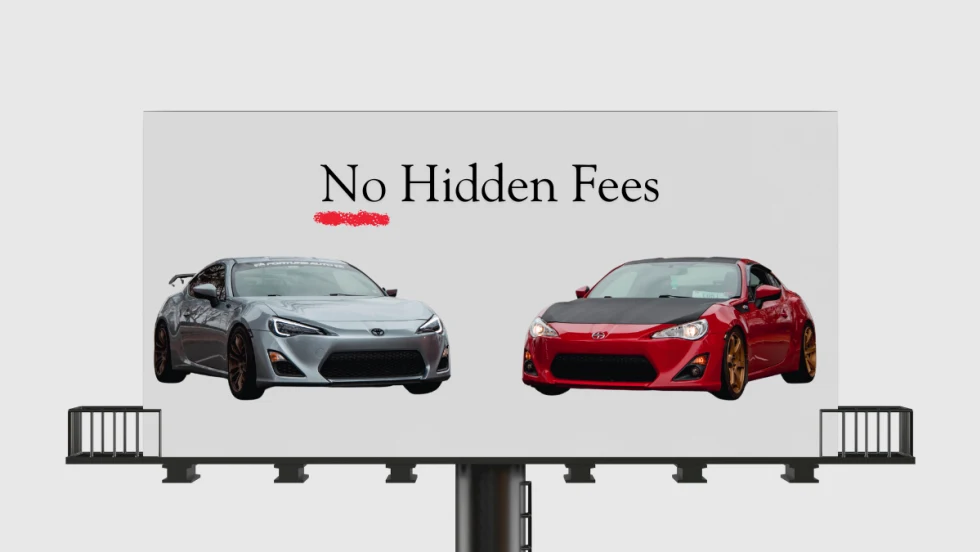
Dealer Ads and the FTC
The agency has made it clear in recent enforcement actions and warnings, in auto retail and other industries, that advertised prices must include all nonoptional costs to the consumer.
Read More →
Used Autos Supply Dwindles
The March shopping surge, despite high prices, cut into inventory by the most since the thick of the pandemic, Cox Automotive analysts calculated.
Read More →