



Nanny State: New Safety Tech Annoys Drivers
A new J.D. Power survey finds car buyer demand for semiautonomous safety technology is threatened by overbearing alerts that are causing many to disable their systems, increasing the risk of a collision.

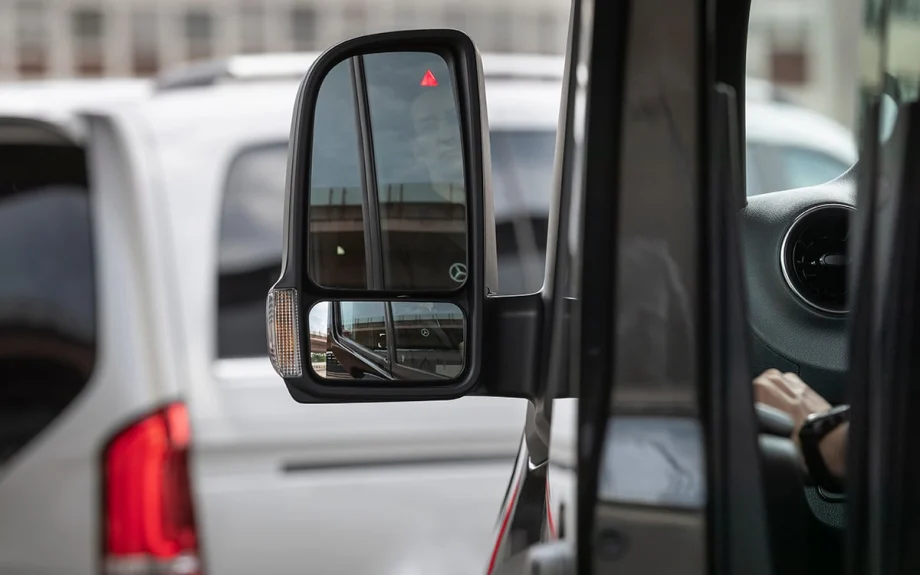
J.D. Power analysts found 61% of drivers sometimes disable their vehicles’ lane-keeping and centering systems.
Photo courtesy Mercedes-Benz USA
COSTA MESA, Calif. — Some alerts on advanced driver assistance systems (ADAS) are so annoying or bothersome that many drivers disable the systems and may try to avoid them on future vehicle purchases, according to the J.D. Power 2019 U.S. Tech Experience Index Study.
This is a major concern for automakers keen to market these lucrative technologies and pave the way for more highly automated vehicles in the future, said Kristin Kolodge, the firm’s executive director of driver interaction and human machine interface research.
“Automakers are spending lots of money on advanced technology development, but the constant alerts can confuse and frustrate drivers,” Kolodge said. “The technology can’t come across as a nagging parent; no one wants to be constantly told they aren’t driving correctly.”
One example is lane-keeping and centering systems. On average, 23% of customers with these systems complain that the alerts are annoying or bothersome. This ranges from just 8% for one domestic brand to more than 30% for two import brands.
For these owners, 61% sometimes disable the system, compared with just 21% of those that don’t consider the alerts annoying or bothersome. Owners wanting the feature on their next vehicle ranges from 63% for those that consider the alerts annoying or bothersome to 91% for those who do not.
“Some brands are succeeding at making their safety technology effective without being overbearing. Some are good at one aspect but weaker at another, and some are struggling with both,” Kolodge said. “This is why one brand has 90% of its customers wanting lane-keeping/centering on their next vehicle, while another brand has just 59% of its customers saying the same thing.”
The study, now in its fourth year, measures owners’ experiences, usage and interaction with 38 driver-centric vehicle technologies at 90 days of ownership. Overall satisfaction with new-vehicle technology ranges widely. The best-performing vehicle in the study is the Kia Stinger, scoring 834 (on a 1,000-point scale). The overall average is 781, with the lowest-scoring model achieving just 709.
Collision protection has the highest score (813) among the six categories measured in the study. Smartphone mirroring (789) is second, followed by comfort and convenience (787), entertainment and connectivity (782), driving assistance (768), and navigation (744).
More Dealer Ops

How to Avoid Phone Scams | Dealer Debrief 09/10/2026
Are you taking the necessary steps to protect your dealership and customer data from phone-based scams? This week's Dealer Debrief breaks down how!
Read More →
Dealer Debrief: August Auto Sales
Gas-powered engines still dominate the U.S. vehicle market, but hybrids are gaining ground as consumers look for ways to cut their gas costs.
Read More →
Dealership Profits Decline
While new and used retail sales stagnated, dealerships have been particularly supported by fixed operations and finance-and-insurance profits, according to a new report.
Read More →
Dealer Debrief: Defection Data & EV Updates
In this week's debrief, host Lauren Lawrence discusses how to use defection data to your advantage and the latest on EV sales and charging infrastructure.
Read More →
How Defection Data is Bridging the Dealership Conversion Gap
Lead volume is flat, cross-shopping is up and brand loyalty is in retreat. As confident sales teams keep losing buyers they thought they had, daily industry sales data is showing dealers exactly where their funnel is breaking and how to fix it without buying a single new lead.
Read More →
Dealer Debrief: Where are you losing customers?
In this week's debrief, host Lauren Lawrence discusses the hidden leaks in dealerships where you might be losing customers without even realizing it.
Read More →
Dealer Debrief: Improving Your Inventory Management
In this week's debrief, host Lauren Lawrence covers a new survey that shows what service technicians really want and two launches that could help improve your inventory and vehicle life cycle management.
Read More →
Ladies and Gentlemen, This Is a Dealership: Why the Fundamentals Still Decide Who Wins
A teaching moment by a legendary football coach happens to apply perfectly in the auto retail space. Learn what it is and how to use it to your store’s advantage.
Read More →
Dealer Ads and the FTC
The agency has made it clear in recent enforcement actions and warnings, in auto retail and other industries, that advertised prices must include all nonoptional costs to the consumer.
Read More →
Used Autos Supply Dwindles
The March shopping surge, despite high prices, cut into inventory by the most since the thick of the pandemic, Cox Automotive analysts calculated.
Read More →