



Consumers Favor Automated Safety Over Self-Driving Tech
S&P Global Mobility survey of 8,000 shoppers worldwide shows semiautonomous driving features are still missing the crucial trust factor, whereas automated safety features are gaining traction.

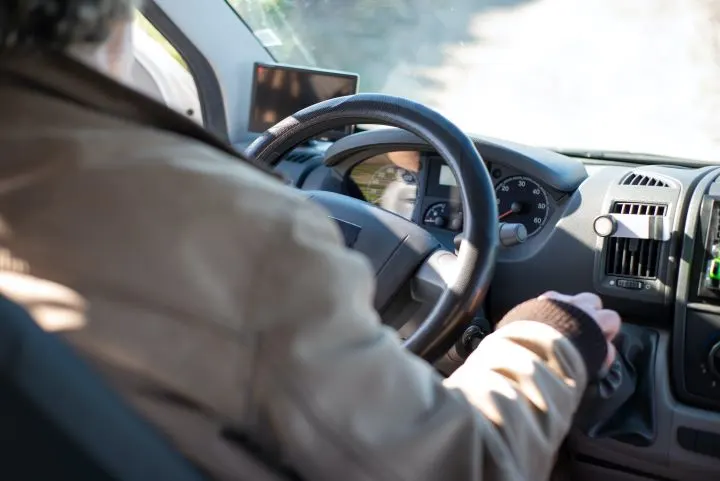
According to an S&P Global Mobility consumer survey, trust and familiarity remain barriers to car shoppers adopting autonomous driving technology. As the amount of vehicle automation increases, consumer desire decreases.
Each of the five most-desired ADAS features improves safety. Blind-spot warning ranks as the most desired feature, wanted by 83% of consumers. More than 80% of those surveyed want forward-collision warning and rear-mirror cameras. Other top-five desired features include automatic emergency braking for vehicles and pedestrians, as well as night vision.
“Exposure is helping to drive much of the desirability for these features,” said Yanina Mills, senior technical research analyst at S&P Global Mobility.
However, while autonomous driving features add convenience by reducing the tedium of driving, they fall well short of ADAS safety features when it comes to buyer desirability. “Safety versus convenience operate in two different ballparks of interest,” according to Brock Walquist, senior technical research analyst at S&P Global Mobility.
By contrast, consumer experience with self-driving is essentially nonexistent, further inhibiting its desirability. Whereas many automated safety features poll in the 80th percentile range, only 61% of the 7,732 global respondents expressed interest in self-driving, making it the least desirable ADAS feature listed in the survey.
But increased capability doesn’t increase buyer desire. Consumers still prefer automated driving features where the driver maintains more control. Only 69% of consumers desire level 2 autonomy. Even fewer, 65%, buyers desire level 2-plus hands-off automated highway driving.
Among those polled, 53% felt that an autonomous car would drive more efficiently than a normal car, 48% felt that it would be safer, and 27% would use it to relieve tedious driving conditions.
Optimism about self-driving cars remains cautious at best – bearing in mind that “consideration” is high up the purchase funnel before purchase papers get signed. If manufacturers want to convince more buyers that autonomous driving systems are worthwhile, they need to better communicate their benefits, Mills said.
Consumer sentiment is different across regions. Consumers in mainland China, for example, have consistently shown the highest desirability scores for self-driving technology, while consumers in the U.S., U.K. and Germany show the lowest scores in these areas.
“Consumers don’t exactly know how it is going to work. There is confusion,” Mills said. “They are asking, ‘Is it self-driving, or is it just going to help me a bit and I still have to focus?’”
The evolving nature of automated driving poses challenges to OEMs who want to sell the systems and to consumers who are weighing their purchases. Automakers will need to better define the benefits of autonomy to improve its desirability to consumers.
More Dealer Ops

How to Avoid Phone Scams | Dealer Debrief 09/10/2026
Are you taking the necessary steps to protect your dealership and customer data from phone-based scams? This week's Dealer Debrief breaks down how!
Read More →
Dealer Debrief: August Auto Sales
Gas-powered engines still dominate the U.S. vehicle market, but hybrids are gaining ground as consumers look for ways to cut their gas costs.
Read More →
Dealership Profits Decline
While new and used retail sales stagnated, dealerships have been particularly supported by fixed operations and finance-and-insurance profits, according to a new report.
Read More →
Dealer Debrief: Defection Data & EV Updates
In this week's debrief, host Lauren Lawrence discusses how to use defection data to your advantage and the latest on EV sales and charging infrastructure.
Read More →
How Defection Data is Bridging the Dealership Conversion Gap
Lead volume is flat, cross-shopping is up and brand loyalty is in retreat. As confident sales teams keep losing buyers they thought they had, daily industry sales data is showing dealers exactly where their funnel is breaking and how to fix it without buying a single new lead.
Read More →
Dealer Debrief: Where are you losing customers?
In this week's debrief, host Lauren Lawrence discusses the hidden leaks in dealerships where you might be losing customers without even realizing it.
Read More →
Dealer Debrief: Improving Your Inventory Management
In this week's debrief, host Lauren Lawrence covers a new survey that shows what service technicians really want and two launches that could help improve your inventory and vehicle life cycle management.
Read More →
Ladies and Gentlemen, This Is a Dealership: Why the Fundamentals Still Decide Who Wins
A teaching moment by a legendary football coach happens to apply perfectly in the auto retail space. Learn what it is and how to use it to your store’s advantage.
Read More →
Dealer Ads and the FTC
The agency has made it clear in recent enforcement actions and warnings, in auto retail and other industries, that advertised prices must include all nonoptional costs to the consumer.
Read More →
Used Autos Supply Dwindles
The March shopping surge, despite high prices, cut into inventory by the most since the thick of the pandemic, Cox Automotive analysts calculated.
Read More →