



7 Keys to Success in the BHPH Business
Buy here pay here expert, Mark Dubois, discusses the seven keys to success in the BHPH business, which are: Capital, Inventory, Deal Structure, Underwriting, Collections, Repeat/Referral Business, and Networking.

Whether you are a dealer currently in the BHPH business or are just exploring the idea of getting into the BHPH business, there are seven keys to BHPH which will provide a great roadmap for success.
1. Capital
Successful BHPH dealers have a clear understanding of the amount of capital required to operate and sustain their businesses. A formal cash flow projection based on your specific business model is one of the most important steps to take in identifying your capital requirements. Industry statistics provided by Tom Webb of Manheim Consulting this past May showed that the year-over-year auction price of compact cars had increased 17.7 percent and mid-size cars had increased 13.3 percent during the same period. Webb also demonstrated that the average mileage on auction vehicles has increased substantially in the past few years, contributing to increased reconditioning expense. Based on an average acquisition cost of $5,000 with an average increase of 15.5 percent ($775) combined with an increased reconditioning cost of $200 per vehicle, and a sales rate of 20 vehicles per month, the additional capital required annually to sustain your BHPH business would be $234,000.
Did you factor the additional capital into your cash flow projection? Do you have access to the additional capital required? Access to capital is one thing; qualifying for the capital you may require is another. Most companies providing capital to BHPH dealers will require that you substantiate your historical business performance in a number of key areas in order to qualify for capital.
2. Inventory
In most cases, the single largest expense in operating a BHPH business is the cost of vehicle inventory. To further complicate this matter, sluggish new car sales (meaning fewer trade-ins) combined with the negative impact from the Cash for Clunkers program have made acquiring inventory one of the biggest challenges. The most successful BHPH dealers have a wide range of resources from which to acquire inventory. The largest and most obvious sources of inventory are wholesale auctions. Find auctions where the vehicles available for sale fit the acquisition cost of your business model.
Another viable option for sourcing inventory is to develop a network of new-car dealers in your area who will agree to sell you the trade-ins they don’t want. These relationships take time to develop, and you will have to buy junk cars along with the vehicles you really want if you’re going to have any success with this plan. More and more BHPH dealers are reporting great success in buying vehicles from private sellers. One of the keys to success for this plan is to advertise boldly and prominently that you buy vehicles from the public. Finally, considering the increased cost to acquire inventory, many dealers are charging off repossessed vehicles, assigning realistic cash values, and reconditioning and reselling the vehicle.
3. Deal Structure
One of the most important fundamental concepts to understand about the BHPH business is that it is the finance business, not the car business. Although delinquency and charge-offs are facts of life in the BHPH business, successful dealers understand that it is their responsibility to make the customer successful in paying off the loan. The degree to which a dealer can successfully combine the key components of deal structure (vehicle selection, down payment, weekly payment and loan term) will increase the odds of a customer successfully paying off the loan. In addition, calculating the applicant’s net-income-to-payment ratio to determine whether the customer can afford the loan payment will likely do more to increase the odds of successful payment of the loan than almost anything else. Finally, the customer and the customer’s down payment should be viewed separately in assessing a loan application. The temptation is to let a strong down payment drive the loan approval decision. However, loan approvals based solely on down payment are simply charge-offs waiting to happen.
4. Underwriting
The objective of underwriting is to determine the degree of risk associated with a loan application and whether the applicant is the right customer for your loan portfolio. Take the time to verify the information provided by the applicant prior to making a loan decision. Key information such as time at residence; time on job; income; residence, job, loan and payment histories; credit impairment; and references are all critical things to evaluate and verify prior to making a loan decision. Pulling a credit report on an applicant is done primarily to verify the honesty and accuracy of the information provided on the loan application.
Many BHPH dealers also use a loan-scoring program to determine a numerical value associated with deal structure. The purpose is to assess the risk associated with the deal structure against the established guidelines of their loan approval policies.
5. Collections
Another important fundamental concept to understand about the BHPH business is that this is the collection business, not the sales business. The most successful BHPH dealers devote a significant amount of time and energy to establishing effective policies and procedures for their collection departments. It is vital for the staff to be very consistent with handling customer delinquency and collections. The same consistency applies to policies and procedures for repossessing a customer’s vehicle. Working with customers to keep them in the vehicle and making car payments during difficult times will not only create good customer relationships but also minimize repossessions.
Recent developments in technology have made payment methods such as debit cards and ACH payments possible. Many BHPH dealers are implementing an online payment feature to their websites to make payments easier and more convenient for customers.
6. Repeat and Referral Business
Successful BHPH dealers rely heavily on repeat and referral business. “Organic growth,” as it is referred to, requires creating a culture at your BHPH business where customers are treated with dignity and respect. Growth of your customer portfolio also requires developing effective promotions that reward existing customers for renewing their loan, or for referring new customers to your BHPH business. Most business people understand that getting new customers is more expensive than retaining current ones. Promotional rewards such as cash, gift cards, gas cards, electronics, recreational items, reduced down payments, or forgiving a low balance on an existing loan will provide an incentive for your customers to repeat or refer customers to your business.
7. Networking
Twenty groups, or performance groups, provide dealers with an opportunity to analyze their businesses and compare results with other non-competing BHPH dealers from across the country. Successful BHPH dealers understand that by analyzing their business performance, comparing ideas, sharing challenges and discussing best practices with other dealers, they gain valuable input to guide and direct their business decisions.
BHPH is a challenging business, but it can be an extremely profitable one if it’s done correctly.
Vol. 8, Issue 10
More Dealer Ops
How to Avoid Phone Scams | Dealer Debrief 09/10/2026
Are you taking the necessary steps to protect your dealership and customer data from phone-based scams? This week's Dealer Debrief breaks down how!
Read More →
Dealer Debrief: August Auto Sales
Gas-powered engines still dominate the U.S. vehicle market, but hybrids are gaining ground as consumers look for ways to cut their gas costs.
Read More →
Dealership Profits Decline
While new and used retail sales stagnated, dealerships have been particularly supported by fixed operations and finance-and-insurance profits, according to a new report.
Read More →
Dealer Debrief: Defection Data & EV Updates
In this week's debrief, host Lauren Lawrence discusses how to use defection data to your advantage and the latest on EV sales and charging infrastructure.
Read More →
How Defection Data is Bridging the Dealership Conversion Gap
Lead volume is flat, cross-shopping is up and brand loyalty is in retreat. As confident sales teams keep losing buyers they thought they had, daily industry sales data is showing dealers exactly where their funnel is breaking and how to fix it without buying a single new lead.
Read More →
Dealer Debrief: Where are you losing customers?
In this week's debrief, host Lauren Lawrence discusses the hidden leaks in dealerships where you might be losing customers without even realizing it.
Read More →
Dealer Debrief: Improving Your Inventory Management
In this week's debrief, host Lauren Lawrence covers a new survey that shows what service technicians really want and two launches that could help improve your inventory and vehicle life cycle management.
Read More →
Ladies and Gentlemen, This Is a Dealership: Why the Fundamentals Still Decide Who Wins
A teaching moment by a legendary football coach happens to apply perfectly in the auto retail space. Learn what it is and how to use it to your store’s advantage.
Read More →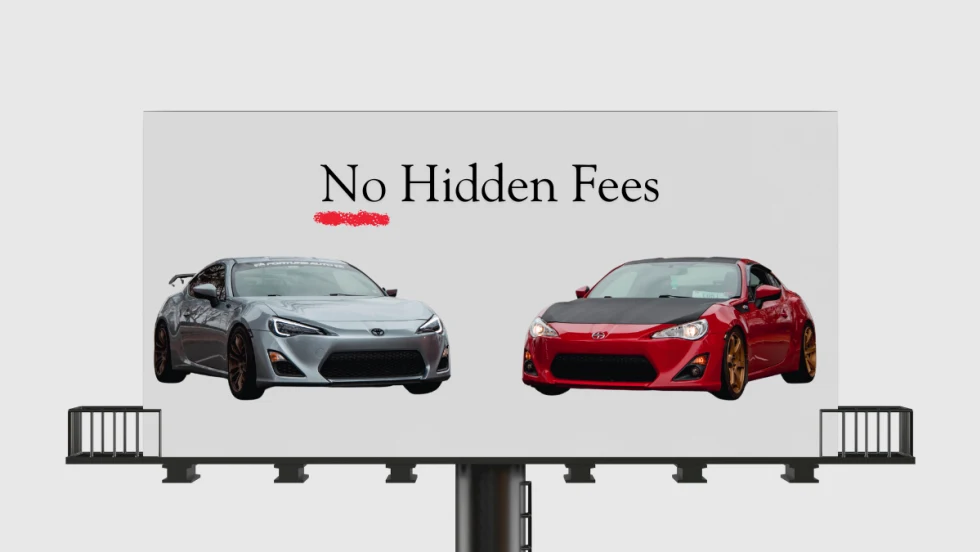
Dealer Ads and the FTC
The agency has made it clear in recent enforcement actions and warnings, in auto retail and other industries, that advertised prices must include all nonoptional costs to the consumer.
Read More →
Used Autos Supply Dwindles
The March shopping surge, despite high prices, cut into inventory by the most since the thick of the pandemic, Cox Automotive analysts calculated.
Read More →