



Less Is More
Customers just want the facts, so elaboration is best left off the desk. Listening and other skills will get you further down the road to product sales.


Sharing everything you know, whether asked or not, is rarely a good idea.
I am a firm believer that in sales, less is more. In our business, this premise may be more valid than any other.
We often teach salespeople that to excel, they need to be product-knowledge experts on each model of vehicle the dealership offers. Product knowledge, and the process of gaining it, can be a catalyst for growth, confidence and the professional development of any new salesperson.
Handling Questions
The same can be said for F&I managers. I share with all new F&I managers that they should never be in a position of not knowing an answer to a customer’s question about a product that they have offered.
The good news is that when a customer asks a question about a product, the salespeople and F&I managers that have put forth the effort, and have invested the time to become product experts, are prepared and ready to share what they have learned.
The bad news is that when asked a product question, some choose to share everything they know about the product instead of answering the question asked. They over-answer the question. In doing this, they can effectively turn a positive, like expert level product knowledge, into a negative.
Sharing everything you know, whether asked or not, is rarely a good idea. A clear, concise and direct response to the question asked trumps volume of information just about every time. After all, why use 10 words when one will do?
Knowing how to answer and when to stop answering takes some skill, awareness and experience. As it turns out, not all customers are as interested in the details as you might think.
What to do Differently
So why is it so hard for some salespeople and F&I managers to get to the point? One reason may be that they don’t have one. They have either not thoughtfully considered the question asked and how to answer the question before responding, or they lack confidence or experience all of which can lead to over-answering.
People speak at about 150 words per minute, but they process words at about 750 words per minute. Too much information without getting to the point can bore your customer. Over-answering can hurt your credibility and erode trust, and that can result in either a quick “no, thank you” or silence when you stop talking. Neither of which is good.
For salespeople and F&I managers, more concise and direct answers can lead to more customer questions, which is good. Each question asked can give you more insight into what your customer needs, or what problems you can solve with the benefits and features of your products.
Listen Up
Less talking also leads to more listening. Many times in sales, actively listening can enhance your ability to influence and persuade more than words can. When done effectively, active listening will give you a better idea of what to say or how to respond. You can be more targeted, specific, concise and direct, all of which are good.
Another example of when less is more is when handling a customer concern. When a customer raises a concern, I often hear salespeople and F&I mangers over-empathize with the customer by offering a long, drawn-out response on how they understand, or how they are just like the customer or share the same issue.
An example that I hear often is when the customer says, “That payment is a lot higher than I expected.” The F&I manager responds with, “I understand Mr. and Mrs. Customer. Everything is so expensive these days, and I get it. I’m on a budget, too.”
This is a great example of why we sometimes use 10 words when one will do. They do this usually because they need time to think of how to respond, so they talk until something comes to them. Instead, it might be better to just acknowledge the statement with “OK,” then pause and take a moment to think of what to say or the best way to respond.
Ask Your Own Question
Lastly, less is more when asking for business. If a customer raises one of three common hesitations to buy, such as cost, need or urgency, offer a solution and close by simply asking for action. Once you have offered a solution, ask for action and the business.
The old tried-and-true still works. “If that works, I just need your approval.” Less talking and more listening from us will lead to more yeses from your customers.
More Dealer Ops
How to Avoid Phone Scams | Dealer Debrief 09/10/2026
Are you taking the necessary steps to protect your dealership and customer data from phone-based scams? This week's Dealer Debrief breaks down how!
Read More →
Dealer Debrief: August Auto Sales
Gas-powered engines still dominate the U.S. vehicle market, but hybrids are gaining ground as consumers look for ways to cut their gas costs.
Read More →
Dealership Profits Decline
While new and used retail sales stagnated, dealerships have been particularly supported by fixed operations and finance-and-insurance profits, according to a new report.
Read More →
Dealer Debrief: Defection Data & EV Updates
In this week's debrief, host Lauren Lawrence discusses how to use defection data to your advantage and the latest on EV sales and charging infrastructure.
Read More →
How Defection Data is Bridging the Dealership Conversion Gap
Lead volume is flat, cross-shopping is up and brand loyalty is in retreat. As confident sales teams keep losing buyers they thought they had, daily industry sales data is showing dealers exactly where their funnel is breaking and how to fix it without buying a single new lead.
Read More →
Dealer Debrief: Where are you losing customers?
In this week's debrief, host Lauren Lawrence discusses the hidden leaks in dealerships where you might be losing customers without even realizing it.
Read More →
Dealer Debrief: Improving Your Inventory Management
In this week's debrief, host Lauren Lawrence covers a new survey that shows what service technicians really want and two launches that could help improve your inventory and vehicle life cycle management.
Read More →
Ladies and Gentlemen, This Is a Dealership: Why the Fundamentals Still Decide Who Wins
A teaching moment by a legendary football coach happens to apply perfectly in the auto retail space. Learn what it is and how to use it to your store’s advantage.
Read More →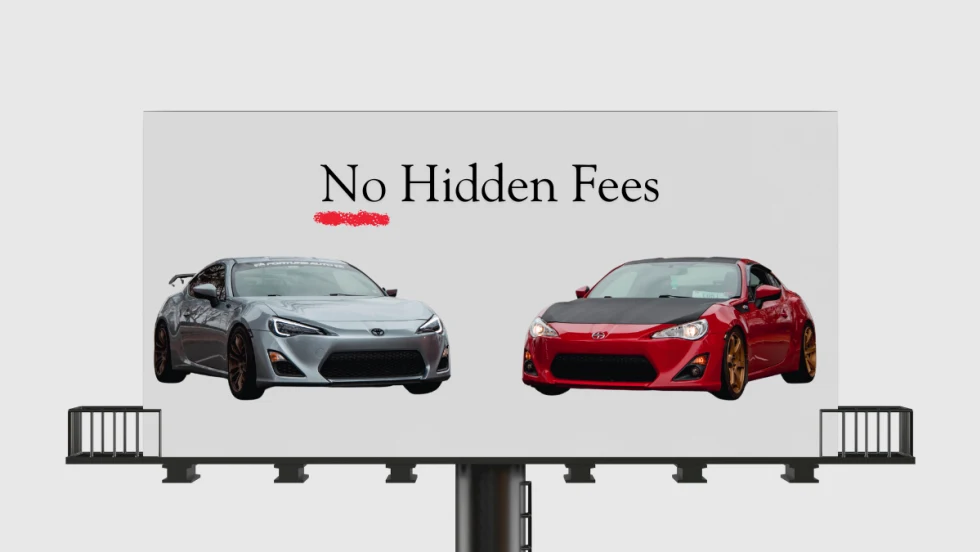
Dealer Ads and the FTC
The agency has made it clear in recent enforcement actions and warnings, in auto retail and other industries, that advertised prices must include all nonoptional costs to the consumer.
Read More →
Used Autos Supply Dwindles
The March shopping surge, despite high prices, cut into inventory by the most since the thick of the pandemic, Cox Automotive analysts calculated.
Read More →