



Opinion: Mercedes-Benz Does Facilities Right
In an industry fraught with dealer-factory tension, Mercedes-Benz launched its Autohaus II initiative in cooperation with and in support of its franchisees.
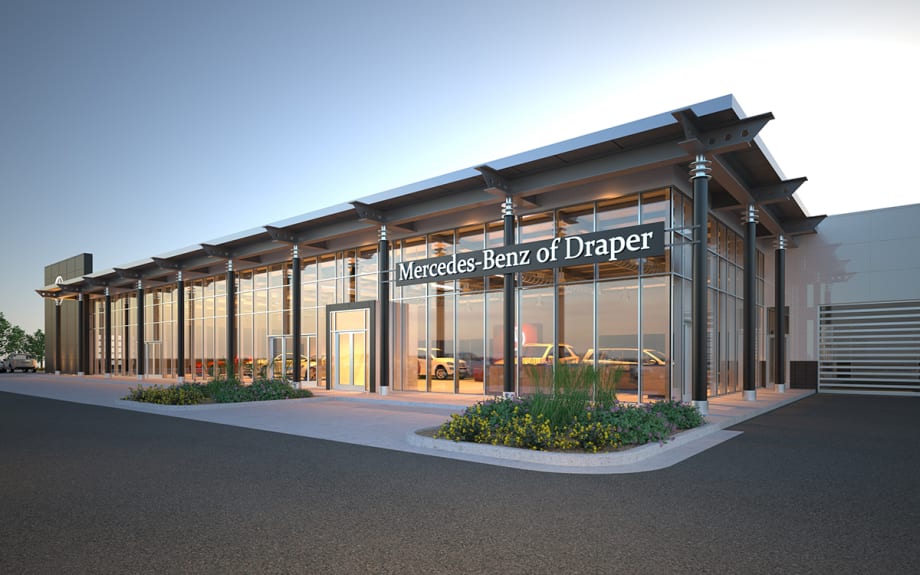
Mercedes-Benz of Draper (Utah) is among the German brand’s 300 U.S. stores. Dealers who have completed the Autohaus II facilities upgrade will not be asked to renovate again until 2024.
Photo courtesy TallyCM
For the last five years, I have worked at the intersection of construction and automotive — two industries that I am passionate about and love. This experience has taught me many lessons, but the lessons that I am consistently reminded of and live by is the power of having a strong brand. The Mercedes-Benz brand is a testament to the powerful balance of having great products and people.
Over the last two years, we’ve had the pleasure of working with multiple Mercedes-Benz dealerships in support of their Autohaus II facilities improvement initiative. The program seeks to enhance the customer experience by updating the functionality and image of their 300-plus U.S. dealerships.
While the Autohaus II initiative has brought challenges, we admire how Mercedes-Benz, as a manufacturer, handled themselves throughout the entire process. Here are some of the things we have taken away from the luxury brand and how they approached the initiative:
• Reasonable terms: The Autohaus II program is ambitious. It involves dealers investing in the brand, and that takes trust. Former Mercedes-Benz CEO Steve Cannon helped gain that trust by initiating the “2024” pledge. Essentially, he guaranteed dealers that once they had met Autohaus II standards, they would not be required to update their facilities until 2024.
This agreement was well-received by dealers. When Cannon left the company in late 2015, many feared the pledge would leave with him, that was until the brand’s current U.S. chief, Dietmar Exler, reassured dealers that he is fully behind Cannon’s initial promise.
All too many dealers and auto groups have been subjected to the collateral damage that comes along with a manufacturer’s C-level turnover. Mercedes-Benz’s directors demonstrated to dealers that they can maintain a unified front, even in times of leadership change. They listen to their stakeholders.
• Flexibility over frugality: Timelines are important in business. That’s undeniable. But one of the trappings many large companies fall into is setting a universal hard deadline. The construction process is intricate and complex. There are just some deadlines that cannot be met.
Mercedes-Benz understands this reality and works with their dealers to help them succeed. The brand had set a goal for all of their U.S. stores to be renovated by June of 2018, but they also said they were willing to work with a dealer if they had issues with zoning or contractors. What is most important to Mercedes-Benz is that dealers are putting in an effort to help strengthen the brand and the customer’s experience within their dealerships.
• Relationships are everything: Whether it be building beautiful cars, servicing customers at a high level, or maintaining a brand synonymous with excellence, it’s clear Mercedes-Benz understands how to develop and maintain dealer relationships.
The way that the factory handles these interactions is a case study for start-ups looking to build a dealer or franchisee network. Mercedes-Benz knows that it is not just important but necessary to care for their dealers, because the brand’s legacy is in their hands.
The best example of how they maintain relationships is the most important: how they treat their customers. Mercedes-Benz knows that you don’t just need to care about the car, you need to care about the customer, and dealers are distinctly aware that their relationship with customers directly impacts the brand.
Over its long history, Mercedes-Benz has forged a legacy rivaled by few. But they didn’t do this by resting on their laurels. In their eyes, they truly must be the best or nothing else. There is something to be learned from that. Mercedes-Benz does not just sell luxury cars; they sell a luxury experience. They believe that their facilities serve that goal.
Brent Tally is the founder and president of TallyCM, a firm that specializes in the design and construction of automotive facilities. Email him at brent.tally@bobit.com.
More Dealer Ops

Dealer Debrief: August Auto Sales
Gas-powered engines still dominate the U.S. vehicle market, but hybrids are gaining ground as consumers look for ways to cut their gas costs.
Read More →
Dealership Profits Decline
While new and used retail sales stagnated, dealerships have been particularly supported by fixed operations and finance-and-insurance profits, according to a new report.
Read More →
Dealer Debrief: Defection Data & EV Updates
In this week's debrief, host Lauren Lawrence discusses how to use defection data to your advantage and the latest on EV sales and charging infrastructure.
Read More →

How Defection Data is Bridging the Dealership Conversion Gap
Lead volume is flat, cross-shopping is up and brand loyalty is in retreat. As confident sales teams keep losing buyers they thought they had, daily industry sales data is showing dealers exactly where their funnel is breaking and how to fix it without buying a single new lead.
Read More →
Dealer Debrief: Where are you losing customers?
In this week's debrief, host Lauren Lawrence discusses the hidden leaks in dealerships where you might be losing customers without even realizing it.
Read More →
Dealer Debrief: Improving Your Inventory Management
In this week's debrief, host Lauren Lawrence covers a new survey that shows what service technicians really want and two launches that could help improve your inventory and vehicle life cycle management.
Read More →
Ladies and Gentlemen, This Is a Dealership: Why the Fundamentals Still Decide Who Wins
A teaching moment by a legendary football coach happens to apply perfectly in the auto retail space. Learn what it is and how to use it to your store’s advantage.
Read More →
Dealer Ads and the FTC
The agency has made it clear in recent enforcement actions and warnings, in auto retail and other industries, that advertised prices must include all nonoptional costs to the consumer.
Read More →
Used Autos Supply Dwindles
The March shopping surge, despite high prices, cut into inventory by the most since the thick of the pandemic, Cox Automotive analysts calculated.
Read More →
Managing Risk Effectively Through Changing Times
The variables influencing risk pricing have changed significantly over the past five years. Being proactive and responsive to emerging trends is not optional but essential.
Read More →