



American-Made EV Sales Soar in January
Tax credit change that requires EVs be assembled in North America cited for the surge.

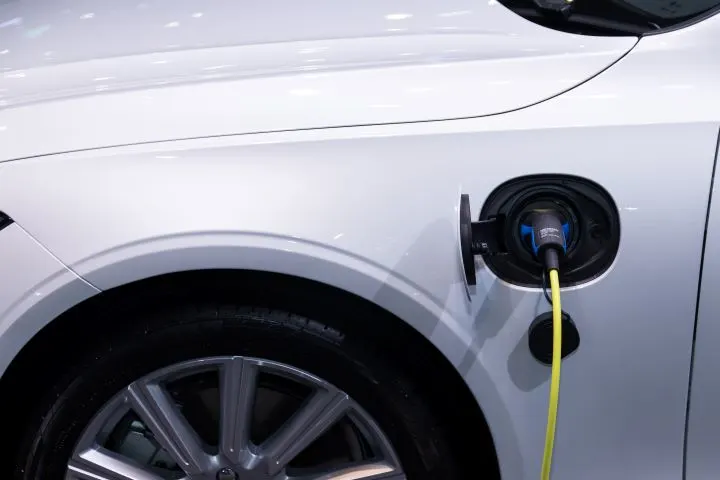
More customers will be charging an EV as jumped 7.1% in January.
Rathaphon Nanthapreecha
The Inflation Reduction Act’s revised electric vehicle standards are driving buyers to North American-made electric vehicles versus imported EVs from Hyundai and Kia, according to Experian new-vehicle registration data.
The act changed eligibility for the U.S. federal tax credit of up to $7,500 as of August. Now EVs must be assembled in North America to qualify.
Experian reported the top eight EVs in January were manufactured in North America. They include three Tesla models, two Ford EVs, and the Volkswagen ID4 crossover that entered production in Chattanooga last year.
The Hyundai Ioniq 5 crossover fell to ninth place from seventh, while Kia's Korean-made EV6 fell off the top 10 EVs in January after holding the eighth slot for all of 2022, according to Experian.
New EV registrations in January grew by almost 3%, from 4.3% to $7% of the U.S. light-vehicle market. Dealers sold 87,708 units compared to 50,338 a year earlier. By comparison, Experian showed new registrations for all light vehicles, regardless of fuel type, were at 1.24 million.
The tax credit revisions have slowed the growth of Korean imports from Hyundai Motor Group, which for much of 2022 ran second to Tesla.
Experian data also showed that in January:
Tesla saw its EV market share fall from 74% to 57%.
Chevrolet captured the second spot with an 8.5% share.
Ford took third with 7.7%.
Volkswagen came in fourth at 4.6% of the market.
Hyundai came in fifth with 3% market share.
On Jan. 1, the new incentive became available to Tesla and General Motors again. The automakers had lost the tax break because they had reached the manufacturer quota of 200,000 vehicles under the old rules.
The only unknown that remains with the act is the tax incentive rules for battery sourcing, which the government hasn’t yet finalized. The new rules could reduce the credit to $3,750 for some models made in North America.
Many automakers are moving more EV and battery production to North America, which could quickly reverse the trends and move Kia and Hyundai to the top 10 again. Hyundai Motor Group has already announced plans to open EV and battery plants in North America.
The EV price war also ramped up sales for Tesla, which slashed prices across its lineup in mid-January to boost sales as it scales up U.S. vehicle production at a new factory in Austin, Texas. Chevrolet also trimmed the sticker price of its Bolt EV and larger Bolt EUV.
Tesla doesn't break out EV sales by model, so new-vehicle registration numbers provide the most accurate sales by model estimates available.
The Tesla's Model Y crossover took the top spot with 28,833 new registrations, a 56% year-over-year increase. The Tesla Model 3 sedan took the second spot with 17,526 new registrations, a 29% increase. Together, the Model 3 and Model Y represented 53% of all EV registrations in January. The figure is a 64% year-over-year drop.
The Chevrolet Bolt models captured two spots in the top 10. The Bolt EUV took third place with 4,928 registrations and the Bolt EV took eighth place with 2,526.
Volkswagen's ID4 held the fourth spot with 4,049 registrations compared with 1,153 a year earlier, an increase of 251%.
Ford's Mustang Mach-E crossover slipped from third place for full-year 2022 to fifth in January. Still, the Mach-E's 3,286 registrations for the month were up 19% year-over-year. Ford had a second vehicle in the top 10 for the first time: The F-150 Lightning pickup took sixth place with 2,918 registrations.
More Dealer Ops

How to Avoid Phone Scams | Dealer Debrief 09/10/2026
Are you taking the necessary steps to protect your dealership and customer data from phone-based scams? This week's Dealer Debrief breaks down how!
Read More →
Dealer Debrief: August Auto Sales
Gas-powered engines still dominate the U.S. vehicle market, but hybrids are gaining ground as consumers look for ways to cut their gas costs.
Read More →
Dealership Profits Decline
While new and used retail sales stagnated, dealerships have been particularly supported by fixed operations and finance-and-insurance profits, according to a new report.
Read More →
Dealer Debrief: Defection Data & EV Updates
In this week's debrief, host Lauren Lawrence discusses how to use defection data to your advantage and the latest on EV sales and charging infrastructure.
Read More →
How Defection Data is Bridging the Dealership Conversion Gap
Lead volume is flat, cross-shopping is up and brand loyalty is in retreat. As confident sales teams keep losing buyers they thought they had, daily industry sales data is showing dealers exactly where their funnel is breaking and how to fix it without buying a single new lead.
Read More →
Dealer Debrief: Where are you losing customers?
In this week's debrief, host Lauren Lawrence discusses the hidden leaks in dealerships where you might be losing customers without even realizing it.
Read More →
Dealer Debrief: Improving Your Inventory Management
In this week's debrief, host Lauren Lawrence covers a new survey that shows what service technicians really want and two launches that could help improve your inventory and vehicle life cycle management.
Read More →
Ladies and Gentlemen, This Is a Dealership: Why the Fundamentals Still Decide Who Wins
A teaching moment by a legendary football coach happens to apply perfectly in the auto retail space. Learn what it is and how to use it to your store’s advantage.
Read More →
Dealer Ads and the FTC
The agency has made it clear in recent enforcement actions and warnings, in auto retail and other industries, that advertised prices must include all nonoptional costs to the consumer.
Read More →
Used Autos Supply Dwindles
The March shopping surge, despite high prices, cut into inventory by the most since the thick of the pandemic, Cox Automotive analysts calculated.
Read More →