



Auto Shoppers' Woes to Continue in 2023
More cars are available, but record prices and rising interest rates will challenge customers.


Customers can expect more choices amid record prices and higher rates.
Erik McClean
Vehicle inventories are growing, but shoppers may still experience supply constraints and record prices.
The average new-vehicle price now sits at about $46,000, a $10,000 increase over 2019.
The National Auto Dealers Association reports that the industry sold 13.7 million new cars and trucks last year, the lowest number of total sales since 2011.
The association blames the reduced totals on the semiconductor microchip shortage and supply-chain disruptions.
Inventory levels rose 49% by the end of 2022 compared to year’s end in 2021. The shift has NADA projecting the industry will sell 14.6 million new vehicles in 2022, a 6.6% increase. Though better, that number falls short of the 17.1 million sold in 2019.
Auto dealerships struggled in 2022 to keep their lots full. They sold into the pipeline, meaning vehicles were sold before they arrived. Now inventories are better, but challenges remain.
NADA Chief Economist Patrick Manzi says inventories for some brands are in better shape than others. But he warns that shoppers will have limited options if they don’t order from the factory. Automakers, he says, have said they will not overproduce vehicles. The days of packed lots with many choices may be behind the industry.
Rising interest rates add to car customers’ concerns. When added to higher vehicle prices and supply issues, that may also make shopping for a vehicle more difficult.
According to NADA, interest rates average 6.4% for loans on new cars and 9.7% for loans on used vehicles. Manzi said he expects rates to go up in the first half of the year.
In 2022, automakers focused their limited resources on producing more profitable, higher trim-level vehicles. Manzi predicts they will shift production back to more affordable models this year.
Automaker incentives remain down. Incentives have steadily declined from the over $4,000 per vehicle offered in 2020. But Manzi predicts a rise in the incentives, which sat at about $1,000 per vehicle in 2022, if inventory grows in the back half of the year.
More Dealer Ops
How to Avoid Phone Scams | Dealer Debrief 09/10/2026
Are you taking the necessary steps to protect your dealership and customer data from phone-based scams? This week's Dealer Debrief breaks down how!
Read More →
Dealer Debrief: August Auto Sales
Gas-powered engines still dominate the U.S. vehicle market, but hybrids are gaining ground as consumers look for ways to cut their gas costs.
Read More →
Dealership Profits Decline
While new and used retail sales stagnated, dealerships have been particularly supported by fixed operations and finance-and-insurance profits, according to a new report.
Read More →
Dealer Debrief: Defection Data & EV Updates
In this week's debrief, host Lauren Lawrence discusses how to use defection data to your advantage and the latest on EV sales and charging infrastructure.
Read More →
How Defection Data is Bridging the Dealership Conversion Gap
Lead volume is flat, cross-shopping is up and brand loyalty is in retreat. As confident sales teams keep losing buyers they thought they had, daily industry sales data is showing dealers exactly where their funnel is breaking and how to fix it without buying a single new lead.
Read More →
Dealer Debrief: Where are you losing customers?
In this week's debrief, host Lauren Lawrence discusses the hidden leaks in dealerships where you might be losing customers without even realizing it.
Read More →
Dealer Debrief: Improving Your Inventory Management
In this week's debrief, host Lauren Lawrence covers a new survey that shows what service technicians really want and two launches that could help improve your inventory and vehicle life cycle management.
Read More →
Ladies and Gentlemen, This Is a Dealership: Why the Fundamentals Still Decide Who Wins
A teaching moment by a legendary football coach happens to apply perfectly in the auto retail space. Learn what it is and how to use it to your store’s advantage.
Read More →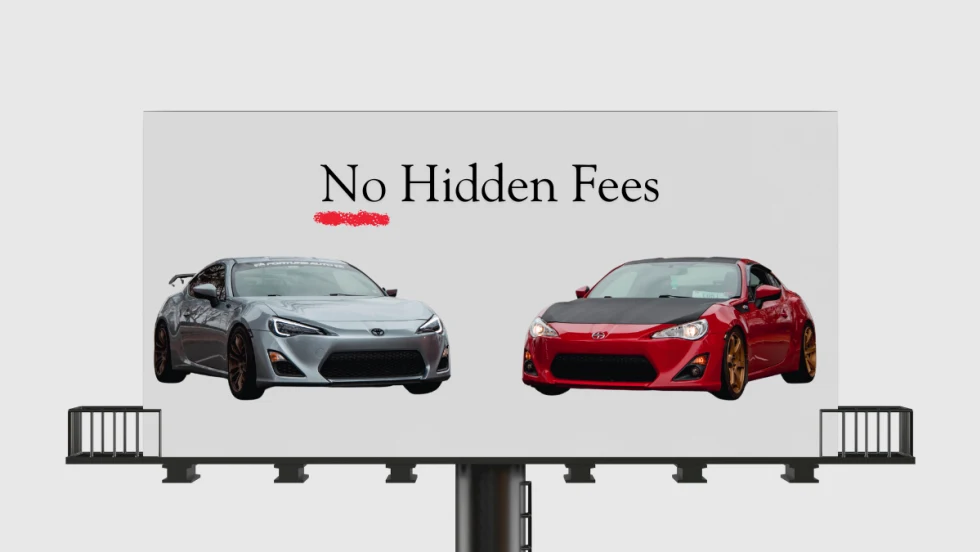
Dealer Ads and the FTC
The agency has made it clear in recent enforcement actions and warnings, in auto retail and other industries, that advertised prices must include all nonoptional costs to the consumer.
Read More →
Used Autos Supply Dwindles
The March shopping surge, despite high prices, cut into inventory by the most since the thick of the pandemic, Cox Automotive analysts calculated.
Read More →