



Dealers Will Not Feel Recession Impacts Immediately
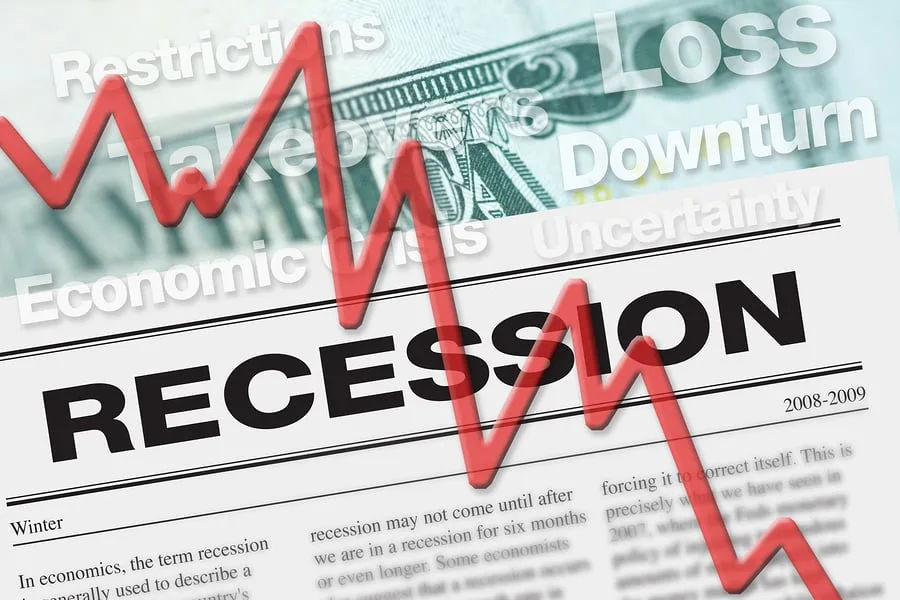
A recession won’t affect U.S. auto dealers and manufacturers until the 12- to 18-month range, says Jonathan Smoke, chief economist-Cox Automotive.

Creative Commons
The impacts of a recession won’t affect U.S. auto dealers and manufacturers until the 12- to 18-month range, says Jonathan Smoke, chief economist-Cox Automotive.
“Most of the (economic) models and most of the individual market analysts and forecasters” don’t think a recession is imminent, “other than those who are deliberately seeking specific headlines or have a reason to be so negative in reading of the data,” Smoke says during a recent Cox Automotive panel discussion.
“And one of those data points being the low unemployment rate and the continued job creation, stable and historically low jobless claims and the general financial shape of the majority of households.”
However, Smoke says durable goods sales decline when prices of groceries and gasoline increase. They stay away from major purchases such as vehicles when these things happen.
Though vehicle sales suffer in a recession, there is evidence that the market for new vehicles is more insulated than in the past, says Charlie Chesbrough, Cox’s senior economist and senior director of industry insights.
“Buyers who would be most impacted by a downturn in the economy have already left the new vehicle market,” he says. “And where are these buyers going? Well, many can no longer afford a new vehicle, and they have moved to the used market. However, prices there are going higher too.”
Still, record gas prices, swings in the stock market, and negative politics impact consumer confidence, adds Smoke.
“The worry is, of course, that consumers will pull back if they have such negative views about the future,” says Smoke. “The only good news here that I can offer is that the index from the Morning Consult did not decline week over week as of (June 27) and the average price of unleaded nationally, according to AAA, declined nearly 2% week over week and is down 2.4% from a peak on June 13 at $5.02. That means one element that has been driving sentiment lower is at least no longer getting worse, at least in the near term.”
A strong labor market, ample credit, strong savings accounts, and wage growth are all positive signs.
Though dealer sentiment data points to a poor outlook and lower than the current market, Smoke says the numbers are still positive. “I think the key issue is uncertainty, and especially uncertainty from things that dealers cannot control, namely the economy and new-vehicle production,” he concludes.
More Dealer Ops

How to Avoid Phone Scams | Dealer Debrief 09/10/2026
Are you taking the necessary steps to protect your dealership and customer data from phone-based scams? This week's Dealer Debrief breaks down how!
Read More →
Dealer Debrief: August Auto Sales
Gas-powered engines still dominate the U.S. vehicle market, but hybrids are gaining ground as consumers look for ways to cut their gas costs.
Read More →
Dealership Profits Decline
While new and used retail sales stagnated, dealerships have been particularly supported by fixed operations and finance-and-insurance profits, according to a new report.
Read More →
Dealer Debrief: Defection Data & EV Updates
In this week's debrief, host Lauren Lawrence discusses how to use defection data to your advantage and the latest on EV sales and charging infrastructure.
Read More →
How Defection Data is Bridging the Dealership Conversion Gap
Lead volume is flat, cross-shopping is up and brand loyalty is in retreat. As confident sales teams keep losing buyers they thought they had, daily industry sales data is showing dealers exactly where their funnel is breaking and how to fix it without buying a single new lead.
Read More →
Dealer Debrief: Where are you losing customers?
In this week's debrief, host Lauren Lawrence discusses the hidden leaks in dealerships where you might be losing customers without even realizing it.
Read More →
Dealer Debrief: Improving Your Inventory Management
In this week's debrief, host Lauren Lawrence covers a new survey that shows what service technicians really want and two launches that could help improve your inventory and vehicle life cycle management.
Read More →
Ladies and Gentlemen, This Is a Dealership: Why the Fundamentals Still Decide Who Wins
A teaching moment by a legendary football coach happens to apply perfectly in the auto retail space. Learn what it is and how to use it to your store’s advantage.
Read More →
Dealer Ads and the FTC
The agency has made it clear in recent enforcement actions and warnings, in auto retail and other industries, that advertised prices must include all nonoptional costs to the consumer.
Read More →
Used Autos Supply Dwindles
The March shopping surge, despite high prices, cut into inventory by the most since the thick of the pandemic, Cox Automotive analysts calculated.
Read More →