



Ford Moves to Build More Components for EVs
Building more parts in-house rather than purchasing them from other suppliers makes financial sense and retains jobs, said CEO Jim Farley.

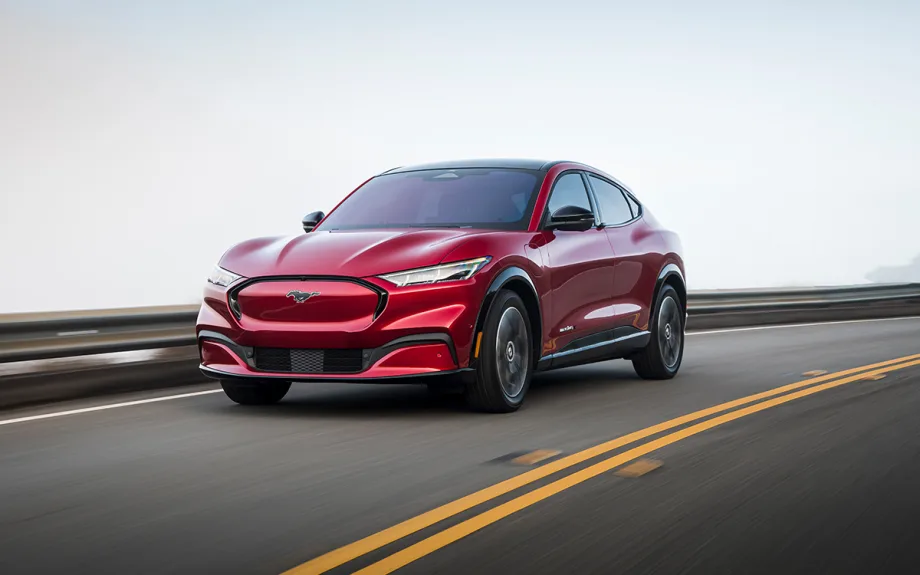
Building more parts in-house rather than purchasing them from other suppliers makes financial sense and retains jobs, said CEO Jim Farley.
IMAGE: Ford
Ford Motor Co. plans to build parts internally for its electric vehicles to offset the estimated 40% reduction in workers needed to build these vehicles, reported CEO Jim Farley.
Farley compared the strategy to the early days of auto manufacture when automakers made most components put in a vehicle. “We’re going back to where we were at the beginning of the century. Why? Because that’s where the value creation is. It’s a huge transformation,” Farley told reporters at an auto conference for the Rainbow Push Coalition.
Building more parts in-house rather than purchasing them from other suppliers makes financial sense and retains jobs, he said. The move, he added, will require Ford to build businesses for key components rather than acquire them.
The company purchased motors and batteries for the Mustang Mach-E crossover, but Farley said that in the future, that would not be necessary.
Ford is building two lithium-ion battery plants in central Kentucky as part of a joint venture with SK Innovation of South Korea. The venture is called BlueOvalSK. Ford also plans a 3,600-acre, $11.4 billion campus in west Tennessee.
Unionizing joint-venture battery plants will be up to workers of these plants, but Farley said Ford would be “thrilled” to have such representation. Currently, the United Auto Workers union is trying to organize a joint-venture battery plant between GM and LG Energy Solution in Ohio.
More Dealer Ops

How to Avoid Phone Scams | Dealer Debrief 09/10/2026
Are you taking the necessary steps to protect your dealership and customer data from phone-based scams? This week's Dealer Debrief breaks down how!
Read More →
Dealer Debrief: August Auto Sales
Gas-powered engines still dominate the U.S. vehicle market, but hybrids are gaining ground as consumers look for ways to cut their gas costs.
Read More →
Dealership Profits Decline
While new and used retail sales stagnated, dealerships have been particularly supported by fixed operations and finance-and-insurance profits, according to a new report.
Read More →
Dealer Debrief: Defection Data & EV Updates
In this week's debrief, host Lauren Lawrence discusses how to use defection data to your advantage and the latest on EV sales and charging infrastructure.
Read More →
How Defection Data is Bridging the Dealership Conversion Gap
Lead volume is flat, cross-shopping is up and brand loyalty is in retreat. As confident sales teams keep losing buyers they thought they had, daily industry sales data is showing dealers exactly where their funnel is breaking and how to fix it without buying a single new lead.
Read More →
Dealer Debrief: Where are you losing customers?
In this week's debrief, host Lauren Lawrence discusses the hidden leaks in dealerships where you might be losing customers without even realizing it.
Read More →
Dealer Debrief: Improving Your Inventory Management
In this week's debrief, host Lauren Lawrence covers a new survey that shows what service technicians really want and two launches that could help improve your inventory and vehicle life cycle management.
Read More →
Ladies and Gentlemen, This Is a Dealership: Why the Fundamentals Still Decide Who Wins
A teaching moment by a legendary football coach happens to apply perfectly in the auto retail space. Learn what it is and how to use it to your store’s advantage.
Read More →
Dealer Ads and the FTC
The agency has made it clear in recent enforcement actions and warnings, in auto retail and other industries, that advertised prices must include all nonoptional costs to the consumer.
Read More →
Used Autos Supply Dwindles
The March shopping surge, despite high prices, cut into inventory by the most since the thick of the pandemic, Cox Automotive analysts calculated.
Read More →