



Lending Tree: Used-Car Buyers Stretch for Some Brands
Lending Tree has ranked the used-car brands Americans will stretch their finances furthest to afford.
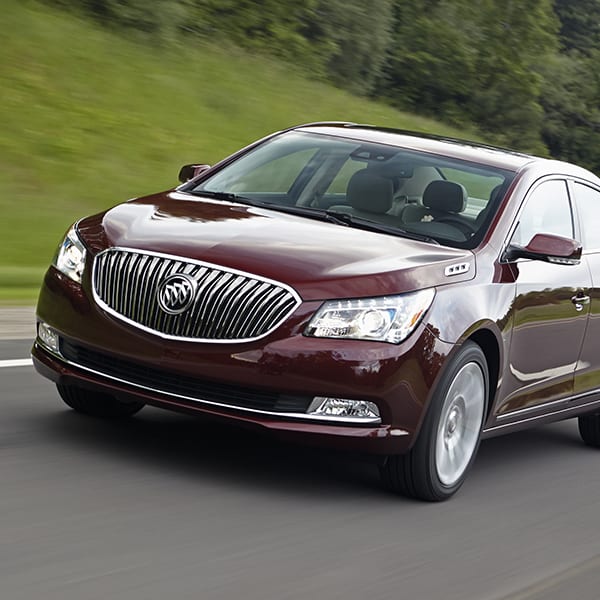
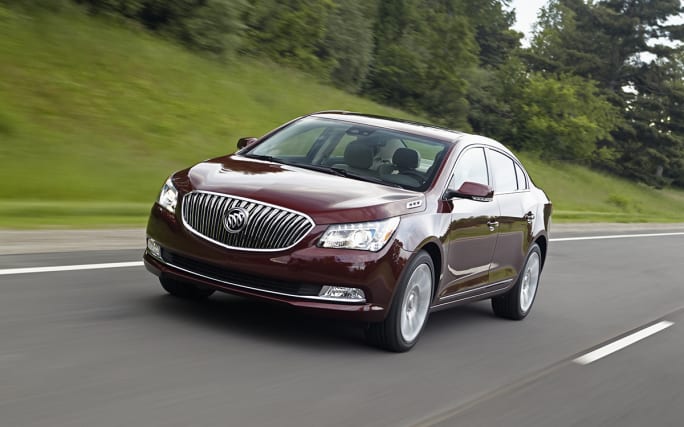
Buick topped the list of marques ranked by Lending Tree, which sought to determine which vehicles used-car buyers will stretch their finances the furthest to afford. Photo courtesy General Motors Co.
CHARLOTTE, N.C. — Online loan marketplace LendingTree has released the findings of its study on which car makes borrowers are stretching the most to afford. Contrary to popular assumptions, the results revealed that people aren’t going broke to buy used luxury cars. In fact, buyers of the most expensive cars seem to handily afford them.
On the other hand, LendingTree found Buick owners have the hardest time affording their car payments — not because they’re indulging in particularly expensive vehicles but because their income tends to be on the lower side, meaning they use a larger share of take-home pay to cover their monthly payments.
As unlikely as it seems, one of the most expensive car makes assessed is the one its buyers can most easily afford, and by a considerable amount. The reason for this is simple: Tesla buyers have the highest incomes out of all those who used the LendingTree platform to finance their purchase of used cars. LendingTree estimates buyers are spending about $54,234 to buy a used Tesla, with an average monthly payment of $818.
But because they’re such high earners, the average Tesla buyer is only spending an average of 4.6% of their reported monthly income to pay it off. To put that in context, the average used car buyer on LendingTree’s platform is estimated to pay 8.9% of their monthly income on car payments.
Tesla has good company with other luxury makers. Porsche is the second most expensive used car reviewed, with an average estimate price of $42,173 and an average estimated monthly payment of $635. Yet Porsche owners are only spending, on average, 5% of their monthly income on the car note. Volvo, Land Rover, Lincoln, Lexus, Audi and Acura are also affordable to their owners, who pay between 6-7% of their income toward their car debt.
Outside of the luxury market, Mini owners spend the smallest share of their income on their monthly payments. At 5.7%, they come in just behind Tesla and Porsche owners, but they do it by buying their cars for a humble $17,728, with monthly payments of about $355. Owners of the more popular Subaru also stay well within their means, spending just 7.2% of their monthly income on car payments of $361, for an average price tag of $19,219.
Buick and Chrysler owners who took out a loan to finance the purchase of a used car in 2017 are spending an average 10.9% of their monthly income to make $418 and $440 monthly payments, respectively. That’s more than twice the percentage of income that Tesla and Porsche owners spend on their car payments.
The buyers aren’t paying an exorbitant amount for those cars, relative to the other buyers on the platform; Buick buyers spent an average of $18,597 on their vehicles, and Chrysler buyers slightly less with an average of $18,497, but their reported monthly earnings fall on the lower end of the group, and they get the least favorable loan terms.
At 8.8% of their reported income, Cadillac owners are willing to spend the largest percentage of their monthly income among buyers of used luxury makes. They’re also willing to pay the healthy average price of about $25,294, which results in an average payment of $480.
Jump several places down the list to see other luxury cars, where several are clustered around 7.5 percent of monthly income. Jaguar, Infiniti, BMW and Mercedes-Benz owners paid about $27,734, $24,728, $25,038 and $28,792, respectively, which come to average monthly payments of $503, $454, $476 and $519, respectively.
“For most Americans, price and monthly payment are still significant deciding factors, as they are often searching for a vehicle to fit within a certain budget. Used cars offer a huge price advantage and are great for those who are less picky about having the most current features. But used cars often have fewer dealer incentives, such as low financing, to capture buyers,” explained Mike Ouyang of LendingTree’s auto division.
Originally posted on F&I and Showroom
More Dealer Ops

Dealership Profits Decline
While new and used retail sales stagnated, dealerships have been particularly supported by fixed operations and finance-and-insurance profits, according to a new report.
Read More →
Dealer Debrief: Defection Data & EV Updates
In this week's debrief, host Lauren Lawrence discusses how to use defection data to your advantage and the latest on EV sales and charging infrastructure.
Read More →
How Defection Data is Bridging the Dealership Conversion Gap
Lead volume is flat, cross-shopping is up and brand loyalty is in retreat. As confident sales teams keep losing buyers they thought they had, daily industry sales data is showing dealers exactly where their funnel is breaking and how to fix it without buying a single new lead.
Read More →
Dealer Debrief: Where are you losing customers?
In this week's debrief, host Lauren Lawrence discusses the hidden leaks in dealerships where you might be losing customers without even realizing it.
Read More →
Dealer Debrief: Improving Your Inventory Management
In this week's debrief, host Lauren Lawrence covers a new survey that shows what service technicians really want and two launches that could help improve your inventory and vehicle life cycle management.
Read More →
Ladies and Gentlemen, This Is a Dealership: Why the Fundamentals Still Decide Who Wins
A teaching moment by a legendary football coach happens to apply perfectly in the auto retail space. Learn what it is and how to use it to your store’s advantage.
Read More →
What Market Timing Mistakes Mean for Your Reinsurance Program
When volatility hits, dealer-owned reinsurance programs face a familiar temptation: pull back and wait for calmer waters. New data from BOK Financial shows why that instinct can quietly cost you years of surplus growth.
Read More →
Dealer Ads and the FTC
The agency has made it clear in recent enforcement actions and warnings, in auto retail and other industries, that advertised prices must include all nonoptional costs to the consumer.
Read More →
Used Autos Supply Dwindles
The March shopping surge, despite high prices, cut into inventory by the most since the thick of the pandemic, Cox Automotive analysts calculated.
Read More →
Managing Risk Effectively Through Changing Times
The variables influencing risk pricing have changed significantly over the past five years. Being proactive and responsive to emerging trends is not optional but essential.
Read More →