



NADA Issues Second Quarter 2022 U.S. Auto Sales and Economic Analysis
The National Automobile Dealers Association issued its analysis of U.S. auto sales and the economy for the second quarter of 2022.

The National Automobile Dealers Association issued its analysis of U.S. auto sales and the economy for the second quarter of 2022.
IMAGE: NADA
TYSONS, Va. — The National Automobile Dealers Association (NADA) issued its analysis of U.S. auto sales and the economy for the second quarter of 2022.
“As has been the case in recent months and for the last year, new-light vehicle sales continue to be limited by inventory constraints across all OEMs,” said Patrick Manzi, NADA chief economist. “At the end of the second quarter, inventory levels were up by 8.3% compared to the start of the year but remain down 12.3% year-over-year.”
The second quarter of 2022 closed with new-light vehicle sales in June totaling a SAAR of 13.0 million units, a decline of 16% compared to June 2021; however, sales were up by 2.3% compared to May 2022’s SAAR of 12.7 million units. For the second quarter, new light-vehicle sales averaged a SAAR of 13.4 million units, down 5% from 14.1 million units in the first quarter of 2022.
Alternative-fuel vehicles continued to gain market share with consumers showing increased interest in electrified vehicles, including battery electric, hybrid and plug-in hybrid vehicles, given increasingly high fuel prices. Through the second quarter, battery electric vehicles (BEVs) accounted for 4.8% of sales, hybrid vehicles accounted for 5.9% and plug-in hybrid vehicles (PHEV) accounted for 1.4% of sales. Year to date, franchised dealerships sold more than 106,000 BEVs, 32.5% of all BEVs sold. This number is anticipated to continue rising as more BEVs from traditional auto manufacturers hit dealership showrooms.
In June 2022, the average transaction price for a new light-vehicle was the highest on record at $45,844, an increase of 14.5% compared to June of 2021, according to J.D. Power. Prices have continued to rise as OEMs have prioritized the production of higher trim level, more expensive models while simultaneously reducing incentive spending. According to J.D. Power, average incentive spending per new vehicle was $930 at the end of June 2022, a decrease of 59.4% year-over-year and the second consecutive month below $1,000.
Monthly payments, in line with transaction prices, have also increased and reached $698 in June 2022, an increase of $79 or 12.8% versus June 2021, J.D. Power says. According to Edmunds, 12.7% of consumers who financed a new vehicle in June 2022 had a monthly payment of $1,000 or more, the highest on record and up from 7.3% in June 2021.
Click here to read the full June 2022 NADA Market Beat report.
More Dealer Ops
How to Avoid Phone Scams | Dealer Debrief 09/10/2026
Are you taking the necessary steps to protect your dealership and customer data from phone-based scams? This week's Dealer Debrief breaks down how!
Read More →
Dealer Debrief: August Auto Sales
Gas-powered engines still dominate the U.S. vehicle market, but hybrids are gaining ground as consumers look for ways to cut their gas costs.
Read More →
Dealership Profits Decline
While new and used retail sales stagnated, dealerships have been particularly supported by fixed operations and finance-and-insurance profits, according to a new report.
Read More →
Dealer Debrief: Defection Data & EV Updates
In this week's debrief, host Lauren Lawrence discusses how to use defection data to your advantage and the latest on EV sales and charging infrastructure.
Read More →
How Defection Data is Bridging the Dealership Conversion Gap
Lead volume is flat, cross-shopping is up and brand loyalty is in retreat. As confident sales teams keep losing buyers they thought they had, daily industry sales data is showing dealers exactly where their funnel is breaking and how to fix it without buying a single new lead.
Read More →
Dealer Debrief: Where are you losing customers?
In this week's debrief, host Lauren Lawrence discusses the hidden leaks in dealerships where you might be losing customers without even realizing it.
Read More →
Dealer Debrief: Improving Your Inventory Management
In this week's debrief, host Lauren Lawrence covers a new survey that shows what service technicians really want and two launches that could help improve your inventory and vehicle life cycle management.
Read More →
Ladies and Gentlemen, This Is a Dealership: Why the Fundamentals Still Decide Who Wins
A teaching moment by a legendary football coach happens to apply perfectly in the auto retail space. Learn what it is and how to use it to your store’s advantage.
Read More →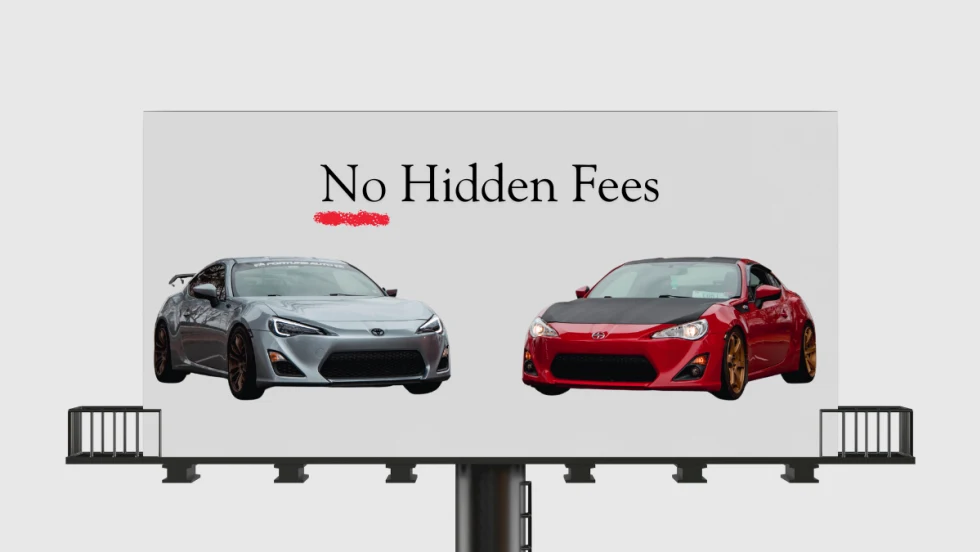
Dealer Ads and the FTC
The agency has made it clear in recent enforcement actions and warnings, in auto retail and other industries, that advertised prices must include all nonoptional costs to the consumer.
Read More →
Used Autos Supply Dwindles
The March shopping surge, despite high prices, cut into inventory by the most since the thick of the pandemic, Cox Automotive analysts calculated.
Read More →