



Nissan Raises Profit Outlook
The Japanese automaker forecasts operating profit for the fiscal year will hit 360 billion yen ($2.5 billion), up 100 billion yen from its July forecast.

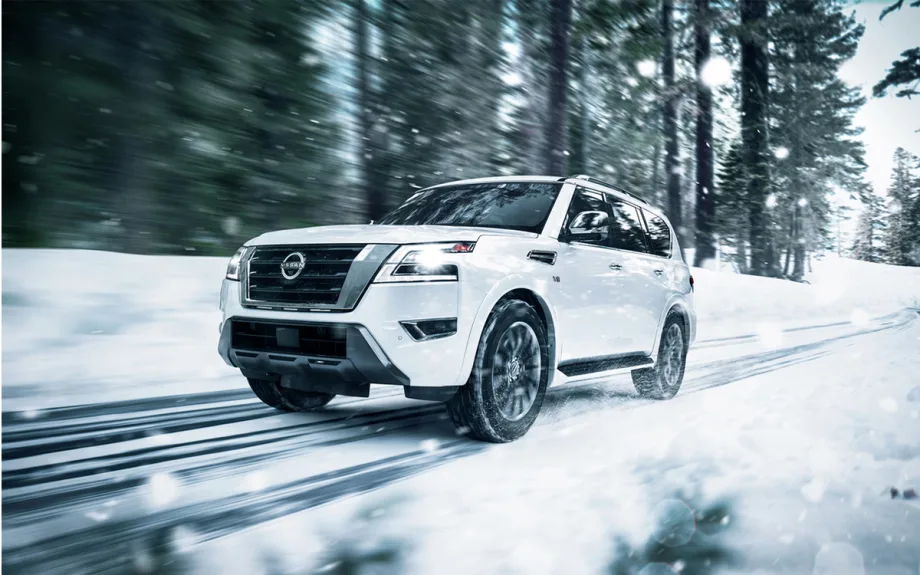
The Japanese automaker forecasts operating profit for the fiscal year will hit 360 billion yen ($2.5 billion), up 100 billion yen from its July forecast.
IMAGE: Nissan
A weak yen has buoyed Nissan Motor Co.’s profit outlook by boosting income amid a shortage of chips and supply-chain constraints that have curtailed production outputs.
The Japanese automaker forecasts operating profit for the fiscal year through March will hit 360 billion yen ($2.5 billion). That’s 100 billion more than the July forecast and exceeds analysts’ average estimate of 337 billion by 23 billion.
The yen’s historic decline has helped Japanese automakers as they face off against parts shortages and surging material costs. The currency slumped to a 32-year low against U.S. dollar in October and has lost about one-fifth of its value in the last 12 months. The decline makes Japanese vehicle exports more competitive abroad and boosts international earnings.
Nissan did revise its yen-dollar assumption for the year to 135 from 120 yen.
“Volatile currency movements cause various issues, and we would prefer more stability,” Chief Executive Officer Makoto Uchida noted in a press conference.
The forecast boosts expected revenue for the fiscal year to 10.9 trillion from the 10 trillion yen estimated previously, the automaker reported. Nissan did lower its global vehicle sales target from 4 million units to 3.7 million units. Bloomberg Intelligence analyst Tatsuo Yoshida suggests the new target means Nissan will need to assemble 2.13 million vehicles in the second fiscal half. This is doable if production stays on track, is a target that could be easy to miss, he says.
Nissan shares have fallen 11% this year. The automaker is considering raising its dividend.
Operating profit in the second quarter hit 91.7 billion, compared with analysts’ average estimate of 85 billion. Sales rose 30% from 2021 in the latest quarter to 2.52 trillion yen.
Nissan’s alliance partner Renault SA recently reported that talks to reboot a two-decade-old alliance continue, even after the French carmaker moved ahead with plans to carve out its electric vehicle (EV) business.
Honda Motor Co. also has raised its profit outlook because of similar factors. Toyota Motor Corp. has lowered its production targets because of the semiconductor chip shortage while sticking to a conservative profit outlook. Mitsubishi Motors Corp., part of the alliance with Nissan and Renault, also upgraded its operating profit target.
More Dealer Ops

How to Avoid Phone Scams | Dealer Debrief 09/10/2026
Are you taking the necessary steps to protect your dealership and customer data from phone-based scams? This week's Dealer Debrief breaks down how!
Read More →
Dealer Debrief: August Auto Sales
Gas-powered engines still dominate the U.S. vehicle market, but hybrids are gaining ground as consumers look for ways to cut their gas costs.
Read More →
Dealership Profits Decline
While new and used retail sales stagnated, dealerships have been particularly supported by fixed operations and finance-and-insurance profits, according to a new report.
Read More →
Dealer Debrief: Defection Data & EV Updates
In this week's debrief, host Lauren Lawrence discusses how to use defection data to your advantage and the latest on EV sales and charging infrastructure.
Read More →
How Defection Data is Bridging the Dealership Conversion Gap
Lead volume is flat, cross-shopping is up and brand loyalty is in retreat. As confident sales teams keep losing buyers they thought they had, daily industry sales data is showing dealers exactly where their funnel is breaking and how to fix it without buying a single new lead.
Read More →
Dealer Debrief: Where are you losing customers?
In this week's debrief, host Lauren Lawrence discusses the hidden leaks in dealerships where you might be losing customers without even realizing it.
Read More →
Dealer Debrief: Improving Your Inventory Management
In this week's debrief, host Lauren Lawrence covers a new survey that shows what service technicians really want and two launches that could help improve your inventory and vehicle life cycle management.
Read More →
Ladies and Gentlemen, This Is a Dealership: Why the Fundamentals Still Decide Who Wins
A teaching moment by a legendary football coach happens to apply perfectly in the auto retail space. Learn what it is and how to use it to your store’s advantage.
Read More →
Dealer Ads and the FTC
The agency has made it clear in recent enforcement actions and warnings, in auto retail and other industries, that advertised prices must include all nonoptional costs to the consumer.
Read More →
Used Autos Supply Dwindles
The March shopping surge, despite high prices, cut into inventory by the most since the thick of the pandemic, Cox Automotive analysts calculated.
Read More →