



Representatives Revive Bipartisan Effort for Self-driving Vehicle Legislation
Two members of the U.S. House of Representatives have launched a bipartisan effort to spur legislative efforts that support self-driving vehicles.


The legislation aims to remove human controls like steering wheels in self-driving vehicles.
Flickr
Representatives Robert Latta, a Republican, and Debbie Dingell, a Democrat, told Reuters in a joint interview they plan to unveil the bipartisan Congressional Autonomous Vehicle Caucus. The bill is designed to help educate other lawmakers on the importance of self-driving vehicles to renew interest in the legislation.
"We're working hard to find that common ground to get something that we can pass," Dingell told Reueters.
In July, the National Highway Traffic Administration reported that General Motors and Ford Motor has requested exemptions to deploy up to 2,500 self-driving vehicles annually. These vehicles would not have human controls like steering wheels or brake pedals.
"We both come from automobile states," Latta stressed in the interview. "It's important we keep our competitiveness in the United States -- that we are using U.S. technology, that it is not coming from China... It's got to be done here in the United States."
Latta acknowledged the legislature may not pass a bill for self-driving vehicles until the next two-year Congress opens in 2023. He called on Congress to get people involved. "This is something that is going to affect everybody,” he says.
Over the years, U.S. lawmakers haven’t been able agree on how to amend regulations to encompass self-driving cars.
In 2017, the House of Representatives passed legislation to spur on self-driving cars’ adoption and bar states from setting performance standards. The bill never passed the U.S. Senate.
But Latta and Dingle purport something must be done after U.S. traffic deaths jumped 10.5% in 2021 to 42,915, the highest number killed on American roads in a single year since 2005.They say autonomous vehicles could save thousands of lives and reduce traffic congestion.
Senators Gary Peters and John Thune are also working on autonomous vehicle legislation. Previously, the lawmakers proposed allowing NHTSA to initially exempt 15,000 self-driving vehicles per manufacturer from current federal motor vehicle safety standards and increasing that figure to 80,000 within three years.
More Dealer Ops
How to Avoid Phone Scams | Dealer Debrief 09/10/2026
Are you taking the necessary steps to protect your dealership and customer data from phone-based scams? This week's Dealer Debrief breaks down how!
Read More →
Dealer Debrief: August Auto Sales
Gas-powered engines still dominate the U.S. vehicle market, but hybrids are gaining ground as consumers look for ways to cut their gas costs.
Read More →
Dealership Profits Decline
While new and used retail sales stagnated, dealerships have been particularly supported by fixed operations and finance-and-insurance profits, according to a new report.
Read More →
Dealer Debrief: Defection Data & EV Updates
In this week's debrief, host Lauren Lawrence discusses how to use defection data to your advantage and the latest on EV sales and charging infrastructure.
Read More →
How Defection Data is Bridging the Dealership Conversion Gap
Lead volume is flat, cross-shopping is up and brand loyalty is in retreat. As confident sales teams keep losing buyers they thought they had, daily industry sales data is showing dealers exactly where their funnel is breaking and how to fix it without buying a single new lead.
Read More →
Dealer Debrief: Where are you losing customers?
In this week's debrief, host Lauren Lawrence discusses the hidden leaks in dealerships where you might be losing customers without even realizing it.
Read More →
Dealer Debrief: Improving Your Inventory Management
In this week's debrief, host Lauren Lawrence covers a new survey that shows what service technicians really want and two launches that could help improve your inventory and vehicle life cycle management.
Read More →
Ladies and Gentlemen, This Is a Dealership: Why the Fundamentals Still Decide Who Wins
A teaching moment by a legendary football coach happens to apply perfectly in the auto retail space. Learn what it is and how to use it to your store’s advantage.
Read More →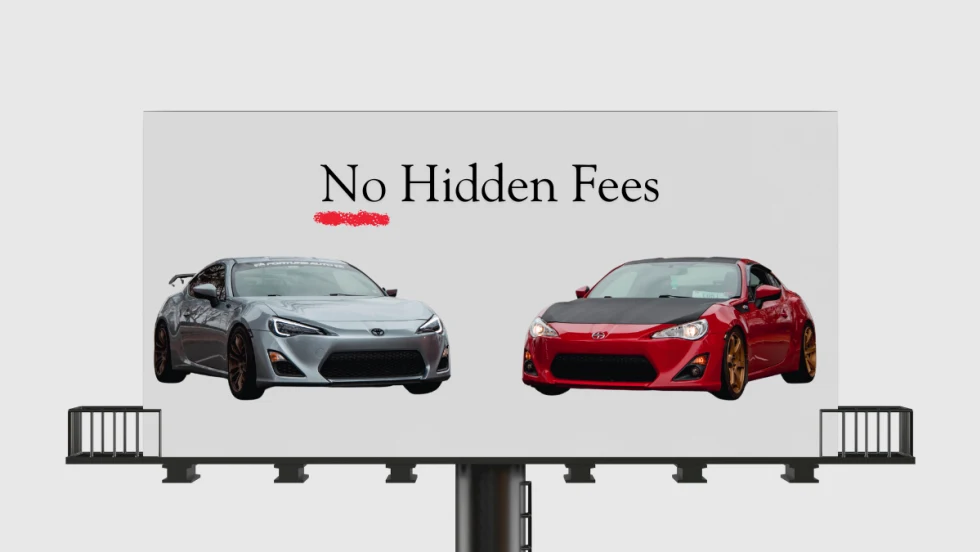
Dealer Ads and the FTC
The agency has made it clear in recent enforcement actions and warnings, in auto retail and other industries, that advertised prices must include all nonoptional costs to the consumer.
Read More →
Used Autos Supply Dwindles
The March shopping surge, despite high prices, cut into inventory by the most since the thick of the pandemic, Cox Automotive analysts calculated.
Read More →