



SAAR Fails to Crack 17M Despite Record August Sales
U.S. sales of new cars and light trucks fell 1.2% year-over-year in August, a sales month that extended through the Labor Day weekend and set new records for Honda, Toyota, and Subaru.

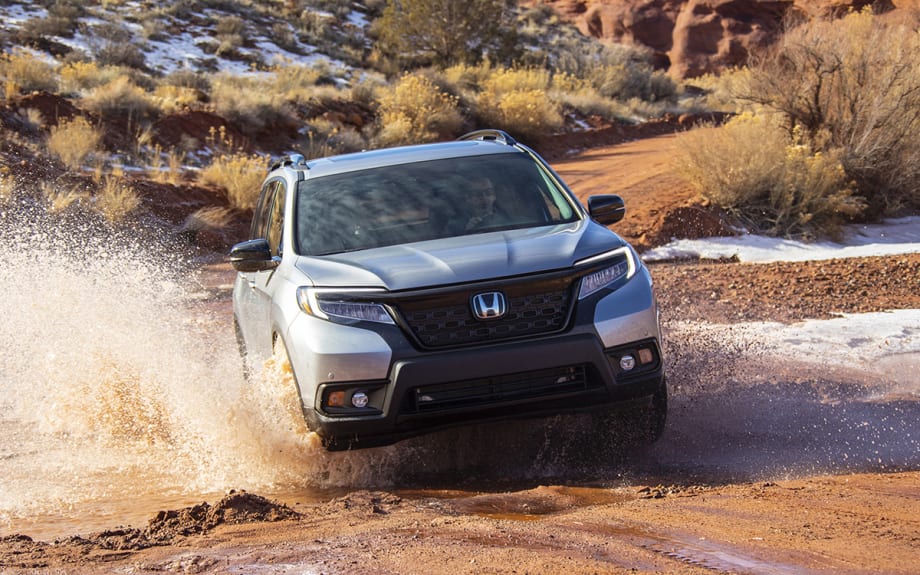
Honda reported a one-month record tally of nearly 174,000 units sold by U.S. dealers in August, led by best-ever months for the Passport (pictured) and CR-V.
Photo courtesy American Honda Motor Co.
(Bobit) — The seasonally adjusted annualized rate of U.S. new-vehicle sales is projected to have climbed no higher than 16.8 million in August, a 1.2% year-over-year decline. But 28 selling days — including Labor Day weekend — helped several manufacturers deliver record volumes in the latest monthly sales report compiled by Automotive News.
“The incredible year-over-year performance for August sales we are seeing from the OEMs is in part due to the calendar,” said Zo Rahim, manager of economics and industry insights for Cox Automotive. “Major U.S. holiday weekends play a central role in driving new-vehicle sales. On average, the week including Labor Day weekend accounts for over 2% of yearly new retail sales, making it one of the busiest weeks of the year.”
“The bad news is that September is going to realize a more sizeable year-over-year sales decline.”
The holiday weekend was credited to September on last year’s sales calendar, which gave August 27 selling days and four weekends, pushing the SAAR to a hair over 17 million. That sets the stage for an underwhelming report a month from now, warned Chris Hopson of IHS Markit.
“The bad news is that September is going to realize a more sizeable year-over-year sales decline due to this same calendar year effect, plus some potential for weather related impacts, depending on the current hurricane watch,” said Hopson, who manages IHS’s North America light-vehicle sales forecast. “IHS Markit expects light vehicle sales volume estimate of 16.9 to 17.0 million units for the full year, but the potential for a big bounce in the fourth quarter remains, especially given the still inviting credit conditions, and sustained inventory and incentive levels from the automakers.”
Read: SAAR Dips to 16.6M in Watershed Sales Report
Honda, Toyota, and Subaru each reported their best U.S. sales month ever, led by Honda with 173,993 deliveries. Honda also led the industry by growing sales 17.6% year-over-year, followed by Nissan (13.2%), Kia (12.7%), Hyundai (12%), and Toyota (11.3%).
Subaru reported a relatively modest 9.3% gain that nevertheless marks the factory’s 93rd straight month-over-month improvement.
Volkswagen (9.8%) and Mazda (6.5%) also found their way into the winner’s column — no mean feat for Mazda, which had reported 13 straight monthly declines — as did luxury brands Genesis (186.6%), Mercedes-Benz (25.2%), Porsche (13.5%), BMW (7.2%), and Audi (3%).
Declines were reported by Jaguar (-13.8%), Land Rover (-8.5%), and Mitsubishi (-3.3%). Ford, General Motors, and Fiat Chrysler now only issue quarterly reports.
“The strong performance of some vehicle lines suggests heavy fleet activity may have occurred for some brands.”
Senior Economist Charlie Chesbrough credited “aggressive” incentives — up 1.2% year-over-year, according to ALG — with helping August exceed Cox Automotive’s forecast.
“And, the surprisingly strong numbers may be misleading. Although the retail/fleet mix is not yet known, the strong performance of some vehicle lines suggests heavy fleet activity may have occurred for some brands,” Chesbrough added. “There are also some worrisome signals in the reported results. Small car sales were up big for some OEMs, bucking recent trends, while their luxury brand numbers were weak. This may suggest affordability is having an increasingly large impact on consumer purchases.”
Read: Prime Buyers Flock to Used Vehicles in Q2 Report
To read the full Automotive News report, click here.
More Dealer Ops

How to Avoid Phone Scams | Dealer Debrief 09/10/2026
Are you taking the necessary steps to protect your dealership and customer data from phone-based scams? This week's Dealer Debrief breaks down how!
Read More →
Dealer Debrief: August Auto Sales
Gas-powered engines still dominate the U.S. vehicle market, but hybrids are gaining ground as consumers look for ways to cut their gas costs.
Read More →
Dealership Profits Decline
While new and used retail sales stagnated, dealerships have been particularly supported by fixed operations and finance-and-insurance profits, according to a new report.
Read More →
Dealer Debrief: Defection Data & EV Updates
In this week's debrief, host Lauren Lawrence discusses how to use defection data to your advantage and the latest on EV sales and charging infrastructure.
Read More →
How Defection Data is Bridging the Dealership Conversion Gap
Lead volume is flat, cross-shopping is up and brand loyalty is in retreat. As confident sales teams keep losing buyers they thought they had, daily industry sales data is showing dealers exactly where their funnel is breaking and how to fix it without buying a single new lead.
Read More →
Dealer Debrief: Where are you losing customers?
In this week's debrief, host Lauren Lawrence discusses the hidden leaks in dealerships where you might be losing customers without even realizing it.
Read More →
Dealer Debrief: Improving Your Inventory Management
In this week's debrief, host Lauren Lawrence covers a new survey that shows what service technicians really want and two launches that could help improve your inventory and vehicle life cycle management.
Read More →
Ladies and Gentlemen, This Is a Dealership: Why the Fundamentals Still Decide Who Wins
A teaching moment by a legendary football coach happens to apply perfectly in the auto retail space. Learn what it is and how to use it to your store’s advantage.
Read More →
Dealer Ads and the FTC
The agency has made it clear in recent enforcement actions and warnings, in auto retail and other industries, that advertised prices must include all nonoptional costs to the consumer.
Read More →
Used Autos Supply Dwindles
The March shopping surge, despite high prices, cut into inventory by the most since the thick of the pandemic, Cox Automotive analysts calculated.
Read More →