



Supply Chain Challenges Slow EV Adoption in Government Agencies
Federal agencies would have purchased more EVs had it not been for supply chain hurdles, the White House reported.

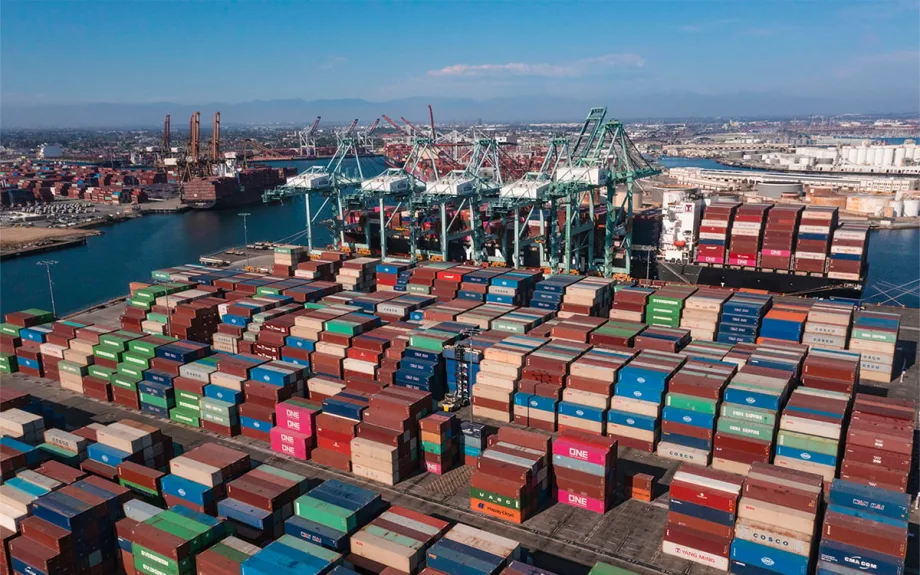
Federal agencies would have purchased more EVs had it not been for supply chain hurdles, the White House reported.
IMAGE: Getty Images
Federal agencies have boosted their purchases of electric and plug-in hybrid vehicles but would have purchased more had it not been for supply chain hurdles, the White House reported.
Federal agencies quintupled their purchases of EVs and PHEVs since September 2021. EVs represented 12% of light-duty purchases in 2022, or 3,567 vehicles, compared to 1% of vehicle acquisitions in 2021.
"But for the supply chain issues that impacted the auto industry’s ability to fulfill all the Federal Government’s (zero emission vehicles) orders in FY2022, ZEVs would have achieved approximately 20% of acquisitions in 2022," the White House said.
The Government Accountability Office (GAO) reported federal agencies purchased 257 electric vehicles in the 2021 budget year but have fewer EV charging ports than they need.
In December 2021, Biden issued an executive order directing the federal government to end purchases of gas-powered vehicles by 2035 and that 100% of light-duty federal acquisitions be EV or PHEV purchases by 2027.
The GAO reported of 33,000 light-duty vehicles acquired in the 2021 budget year, agencies bought 138 EVs and 119 plug-in hybrids.
Charging ports remain an issue. As of March, federal agencies owned and operated over 4,000 charging ports in around 1,050 charging locations in less than 500 cities, GAO said.
But the General Services Administration (GSA) estimates the federal government will need over 100,000 charging ports because agencies need at least one charging port for every two electric vehicles acquired, the report said.
As of 2020, the federal government operated 610,000 vehicles that traveled over 4 billion miles and consumed over 360 million gallons of fuel.
The government also owns 102,000 law enforcement vehicles which are covered by Biden's order unless exempted by an agency head. GAO said they "may have additional performance requirements that may not be met by currently available zero-emission vehicle models."
The Homeland Security Department became the first federal agencies to debut an EV for law enforcement use. The vehicle is a Ford Mustang Mach-E.
The U.S. Postal Service is exempt from Biden's order. The USPS operates 200,000 vehicles.
More Dealer Ops
How to Avoid Phone Scams | Dealer Debrief 09/10/2026
Are you taking the necessary steps to protect your dealership and customer data from phone-based scams? This week's Dealer Debrief breaks down how!
Read More →
Dealer Debrief: August Auto Sales
Gas-powered engines still dominate the U.S. vehicle market, but hybrids are gaining ground as consumers look for ways to cut their gas costs.
Read More →
Dealership Profits Decline
While new and used retail sales stagnated, dealerships have been particularly supported by fixed operations and finance-and-insurance profits, according to a new report.
Read More →
Dealer Debrief: Defection Data & EV Updates
In this week's debrief, host Lauren Lawrence discusses how to use defection data to your advantage and the latest on EV sales and charging infrastructure.
Read More →
How Defection Data is Bridging the Dealership Conversion Gap
Lead volume is flat, cross-shopping is up and brand loyalty is in retreat. As confident sales teams keep losing buyers they thought they had, daily industry sales data is showing dealers exactly where their funnel is breaking and how to fix it without buying a single new lead.
Read More →
Dealer Debrief: Where are you losing customers?
In this week's debrief, host Lauren Lawrence discusses the hidden leaks in dealerships where you might be losing customers without even realizing it.
Read More →
Dealer Debrief: Improving Your Inventory Management
In this week's debrief, host Lauren Lawrence covers a new survey that shows what service technicians really want and two launches that could help improve your inventory and vehicle life cycle management.
Read More →
Ladies and Gentlemen, This Is a Dealership: Why the Fundamentals Still Decide Who Wins
A teaching moment by a legendary football coach happens to apply perfectly in the auto retail space. Learn what it is and how to use it to your store’s advantage.
Read More →
Dealer Ads and the FTC
The agency has made it clear in recent enforcement actions and warnings, in auto retail and other industries, that advertised prices must include all nonoptional costs to the consumer.
Read More →
Used Autos Supply Dwindles
The March shopping surge, despite high prices, cut into inventory by the most since the thick of the pandemic, Cox Automotive analysts calculated.
Read More →