



Though EV Sales Will Triple by 2025, More Will Be Needed to Reach Net Zero
The window to get the world’s road emissions to carbon neutrality by 2050 is ‘closing quickly,’ BloombergNEF (BNEF) says in its latest Electric Vehicle Outlook.

https://ourgoodbrands.com/
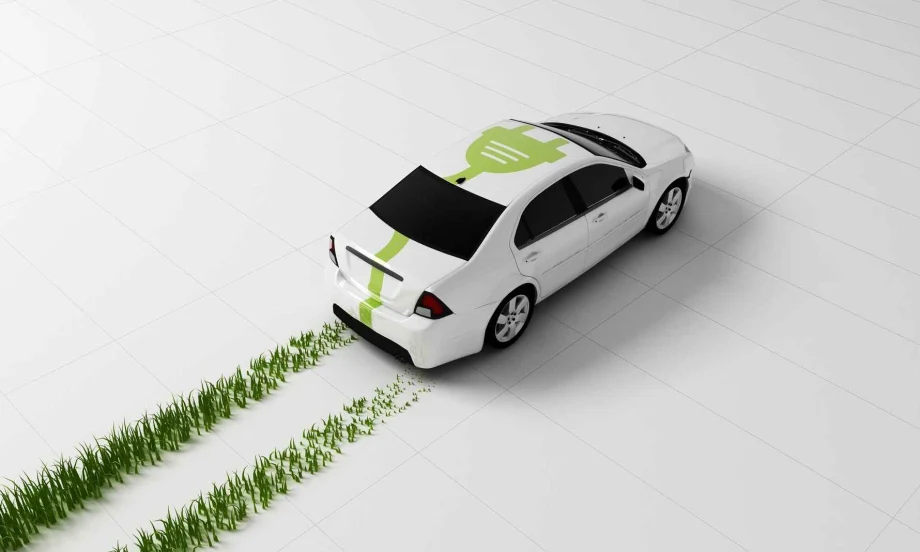
Electric vehicle sales are expected to more than triple by 2025. Still, BloombergNEF call for greater action in its 7th annual Long-Term Electric Vehicle Outlook
Though BNEF analysts deem EVs “a remarkable success story” and predict plug-in passenger vehicle sales will hit 20.6 million by 2025, they warn replacing 1.2 billion passenger vehicles on the road that run on internal combustion engines will take time.
BNEF finds slightly over two-thirds of the global fleet will be zero-emission by 2050, without enacting new policies or regulations. Heavier commercial vehicles trail further behind, with just 29% of the fleet expected to decarbonize by then.
“Despite the rapid rise in EV adoption, road transport is still not on track for carbon neutrality by 2050,” analysts led by Colin McKerracher, BNEF’s head of advanced transport, write in the report. “Aggressive action from policymakers will be required, especially on heavier vehicles where both batteries and hydrogen fuel cells are vying for a place in the market. The window to stay on track for net zero is closing quickly.”
The 201-page report covers the opportunities electric vehicles present, the impact they may have and the risks they face. It also highlights how governments can combat car dependency and make the transition easier.
As EV popularity grows, worldwide sales of internal combustion engine vehicles are in decline, after peaking in 2017, according to BNEF. The global fleet of combustion vehicles will start to shrink in 2024, and by the following year, deliveries will drop roughly 19% from their highest point.
EVs of all types will trim oil use by 2.5 barrels a day by 2025. BNEF also expects gasoline demand to peak in 2026 with total oil demand from road transport to crest in 2027. The amount of CO2 emitted is expected to rise for two years after oil demand peaks, due to additional emissions from power plants supplying electricity to the fleet.
BNEF predicts Germany, the UK, France and China will come close to phasing out combustion vehicle sales by 2038. The US, Japan and Australia will trail behind, with India, Southeast Asia, Mexico, Brazil, Turkey and Russia even further back
“Without additional policies in those countries, the net-zero trajectory will remain out of reach for global road transport,” the analysts write. “Air quality in urban areas is already markedly different between wealthy and emerging economies, and this gap will widen further” unless EV adoption improves.
BNEF’s research finds $1.4 trillion of investment will be needed to build out enough charging infrastructure by 2040. Scaling up networks quickly enough to keep pace with EV uptake will challenge countries, especially in the U.S. where average annual public charging installs need to increase sixfold in the next four years.
Supplies of lithium, cobalt, manganese and nickel — key EV battery ingredients — will remain steady, with China dominating battery production.
The point when pack prices will drop below $100 per kilowatt hour — a widely cited benchmark around which battery costs are competitive with combustion engines — is less certain because of significant cost pressures.
“If raw material prices remain elevated or climb further, this could delay the timeline by a couple of years, out from 2024 in most markets,” the analysts write.
Still, the analysts do not expect rising battery costs to derail EV adoption. The factors driving high battery raw material costs include war, inflation, and trade friction are also pushing the price of gasoline and diesel to record highs, which will increase consumer interest in EVs.
More Dealer Ops

How to Avoid Phone Scams | Dealer Debrief 09/10/2026
Are you taking the necessary steps to protect your dealership and customer data from phone-based scams? This week's Dealer Debrief breaks down how!
Read More →
Dealer Debrief: August Auto Sales
Gas-powered engines still dominate the U.S. vehicle market, but hybrids are gaining ground as consumers look for ways to cut their gas costs.
Read More →
Dealership Profits Decline
While new and used retail sales stagnated, dealerships have been particularly supported by fixed operations and finance-and-insurance profits, according to a new report.
Read More →
Dealer Debrief: Defection Data & EV Updates
In this week's debrief, host Lauren Lawrence discusses how to use defection data to your advantage and the latest on EV sales and charging infrastructure.
Read More →
How Defection Data is Bridging the Dealership Conversion Gap
Lead volume is flat, cross-shopping is up and brand loyalty is in retreat. As confident sales teams keep losing buyers they thought they had, daily industry sales data is showing dealers exactly where their funnel is breaking and how to fix it without buying a single new lead.
Read More →
Dealer Debrief: Where are you losing customers?
In this week's debrief, host Lauren Lawrence discusses the hidden leaks in dealerships where you might be losing customers without even realizing it.
Read More →
Dealer Debrief: Improving Your Inventory Management
In this week's debrief, host Lauren Lawrence covers a new survey that shows what service technicians really want and two launches that could help improve your inventory and vehicle life cycle management.
Read More →
Ladies and Gentlemen, This Is a Dealership: Why the Fundamentals Still Decide Who Wins
A teaching moment by a legendary football coach happens to apply perfectly in the auto retail space. Learn what it is and how to use it to your store’s advantage.
Read More →
Dealer Ads and the FTC
The agency has made it clear in recent enforcement actions and warnings, in auto retail and other industries, that advertised prices must include all nonoptional costs to the consumer.
Read More →
Used Autos Supply Dwindles
The March shopping surge, despite high prices, cut into inventory by the most since the thick of the pandemic, Cox Automotive analysts calculated.
Read More →