



Toyota, Stellantis Plan to Build North American EV-Battery Factories
Toyota Motor Corp. and Stellantis have announced plans to build battery factories in North America to meet the U.S. government’s push for electric vehicles and the batteries that power them.

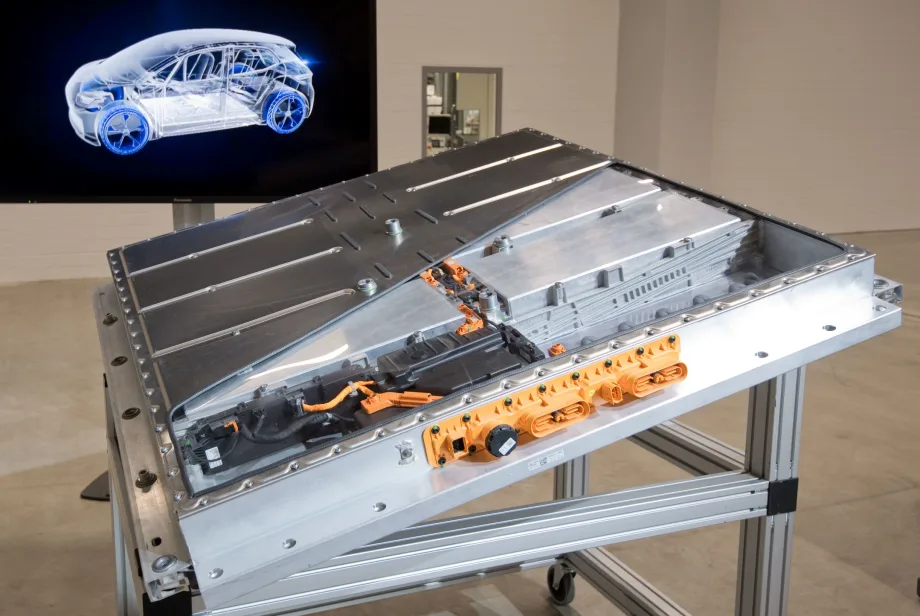
Volkswagen D3-EV battery pack.
Volkswagen
Toyota announced intentions to spend $3.4 billion through 2030 to build electric-car batteries in the U.S. Previously, the automaker announced plans to spend $9 billion to build battery factories around the globe as part of a $13.5 billion battery plan that included research.
Toyota reports its new U.S. battery plant will initially concentrate on producing batteries for hybrid models.
Toyota doesn’t provide a full breakdown on U.S. spending but reported it and an affiliated company will invest $1.29 billion on a new battery plant that will start production in 2025 and create 1,750 new jobs.
Stellantis reported it had partnered with LG Energy Solution, the battery-manufacturing arm of South Korea’s LG conglomerate, to build a factory for lithium-ion batteries in North America. The companies didn’t disclose the size of investment but report the plant will produce batteries with a combined output of up to 40 gigawatt hours, enough to supply hundreds of thousands of EVs.
Most automakers will take two paths to supply EV batteries. Toyota and Ford Motor Co. plan to build EV batteries in-house, while Stellantis and General Motors plan to partner with electronics manufacturers for their batteries.
Toyota plans to sell 25 different EV models by 2025. Currently the automaker does not mass-market EVs in the U.S., but Toyota plans to have its first model ready in 2022. By 2030, Toyota targets selling 2 million EVs a year globally.
In contrast, GM plans to spend $35 billion on EVs and battery plants through 2025, and Stellantis plans to spend $3.5 billion over the same period.
Toyota CEO Akio Toyoda has criticized the push to restrict the sale of gasoline-powered cars, saying the move will cost millions of jobs and put the price of cars out of reach for most buyers. Many car makers and suppliers echo Toyoda’s sentiments.
Toyota predicts most of its vehicles sold in the U.S. will be at least partially powered by gasoline engines. The company believes its hybrid vehicles, which combine an electric motor with a gasoline engine, offer environmental friendliness in an affordable package.
The investment comes as Congress considers proposals to expand incentives to make EVs more affordable. The legislation proposes offering buyers an additional rebate of up to $4,500 for battery-powered models built in the U.S. by unionized labor.
Automakers without unionized workers will not be eligible for the full incentives under the proposed legislation. These automakers have criticized the legislative proposals, saying they put them at a disadvantage.
More Dealer Ops

How to Avoid Phone Scams | Dealer Debrief 09/10/2026
Are you taking the necessary steps to protect your dealership and customer data from phone-based scams? This week's Dealer Debrief breaks down how!
Read More →
Dealer Debrief: August Auto Sales
Gas-powered engines still dominate the U.S. vehicle market, but hybrids are gaining ground as consumers look for ways to cut their gas costs.
Read More →
Dealership Profits Decline
While new and used retail sales stagnated, dealerships have been particularly supported by fixed operations and finance-and-insurance profits, according to a new report.
Read More →
Dealer Debrief: Defection Data & EV Updates
In this week's debrief, host Lauren Lawrence discusses how to use defection data to your advantage and the latest on EV sales and charging infrastructure.
Read More →
How Defection Data is Bridging the Dealership Conversion Gap
Lead volume is flat, cross-shopping is up and brand loyalty is in retreat. As confident sales teams keep losing buyers they thought they had, daily industry sales data is showing dealers exactly where their funnel is breaking and how to fix it without buying a single new lead.
Read More →
Dealer Debrief: Where are you losing customers?
In this week's debrief, host Lauren Lawrence discusses the hidden leaks in dealerships where you might be losing customers without even realizing it.
Read More →
Dealer Debrief: Improving Your Inventory Management
In this week's debrief, host Lauren Lawrence covers a new survey that shows what service technicians really want and two launches that could help improve your inventory and vehicle life cycle management.
Read More →
Ladies and Gentlemen, This Is a Dealership: Why the Fundamentals Still Decide Who Wins
A teaching moment by a legendary football coach happens to apply perfectly in the auto retail space. Learn what it is and how to use it to your store’s advantage.
Read More →
Dealer Ads and the FTC
The agency has made it clear in recent enforcement actions and warnings, in auto retail and other industries, that advertised prices must include all nonoptional costs to the consumer.
Read More →
Used Autos Supply Dwindles
The March shopping surge, despite high prices, cut into inventory by the most since the thick of the pandemic, Cox Automotive analysts calculated.
Read More →