



Volvo’s, Other Carmakers’ Eyes on US
Biden’s green-tech offerings so far more attractive for investments than Europe’s idea.

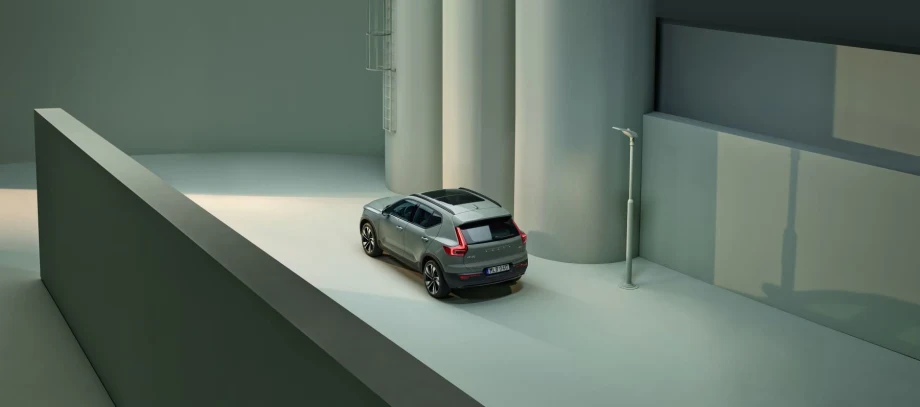
Hybrid Volvo XC40 is one of brand's alternative-fuel models. Its CEO says its next battery plant could be in North America due to attractive U.S. subsidies.
A growing number of automakers may shift investments to the U.S. if the European Union fails to increase aid following passage of the Biden administration’s Inflation Reduction Act, which includes about $370 billion in clean-energy subsidies, Bloomberg reported.
Volvo is the latest manufacturer to signal it could move investments here if Europe doesn’t act, the news service said. Its CEO, Martin Lundstedt, said the new measure will significantly increase demand for emissions-free trucks in the U.S.
"If nothing happens in Europe, we will have to think about where we're going to put the initial investments to scale up capacity for some of the technologies in the value chain," Lundstedt told Bloomberg. "This is not a threat, it's driven by customer demand and where volumes will accelerate."
The European Union’s proposed green-technology measure, intended to help the region compete with the U.S., has so far gotten a mixed reception due to concerns over a trade war and that subsidies would benefit only wealthier countries.
Lundstedt told Bloomberg that the European Union’s earlier message about green technology didn’t impress Volvo as much as the Inflation Reduction Act. He said the measure covers $45 per kilowatt hour of a battery’s production costs, which would “change the equation for customers.”
He added that it wouldn’t be a surprise if Volvo builds its next battery plant in North America, as the act is expected to increase vehicle sales demand there.
DIG DEEPER: Biden Administration Awards $2.8 Billion for EV Battery Production
More Dealer Ops

How to Avoid Phone Scams | Dealer Debrief 09/10/2026
Are you taking the necessary steps to protect your dealership and customer data from phone-based scams? This week's Dealer Debrief breaks down how!
Read More →
Dealer Debrief: August Auto Sales
Gas-powered engines still dominate the U.S. vehicle market, but hybrids are gaining ground as consumers look for ways to cut their gas costs.
Read More →
Dealership Profits Decline
While new and used retail sales stagnated, dealerships have been particularly supported by fixed operations and finance-and-insurance profits, according to a new report.
Read More →
Dealer Debrief: Defection Data & EV Updates
In this week's debrief, host Lauren Lawrence discusses how to use defection data to your advantage and the latest on EV sales and charging infrastructure.
Read More →
How Defection Data is Bridging the Dealership Conversion Gap
Lead volume is flat, cross-shopping is up and brand loyalty is in retreat. As confident sales teams keep losing buyers they thought they had, daily industry sales data is showing dealers exactly where their funnel is breaking and how to fix it without buying a single new lead.
Read More →
Dealer Debrief: Where are you losing customers?
In this week's debrief, host Lauren Lawrence discusses the hidden leaks in dealerships where you might be losing customers without even realizing it.
Read More →
Dealer Debrief: Improving Your Inventory Management
In this week's debrief, host Lauren Lawrence covers a new survey that shows what service technicians really want and two launches that could help improve your inventory and vehicle life cycle management.
Read More →
Ladies and Gentlemen, This Is a Dealership: Why the Fundamentals Still Decide Who Wins
A teaching moment by a legendary football coach happens to apply perfectly in the auto retail space. Learn what it is and how to use it to your store’s advantage.
Read More →
Dealer Ads and the FTC
The agency has made it clear in recent enforcement actions and warnings, in auto retail and other industries, that advertised prices must include all nonoptional costs to the consumer.
Read More →
Used Autos Supply Dwindles
The March shopping surge, despite high prices, cut into inventory by the most since the thick of the pandemic, Cox Automotive analysts calculated.
Read More →