



Buying Into Bankruptcies
Are you getting your share of the profitable BK market? Direct marketing expert lists the essentials of reaching these motivated, in-market buyers.

When I was a finance manager at a dealership in the mid-’80s, the banks didn’t buy anyone who had a bankruptcy until seven years after their discharge. A few years later, after I had moved into direct marketing full-time, I received a call from one of my clients. Jerry Schwelling at Warren Nissan in Warren, Ohio, asked if it was possible to get a list of people who had discharged a bankruptcy in the last two years. After Jerry successfully assured me he hadn’t lost his mind, I decided to take up his challenge.
I set out on a quest to find a list that simply wasn’t available at that time. Eventually, I found a company that compiled discharges for credit card providers, which used those lists as suppression files before mailing pre-qualified offers. At that time, even the credit bureaus took forever to get information from the bankruptcy courts.
We paid dearly for that list, but the investment paid huge dividends for my client. We mailed 5,000 pieces and, in the course of three days, he delivered 48 vehicles and made $153,000 in gross profit. That’s not bad money in 2014 dollars. At the time, it was more than a lot of dealerships took in during an entire month. That was the beginning of my career as a subprime marketing expert, and the BK segment has matured considerably since then.
Cornering the Market
Today’s special finance market has many faces. There is no one marketing program that will cover every type of credit-challenged customer. Each segment requires a separate approach. I believe bankruptcies are a cornerstone for any dealer who chooses to invest in subprime, but BK customers have many faces as well.
If you have the right lenders, the right inventory and the right marketing programs, you and your special finance managers can be masters of this highly profitable segment. When BKs first came to the fore, finance companies would only approve discharged Chapter 7 bankruptcies. Times have changed. You can help those consumers get a vehicle the day after they file their bankruptcy. A number of lenders are buying open Chapter 13s as well. Let’s break the segment down into three programs:
1. Fresh Chapter 7s
Statistics have shown that 37% of consumers who file for bankruptcy will purchase and finance a vehicle sometime between the day they file and 30 days after they receive their discharge papers. Many find themselves in the market because their current vehicle was repossessed before the bankruptcy. In other cases, because they were contacted by a dealer who was in a position to help them, they surrendered their vehicle during the bankruptcy process and escaped a high monthly payment or negative equity as a result.
Bankruptcy filings continue to pour into the courts, but there are a limited number of BK customers in any given geographic area. There’s a small window of opportunity to reach them and create an opportunity for additional sales. You must contact these customers multiple times between their filing and 30 days after discharge.
2. Discharged Chapter 7s
If we trust the statistics and agree that 37% of Chapter 7 filers purchase a vehicle early in the process, that means that 63% remain in the market. Many of them will purchase and finance a vehicle within two years of their discharge. You should not ignore this group, but you should also not mail them too often. Once every 60 to 90 days should put you in an ideal position for the highest return on investment.
3. Open Chapter 13s
Compared to Chapter 7, Chapter 13 BKs are a more limited market. There are also a limited number of finance companies that buy this paper; however, their ranks are growing. With the right partner, there are additional vehicle sales available for dealers who target this audience properly. And because it is a smaller market, it won’t require a large investment. It should also be noted that financing an open Chapter 13 requires a letter from the car buyer’s court-appointed trustee. In some states, these letters are fairly easy to acquire; in others, it’s more difficult. If you are struggling, consult with your finance partners.
The Letter
BK marketing requires adherence to the same rules and laws you follow for any other type of advertising — as well as a few guidelines that have proven effective in this segment.
If it’s not true, don’t say it. Your mailers will be based on public records, meaning you have not looked at each recipient’s credit bureau. Thus, in most states, you cannot use terms such as “pre-approved” or “pre-qualified.” All you can offer is an invitation to reply. If you have any doubt about the language in these or any other promotions, consult your attorney.
Be sensitive. They know they just filed for or were recently discharged from bankruptcy. Don’t throw it in their face, and don’t alarm them — many BK customers had no idea they were in a position to buy a vehicle, let alone that they would be contacted by a dealer. My advice is to speak in hypotheticals and explain how you are in a position to help.
Don’t lump all BKs together. People who have recently filed and those who have recently been discharged are distinct groups. Don’t assume that these consumers know what you know, because in most cases, they don’t. You are trying to help them in a very difficult time in their life and you should convey that in your message.
Include a call to action. Make it easy to reply to your offer. Tell the consumer what you want them to do. If possible, give them multiple options, such as a toll-free number and a special landing page on your website. Marketing is about the entire experience, not just your ads. Your BK customers have been through enough. Make the process as easy as possible.
Finally, bear in mind that the BK segment is a moving target. There are new consumers coming into the market every day. Happily, at the other end of the timeline, sold customers have recovered from their financial difficulties and may even be thinking about trading up. For that reason and more, you can’t rely on “one-and-done” marketing campaign. Develop a program that constantly sends timely messages to potential and existing customers. If you do it right, you will add a nice chunk of change to your bottom line every month. Good luck and good selling!
Denny Long is president of Credit Mail Experts and is ranked among the industry’s leading experts in direct mail and subprime marketing.
DLong@AutoDealerMonthly.com
More Dealer Ops

Ladies and Gentlemen, This Is a Dealership: Why the Fundamentals Still Decide Who Wins
A teaching moment by a legendary football coach happens to apply perfectly in the auto retail space. Learn what it is and how to use it to your store’s advantage.
Read More →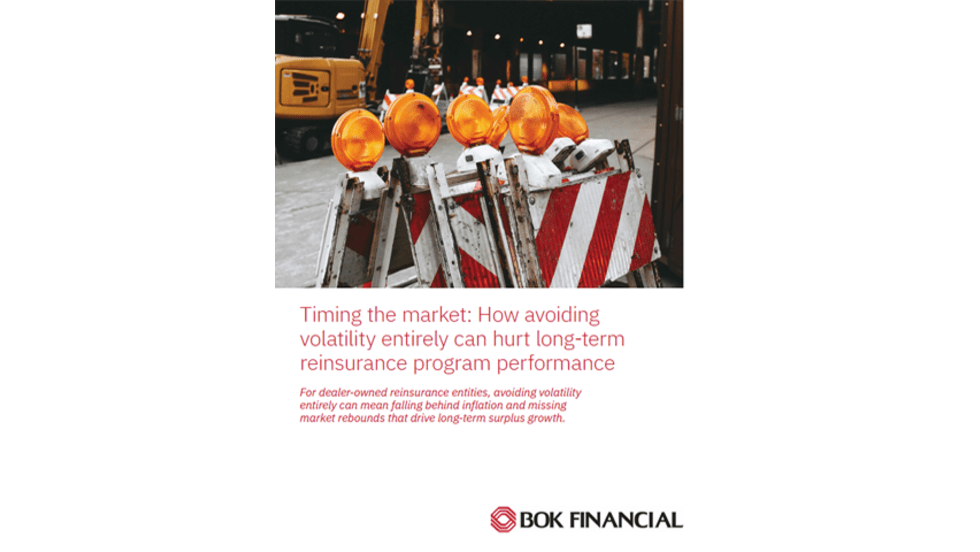
Timing the Market Can Hurt Long-Term Program Performance
For dealer-owned reinsurance entities, avoiding volatility entirely can mean falling behind inflation and missing market rebounds that drive long term surplus growth. Missing just a handful of strong market days can materially impact cumulative returns—an important reminder for long horizon trust and investment strategies.
Read More →
Dealer Ads and the FTC
The agency has made it clear in recent enforcement actions and warnings, in auto retail and other industries, that advertised prices must include all nonoptional costs to the consumer.
Read More →
Used Autos Supply Dwindles
The March shopping surge, despite high prices, cut into inventory by the most since the thick of the pandemic, Cox Automotive analysts calculated.
Read More →
Managing Risk Effectively Through Changing Times
The variables influencing risk pricing have changed significantly over the past five years. Being proactive and responsive to emerging trends is not optional but essential.
Read More →
Survey Reveals What Won't Fix What's Breaking Car Sales
AutoPayPlus says extra-long auto loans are trapping consumers and threatening the dealer trade-in cycle, and that the industry is leveraging the wrong tools to combat high MSRPs.
Read More →
IA American Appoints Two Execs
Senior vice presidents of the company's agent and dealer channels chosen to support general agents and help auto dealers with sales and performance.
Read More →
Cox Automotive Acquires Inspection Firm
Full ownership of Alliance Inspection Management, or AiM, meant to unlock growth for Manheim inspection capabilities
Read More →
Assurant Expands Partnership With Holman
Extended collaboration delivers training, products and performance development to 30 newly acquired Holman dealerships
Read More →
Franchises, Throughput Down in First Half
A handful of states see franchise growth through June, while EV sales per store boost overall business in U.S.
Read More →