



Biden Administration Announces Federal EV Plan
The proposed strategy includes building 500,000 charging stations for electric vehicles across the country and lowering the cost of electric cars.

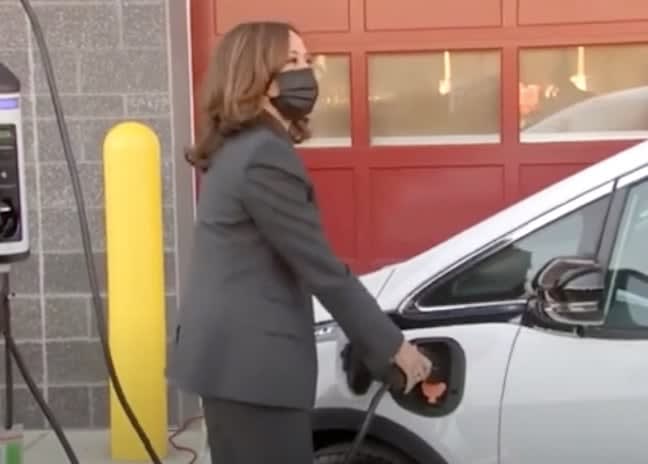
Vice President Kamala Harris
PBS
The Biden administration has announced a federal strategy to build 500,000 charging stations for electric vehicles across the country and to lower the cost of electric cars to transform the U.S. auto industry.
“The future of transportation in our nation and around the world is electric, ″ Vice President Kamala Harris said at an EV charging facility in suburban Maryland.
The $1 trillion infrastructure bill that Joe Biden signed in November authorizes a nationwide network of charging stations and sets aside $5 billion for states to build them. The legislation also earmarks $2.5 billion for local grants to support charging stations in rural areas and in disadvantaged communities.
The Biden Administration’s proposed $2 trillion social and environmental policy bill includes a $7,500 tax credit to lower the cost of electric vehicles.
“We want to make electric vehicles accessible for everyone, ″ Harris said. “Absolutely make it accessible for everyone and easy. Just like filling up your car with gas.”
The auto industry already is moving toward electric vehicles, Harris added: “We need to make the shift faster and make sure the United States drives it.″
Harris pointed out that installing public chargers in rural, urban or suburban neighborhoods makes “it easier for people to go electric.” She stressed the biggest barrier to buying an electric car for most people is “figuring out where and how to charge it. ″
She explained people who live in apartments may not have a private driveway where they can install a plug, while rural residents may have to drive miles to the nearest charger.
Harris visited a maintenance facility in Brandywine, just outside Washington, where she received a demonstration on how chargers work and learned about a plan to electrify the government fleet in Maryland’s Prince George’s County.
The federal government’s new EV charging strategy:
Forms a joint electric vehicles office between the federal Energy and Transportation departments
Provides guidance and standards for states
Ensures consultations with manufacturers, state and local governments, environmental justice and civil rights groups, tribes and others.
The Energy and Transportation departments also will launch an advisory committee on electric vehicles that officials hope will be up and running early next year.
The effort should lower emissions and promote sustainability while helping the U.S. leapfrog China in the plug-in EV market. Currently, the U.S. market share of plug-in electric vehicle sales is one-third the size of that of China.
Biden has set a goal that electric cars and trucks account for half of new vehicles sold by 2030.
The LMC Automotive consulting firm forecasts that U.S. sales of new fully electric vehicles will reach 400,000 this year, almost double last year’s figure. Even so, EVs still make up only about 2.6% of sales. But LMC predicts EV sales will grow to over 730,000 in 2022 and over 2 million by 2025.
Even at 2 million, however, EV sales would only represent about 12% of U.S. new vehicle sales.
Republicans, including some who voted in favor of the new infrastructure law, criticize the Administration’s focus on EVs as Americans content with spikes in gasoline and natural gas prices.
Republicans and Sen. Joe Manchin also are criticizing the legislation’s proposed additional $4,500 tax credit for EVs made in plants that operate under a union-negotiated collective bargaining agreement.
More Dealer Ops

Ladies and Gentlemen, This Is a Dealership: Why the Fundamentals Still Decide Who Wins
A teaching moment by a legendary football coach happens to apply perfectly in the auto retail space. Learn what it is and how to use it to your store’s advantage.
Read More →
Timing the Market Can Hurt Long-Term Program Performance
For dealer-owned reinsurance entities, avoiding volatility entirely can mean falling behind inflation and missing market rebounds that drive long term surplus growth. Missing just a handful of strong market days can materially impact cumulative returns—an important reminder for long horizon trust and investment strategies.
Read More →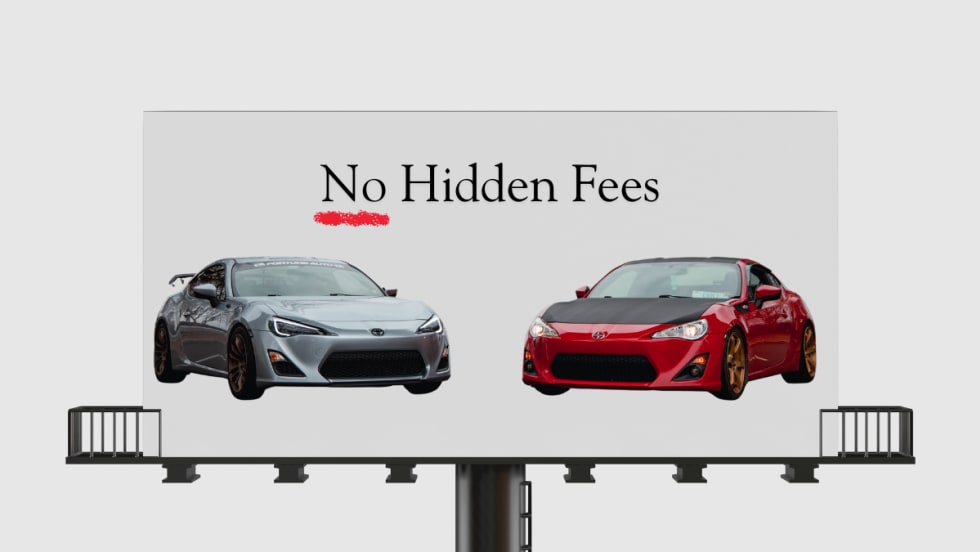
Dealer Ads and the FTC
The agency has made it clear in recent enforcement actions and warnings, in auto retail and other industries, that advertised prices must include all nonoptional costs to the consumer.
Read More →
Used Autos Supply Dwindles
The March shopping surge, despite high prices, cut into inventory by the most since the thick of the pandemic, Cox Automotive analysts calculated.
Read More →
Managing Risk Effectively Through Changing Times
The variables influencing risk pricing have changed significantly over the past five years. Being proactive and responsive to emerging trends is not optional but essential.
Read More →
Survey Reveals What Won't Fix What's Breaking Car Sales
AutoPayPlus says extra-long auto loans are trapping consumers and threatening the dealer trade-in cycle, and that the industry is leveraging the wrong tools to combat high MSRPs.
Read More →
IA American Appoints Two Execs
Senior vice presidents of the company's agent and dealer channels chosen to support general agents and help auto dealers with sales and performance.
Read More →
Cox Automotive Acquires Inspection Firm
Full ownership of Alliance Inspection Management, or AiM, meant to unlock growth for Manheim inspection capabilities
Read More →
Assurant Expands Partnership With Holman
Extended collaboration delivers training, products and performance development to 30 newly acquired Holman dealerships
Read More →
Franchises, Throughput Down in First Half
A handful of states see franchise growth through June, while EV sales per store boost overall business in U.S.
Read More →