



Automakers Urge Congress to Lift EV Tax Credit Cap
Automakers have urged Congress to lift a cap on the $7,500 electric vehicle tax credit.

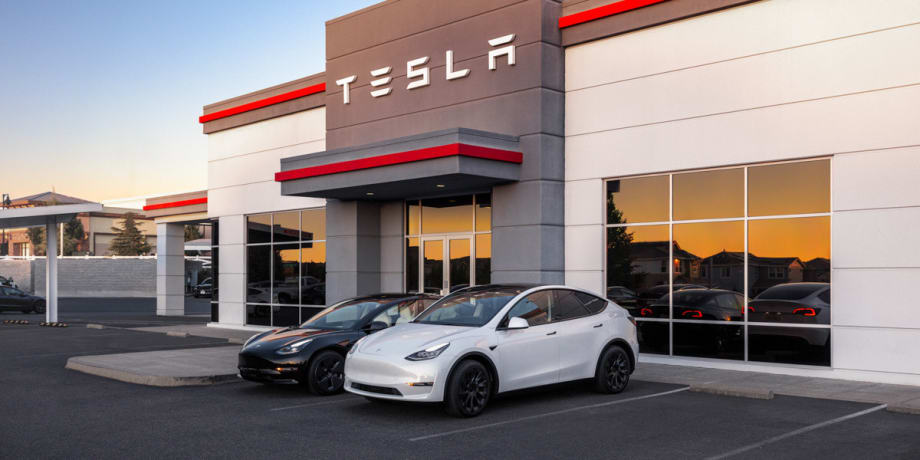
Tesla EVs are no longer eligible for the consumer tax credits.
Tesla
General Motors Co, Ford Motor Co, Chrysler-parent Stellantis NV and Toyota Motor North America have urged Congress to lift a cap on the $7,500 electric vehicle tax credit, citing higher costs to produce zero-emission vehicles in a letter.
The joint letter from the automakers’ CEOs stressed they have pledged to invest over $170 billion through 2030 to aid in EV development, production and sale.
But the current $7,500 tax credit phases out after a manufacturer hits 200,000 vehicles sold. GM and Tesla are no longer eligible for the consumer tax credits. Toyota reported its credits will expire by the end of 2022 after it hits the cap. Ford also will hit the cap
this year.
"We ask that the per-(automaker) cap be removed, with a sunset date set for a time when the EV market is more mature," the automakers said in the letter. "Recent economic pressures and supply chain constraints are increasing the cost of manufacturing electrified vehicles which, in turn, puts pressure on the price to consumers."
Automakers fear the window of opportunity for the U.S. Congress to extend EV tax credits will close if Republicans take over the Senate and the House in mid-term elections.
Not everyone agrees with the need to extend the cap. In April, Sen. Joe Manchin questioned the need to extend electric vehicle tax credits, citing strong consumer demand and Chinese production of battery components.
"There's a waiting list for EVs right now with the fuel price at $4. But they still want us to throw $5,000 or $7,000 or $12,000 credit to buy electric vehicles. It makes no sense to me whatsoever," Manchin said. "When we can't produce enough product for the people that want it and we're still going to pay them to take it -- it's absolutely ludicrous in my mind."
In 2021, the Biden Administration proposed hoisting EV tax credits to $12,500 -- including a $4,500 incentive for union-made, U.S. assembled vehicles.
Manchin also opposed the union-only incentive, as did Toyota.
President Biden also backed a 30% credit for commercial electric vehicles, a $4,000 used EV tax credit, and phasing out credits for EVs manufactured outside the United States.
More Dealer Ops

How to Avoid Phone Scams | Dealer Debrief 09/10/2026
Are you taking the necessary steps to protect your dealership and customer data from phone-based scams? This week's Dealer Debrief breaks down how!
Read More →
Dealer Debrief: August Auto Sales
Gas-powered engines still dominate the U.S. vehicle market, but hybrids are gaining ground as consumers look for ways to cut their gas costs.
Read More →
Dealership Profits Decline
While new and used retail sales stagnated, dealerships have been particularly supported by fixed operations and finance-and-insurance profits, according to a new report.
Read More →
Dealer Debrief: Defection Data & EV Updates
In this week's debrief, host Lauren Lawrence discusses how to use defection data to your advantage and the latest on EV sales and charging infrastructure.
Read More →
How Defection Data is Bridging the Dealership Conversion Gap
Lead volume is flat, cross-shopping is up and brand loyalty is in retreat. As confident sales teams keep losing buyers they thought they had, daily industry sales data is showing dealers exactly where their funnel is breaking and how to fix it without buying a single new lead.
Read More →
Dealer Debrief: Where are you losing customers?
In this week's debrief, host Lauren Lawrence discusses the hidden leaks in dealerships where you might be losing customers without even realizing it.
Read More →
Dealer Debrief: Improving Your Inventory Management
In this week's debrief, host Lauren Lawrence covers a new survey that shows what service technicians really want and two launches that could help improve your inventory and vehicle life cycle management.
Read More →
Ladies and Gentlemen, This Is a Dealership: Why the Fundamentals Still Decide Who Wins
A teaching moment by a legendary football coach happens to apply perfectly in the auto retail space. Learn what it is and how to use it to your store’s advantage.
Read More →
Dealer Ads and the FTC
The agency has made it clear in recent enforcement actions and warnings, in auto retail and other industries, that advertised prices must include all nonoptional costs to the consumer.
Read More →
Used Autos Supply Dwindles
The March shopping surge, despite high prices, cut into inventory by the most since the thick of the pandemic, Cox Automotive analysts calculated.
Read More →