



Bill to Lower Use of EV Battery Minerals from Foreign Sources
The Intergovernmental Critical Minerals Task Force Act aims to boost domestic mining, processing, refining, reusing, and recycling of critical minerals.

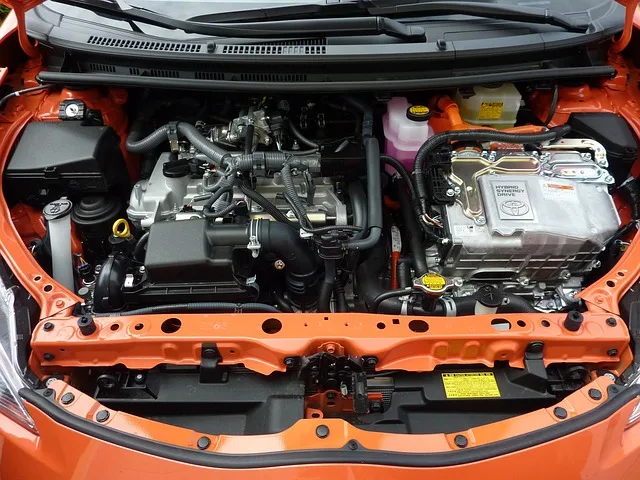
U.S. manufacturing and global economic competitiveness depends on reliable access to minerals for EV batteries.
Davgood Kirshot, Pixabay
Sen. Gary Peters introduced legislation to reduce the nation's reliance on foreign adversaries, especially China, for the critical minerals used in electric vehicle (EV) batteries and other technologies.
The Intergovernmental Critical Minerals Task Force Act, as the bipartisan legislation is called, would require the Office of Management and Budget to create a task force and appoint representatives from federal agencies to consult with state, local and tribal governments.
According to a press release, the group would be tasked with identifying new opportunities for domestic mining, processing, refining, reusing, and recycling of critical minerals, and how to best tackle national security threats related to America's critical mineral supply chains.
The bill mandates the task force to publish a report on its findings for Congress.
Peters noted that U.S. manufacturing and global economic competitiveness depends on reliable access to minerals. The Michigan Democrat who chairs the Homeland Security and Governmental Affairs Committee emphasized in a statement that “the nation’s dependence on adversarial nations like China for critical minerals poses serious national security and economic threats.”
Sen. Peters stressed that the bill would strengthen the domestic critical minerals supply chain, create well-paying jobs, and keep the U.S. manufacturing sector competitive globally.
Currently, China dominates the global market for processing and refining crucial EV battery materials like lithium and cobalt, making access to battery materials a growing concern for automakers and their suppliers.
The Inflation Reduction Act’s tax credit for new EVs is also tied to domestic sourcing of critical minerals. There is a $3,750 tax credit for EVs with at least 40% of the value of the battery’s critical minerals were extracted or processed:
In the U.S.
In a country where the U.S. has a free-trade agreement, or
From materials that were recycled in North America.
Another $3,750 is available if at least half of the value of the EV’s battery components are made or assembled in North America, notes Automotive News.
The percentages rise gradually and hit a peak of 80% in 2027 for minerals and 100% in 2029 for battery components.
From 2024, cars containing battery parts made by "foreign entities of concern," including Chinese-controlled companies, won't qualify for credits. That disqualifier extends to minerals in 2025.
More Dealer Ops

How to Avoid Phone Scams | Dealer Debrief 09/10/2026
Are you taking the necessary steps to protect your dealership and customer data from phone-based scams? This week's Dealer Debrief breaks down how!
Read More →
Dealer Debrief: August Auto Sales
Gas-powered engines still dominate the U.S. vehicle market, but hybrids are gaining ground as consumers look for ways to cut their gas costs.
Read More →
Dealership Profits Decline
While new and used retail sales stagnated, dealerships have been particularly supported by fixed operations and finance-and-insurance profits, according to a new report.
Read More →
Dealer Debrief: Defection Data & EV Updates
In this week's debrief, host Lauren Lawrence discusses how to use defection data to your advantage and the latest on EV sales and charging infrastructure.
Read More →
How Defection Data is Bridging the Dealership Conversion Gap
Lead volume is flat, cross-shopping is up and brand loyalty is in retreat. As confident sales teams keep losing buyers they thought they had, daily industry sales data is showing dealers exactly where their funnel is breaking and how to fix it without buying a single new lead.
Read More →
Dealer Debrief: Where are you losing customers?
In this week's debrief, host Lauren Lawrence discusses the hidden leaks in dealerships where you might be losing customers without even realizing it.
Read More →
Dealer Debrief: Improving Your Inventory Management
In this week's debrief, host Lauren Lawrence covers a new survey that shows what service technicians really want and two launches that could help improve your inventory and vehicle life cycle management.
Read More →
Ladies and Gentlemen, This Is a Dealership: Why the Fundamentals Still Decide Who Wins
A teaching moment by a legendary football coach happens to apply perfectly in the auto retail space. Learn what it is and how to use it to your store’s advantage.
Read More →
Dealer Ads and the FTC
The agency has made it clear in recent enforcement actions and warnings, in auto retail and other industries, that advertised prices must include all nonoptional costs to the consumer.
Read More →
Used Autos Supply Dwindles
The March shopping surge, despite high prices, cut into inventory by the most since the thick of the pandemic, Cox Automotive analysts calculated.
Read More →