



Get Focused on Right-to-Repair
The involvement of auto industry stakeholders is vital in the ongoing discussion about the broadening scope of right-to-repair laws.
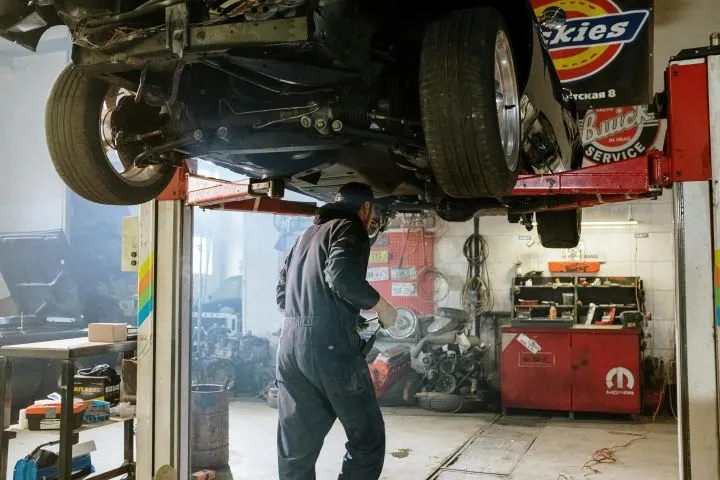
Industry leaders are encouraged to support and fund independent research on the effects of right-to-repair legislation.
IMAGE: Pexels/cottonbro studio
In recent years, automotive industry stakeholders have navigated a changing industry as state and federal government bodies introduce and enact regulations that promise to overhaul and impede the auto manufacturing space.
The regulations, collectively known as right-to-repair laws, are positioned as a simpler and more cost-effective approach to empowering consumers to maintain and repair their vehicles.
Proponents of the movement seek the sharing of repair data, diagnostic tools, and readily available parts. “The idea is that if you bought it, you should be able to repair, modify or do whatever you want with it,” says Thomas DiStanislao, senior counsel at Butler Snow LLC, a law firm involved in right-to-repair law research and litigation. He notes that it’s easy to agree with such a broad sentiment, which explains the movement’s rapid expansion in the past decade.
However, he warns right-to-repair laws also aim for much more: access to intricate coding and diagnostic information essential for after-market repairs and modifications across a wide spectrum of consumer products, automobiles being but one of them.
Trey Bourn, an attorney with Butler Snow, says many consumers have faced repair issues that only the dealership can resolve. “The movement capitalizes on these anecdotal stories. But there is much more at stake. There are privacy, security and proprietary information concerns. These are all factors that must be taken into consideration when preparing a measured response to right-to-repair legislation.”
The regulation poses substantial challenges and potential pitfalls for the entire auto industry, so it’s imperative that manufacturers, dealerships and repair facilities remain vigilant and well-informed as the right-to-repair movement picks up steam.
What is Right to Repair, and Why Is it Needed?
The right-to-repair argument centers on how much access vehicle owners should have to a car’s inner workings and data, and on protecting their freedom of choice in choosing who fixes their cars.
Such laws also aim to level the playing field between dealership service shops and independent repair shops by giving the latter access to all tools and information they need to repair modern cars. There are many diagnostic needs that require a factory tool that after-market shops say they need access to in order to complete a repair.
Consumers benefit from right-to-repair because they get to decide who can access their data and repair their cars.
However, some automakers don’t see things the same way. They sell parts, but after-market shops can use factory parts, after-market parts or refurbished parts from a junkyard, so the concern is that the quality of work and parts at independent shops could be inconsistent and lead to inferior results. Who owns the data is also a concern.
And Stephen Piepgrass, a partner at law firm Troutman Pepper, which is involved in right-to-repair regulatory issues, warns that excessively strict regulations may push manufacturers to remove technology from cars in order to comply while protecting proprietary data.
Right-to-Repair Evolution
Right to repair first made headlines with a Massachusetts law passed in 2013 that guaranteed all information and tools necessary to diagnose and repair vehicles would be available to independent repair shops.
The law required automakers to share telematics and diagnostic data with independent repair shops using short-range wireless technology. The goal was to lower repair costs by increasing competition, by allowing owners of newer models to visit independent repair shops, as well as dealerships, for service, or even fix their vehicles themselves.
The National Highway Traffic Safety Administration cautioned that the law’s wireless provision required open access to data, which could enable malicious actors to tamper with vehicle systems, including safety functions. It warned that it might even allow hackers to command vehicles to operate dangerously as they moved down the road.
“The problem is the more available we make the data, the more hackers will find ways to penetrate it,” Piepgrass says. “These laws can deter technological progress. Auto manufacturers have to have control to make these systems work.”
After the Massachusetts law passed, the auto industry worked with lawmakers to develop a nationwide memorandum of understanding that all could support, though because the MOU is based on the Massachusetts law, only independent shops in that state can bring an action to enforce the law. “This is where automotive manufacturers differ from other industry groups affected by these laws,” DiStanislao says. “They were willing to reach a compromise that protected everyone’s interests.”
The 2014 agreement restricted wireless data transmission to an area near a service shop and limited access to necessary diagnostic and repair information.
“That MOU remains in place today and is working,” writes the Alliance for Automotive Innovation in “Automotive Right to Repair: Myth or Fact. “In fact, the automotive MOU has been frequently cited as a model for other industries to follow when looking to ensure repair options.”
Greater connectivity and telematics further complicated the debate. Today’s high-tech vehicles can require increased access to OEM tools, diagnostic software and telematics information for proper repair. As a result, last July some in the industry entered a new, widely contested voluntary pact regarding the right to repair.
The Automotive Service Association, the Society of Collision Repair Specialists, and the Alliance for Automotive Innovation (which represents 98% of U.S. automakers) entered the new deal to purportedly strengthen automotive right-to-repair measures.
Proponents of the new pact said the agreement gave independent repair shops access to the same diagnostic and repair information as authorized dealer networks. They also say it promised access to the telematics data needed to diagnose and repair a vehicle if not otherwise available and gave all involved access to vehicle technologies and powertrains, including gasoline, diesel, fuel cell, electric battery, hybrid and plug-in hybrid electric powertrains.
In the agreement, stakeholders also pledged to develop education and training initiatives to ensure repair facilities have the knowledge and resources to obtain repair information. And auto manufacturers agreed to provide a forum to discuss future repairer needs as they develop.
Trouble Ahead
In November, voters in Maine turned the earlier agreements on their head when 84% of voters voted yes to Question 4, which asked voters if manufacturers should be “required to standardize on-board diagnostics systems and provide remote access to these systems and mechanical data to owners and independent repair facilities.”
The law’s passage means manufacturers must give vehicle owners and independent repair shops access to the same diagnostic tools they give authorized repair shops, including software, data, tools, parts and more. More significantly, the Maine law also requires OEMs to standardize the digital platform vehicle owners and repair shops use to access the information.
“The floodgates are now open,” Bourn says.
Maine’s law requires OEMs to standardize on-board diagnostic systems and mandates that the state attorney general designate a body to inform manufacturers what must be included. “That has never been done in the industry before,” he says. “That has huge implications across the board.”
The second part of the law grants remote access to vehicle data. “Under the memorandum of understanding, independent repair facilities already have access to the same diagnostic and repair information as authorized dealers,” Bourn says. “But this [law] takes it farther and allows remote access to systems and mechanical data, without any temporal or geographic limitations.”
Bourn suggests that now even a simple tire change could allow someone to access and track telematic data indefinitely. “There is no limitation on how long anyone may have access to the data. This triggers the fear that the NHTSA raised in response to the Massachusetts bill because it’s unqualified and provides a real safety threat.”
The Maine and Massachusetts laws, which are the only right-to-repair laws that address automotive telematics, apply only to independent shops in those states, though there are right-to-repair laws in other states, and any change to the laws has a nationwide effect because it’s impractical for auto manufacturers to meet the requirements of one state and not others.
Where Do We Go From Here?
Automotive manufacturers’ only recourse to the Maine ballot initiative at this point is to litigate or advocate for a new law, DiStanislao says. “Regardless, a measured and quick response is necessary.”
“There will be legal challenges,” Piepgrass says. “We are seeing some of that already.”
Still, DiStanislao suggests that industry leaders and associations support and fund independent, empirical research on the effects of right-to-repair legislation and engage with legislators working on the bills.
“The 2014 MOU shows the auto industry recognizes change is inevitable and is committed to working together to react to that change,” he says. “Automakers need to keep taking this seriously and working with these groups, but they also need to oppose obvious overreach.”
Another option is to work with the right-to-repair coalition on a new memorandum of understanding.
Some parties are advocating for federal legislation that would codify the provisions of the MOU, ultimately guaranteeing consumer choice in vehicle repair. Piepgrass is one of them. Doing so would make right-to-repair laws uniform in scope and application instead of varied from state to state, he says.
“As groups try to expand this legislation further and further, instead of dealing with a patchwork quilt of obligations and duties under various jurisdictions, having the MOU codified would put everyone at rest and allow both sides to move forward together.”
Ronnie Wendt is an editor at F&I and Showroom.
Originally posted on F&I and Showroom
More Fixed Ops
California Dealer Group Foundation Partners With ASE
CNCDA Foundation and ASE Connects collaboration is intended to build California's automotive technician workforce.
Read More →
Dealer Debrief: Fixed-Ops Opportunities
In this week's debrief, host Lauren Lawrence discusses maximizing your dealership's profitability with a focus on fixed operations.
Read More →
Dealer Debrief: Technician Apprenticeships
In this week's debrief, host Lauren Lawrence discusses a new grant for service tech apprenticeships and more industry workforce news.
Read More →
ASE Acquires WrenchWay
The auto technician certification nonprofit said the deal expands its role in workforce-development and support for current and future service professionals.
Read More →
TraXtion Introduces TireSpec Website Solution
The company says the offering enables consumers to snap a photo of their tire with a smartphone and receive an instant replacement quote, capturing 90% of tire shoppers who start their shopping online.
Read More →
UVeye Launches Same-Day Vehicle Listings for Car Dealers
New 'Scan to Sold' offering turns the service lane into a website-ready merchandising photo booth designed to help dealerships reduce turnaround time from days to minutes.
Read More →
RockED, VINCUE Launch Inventory-Management Industry Certification
Offering for retail automotive dealers and operators is designed to address what the companies say is a lack of standardized and modern thought leadership in vehicle life-cycle management.
Read More →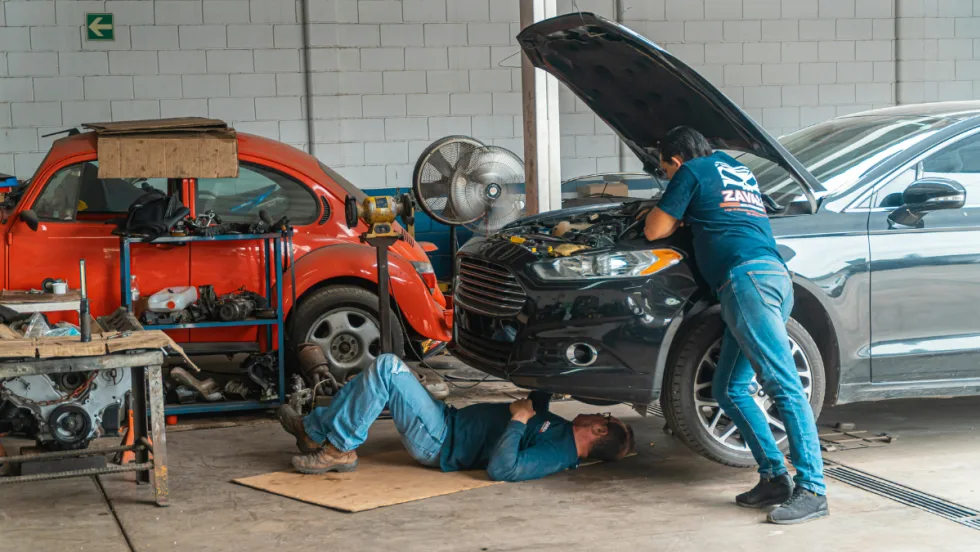
Survey Shows What Technicians Want
Data gathered by the ASE Training Managers Council shows that service technicians prefer classroom or instructor-led training and hands-on lab work over online or self-led training.
Read More →
Automotive Service Pros Month Shifts to October
ASE is making the change to better align with two other sector observances that take place each year highlighting technicians' key role.
Read More →
Extreme Temps Hinder EV Efficiency
American consumers might be happy to know that their preferred hybrids are slightly less impacted by extreme temperatures than fully electric vehicles, according to a new study.
Read More →