



3 Ways EVs (and Chargers) Capture Customers
Dealerships are in a unique position to capitalize on the shift towards a future filled with electric vehicles by transforming the customer experience.
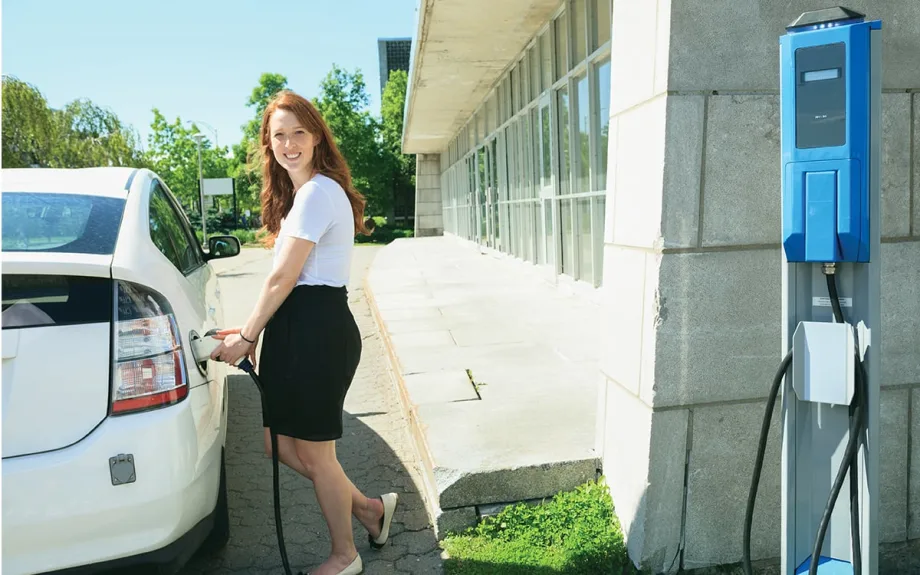
Dealerships are in a unique position to capitalize on the shift towards a future filled with electric vehicles by transforming the customer experience.
photo ©GettyImages.com/LSOphoto
The move toward a future filledwith electric vehicles is gainingmomentum, led by automotive manufacturers themselves. Volkswagen has already announced plans to phase out conventional combustion engine vehicles, while Porsche wants half of its production to be fully electric by 2023, and Volvo aims for half of its sales to be fully electric by 2025.
The rise of EVs offers a unique opportunity for dealerships in the US — and indeed their global counterparts — to transform the customer engagement paradigm and add true value to the customer sales experience.
Dealerships are in unique positions to capitalize from this shift and the added revenue streams it drives; not only by selling a new generation of vehicles, but by increasing foot traffic on the showroom floor by transforming the customer experience. That opportunity starts with charging infrastructure.
As with petrol-powered vehicles, EV owners want — and increasingly demand — fast car charging. Providing a way to do so through the installation of a publicly-available charging station at the dealership will attract both new and existing customers. While the EV is charging, salespeople can showcase their service excellence through ongoing discussions on options for new tires, wheel alignments, servicing, mapping upgrades, software updates, and even new cars.
But not all charging options can yield this volume of return. Ultimately, it comes down to the driving range a charger can add to an EV.
1. Power the customer and drive foot traffic.
In 20 minutes, a typical 7.2kW home charger can add just under nine miles of range to a vehicle, while a 25kW commercial charger can add about 30 miles of range. Many dealership leaders might be tempted to install one of these options as a low-budget solution, however the return on investment is very limited. While they may be suitable for the dealership’s needs up to the point of sale, they will not generate the type of ongoing value that converts one-time visitors into repeat customers.
A recent ABC News/Gallup poll found that the average daily commute for drivers in the United States is about 16 miles. At the aforementioned charge speeds, an EV owner would need to wait about 10 minutes with a 25kW charger to add enough range to match that average, which is just enough for a daily commute. They’d need 40 minutes with a 7.2kW charger.
These inhibitions have rendered 50kW DC fast chargers as the standard — in 20 minutes, these chargers can add 60 miles of range, or nearly four days of the average daily commute in the US.
The availability of a fast charging option transforms a dealership into a trusted charging station that is likely to have EV owners re-visiting. Customers are guaranteed a dedicated pit-stop where they can top up quickly if their batteries are low.
2. Attract repeat business with fast charging.
A tire company in Australia announced its plans to install 50kW DC fast chargers at all of its stores. The reason for the move is clear: while a customer charges a vehicle, salespeople can discuss everything from optional tire checks to re-treads, and potentially close another sale.
A 20-minute charge window is short enough to attract the driver who wants short wait-times that add enough range for their needs, and long enough for a salesperson to meaningfully engage. In the time it takes to add 60 miles of range to a vehicle, alert salespeople can discuss everything from software and firmware upgrades to newer models.
In this scenario, the charger delivers ongoing value-additions to the business, rather than a sunk cost. Salespeople can build relationships with their customers that extend beyond the original sale of a vehicle — and with the threat of the online marketplaces, this is a unique opportunity to attract a loyal breed of customers.
3. Transform the image of the dealership.
In addition to the engagement benefits, existing 50kW DC fast chargers can be designed and manufactured to transform the face of a dealership and position it firmly on the cutting edge.
Modern 50kW chargers resemble state-of-the-art petrol pumps with interactive interfaces. They can be installed outside and can handle weather of all kinds — from sub-30 degrees all the way to 50 degrees Celsius in some cases — and they can also be installed inside the dealership as both the charger and the cars do not emit fumes. Additionally, they can be customized to suit or enhance the dealership aesthetic. Chargers can be modified with the dealership’s logos and colors, while the physical footprint of these chargers can be minimal — thus ensuring they are in line with the look and feel of the dealership.
But most importantly, EVs are considered progressive, green and technologically advanced — and installing a modern, fast charger with similar traits — will only serve to enhance the dealer brand.
EVs are not just here to stay — they will become the status quo. With that comes a new wave of business — and repeat business. Unlike combustion engine vehicles (in which return business often boils down to contractual servicing requirements), electric equivalents allow dealerships to foster long-lasting relationships and brand loyalty.
The rise of EVs offers a unique opportunity for dealerships in the US — and indeed their global counterparts — to transform the customer engagement paradigm and add true value to the customer sales experience.
Marcelo Salgado is chief sales officer for Tritium, an Australian electric vehicle infrastructure firm.
More Dealer Ops

How to Avoid Phone Scams | Dealer Debrief 09/10/2026
Are you taking the necessary steps to protect your dealership and customer data from phone-based scams? This week's Dealer Debrief breaks down how!
Read More →
Dealer Debrief: August Auto Sales
Gas-powered engines still dominate the U.S. vehicle market, but hybrids are gaining ground as consumers look for ways to cut their gas costs.
Read More →
Dealership Profits Decline
While new and used retail sales stagnated, dealerships have been particularly supported by fixed operations and finance-and-insurance profits, according to a new report.
Read More →
Dealer Debrief: Defection Data & EV Updates
In this week's debrief, host Lauren Lawrence discusses how to use defection data to your advantage and the latest on EV sales and charging infrastructure.
Read More →
How Defection Data is Bridging the Dealership Conversion Gap
Lead volume is flat, cross-shopping is up and brand loyalty is in retreat. As confident sales teams keep losing buyers they thought they had, daily industry sales data is showing dealers exactly where their funnel is breaking and how to fix it without buying a single new lead.
Read More →
Dealer Debrief: Where are you losing customers?
In this week's debrief, host Lauren Lawrence discusses the hidden leaks in dealerships where you might be losing customers without even realizing it.
Read More →
Dealer Debrief: Improving Your Inventory Management
In this week's debrief, host Lauren Lawrence covers a new survey that shows what service technicians really want and two launches that could help improve your inventory and vehicle life cycle management.
Read More →
Ladies and Gentlemen, This Is a Dealership: Why the Fundamentals Still Decide Who Wins
A teaching moment by a legendary football coach happens to apply perfectly in the auto retail space. Learn what it is and how to use it to your store’s advantage.
Read More →
Dealer Ads and the FTC
The agency has made it clear in recent enforcement actions and warnings, in auto retail and other industries, that advertised prices must include all nonoptional costs to the consumer.
Read More →
Used Autos Supply Dwindles
The March shopping surge, despite high prices, cut into inventory by the most since the thick of the pandemic, Cox Automotive analysts calculated.
Read More →