



Back on the Road
Meet four dealers who are closing deals and driving loyalty by providing a much-needed service to customers who have filed for bankruptcy.
Several years ago, after the U.S. housing market collapsed, Angie Vines found herself in an increasingly desperate situation. She and her husband, Michael, were homeowners themselves, and Michael was in the flooring industry. When he was laid off by the company he had worked for the past 10 years, the Vines were pushed to the brink.
“We had to file for bankruptcy to hold onto the house,” Angie says. She had reason to be hopeful for a fresh start. She was on track for a prosperous career in finance and Michael was able to find flooring jobs on his own. But there was one last obstacle: Michael needed a dependable truck, and it seemed unlikely they could qualify for an auto loan.
That’s when Angie learned about Prestige Financial, a subprime finance company based in Salt Lake City. Prestige was able to finance the Vines’ purchase of a late-model Chevrolet pickup. The initial interest rate was high — 17.9 percent — but Angie says the price was right and the payments were manageable. By setting up automatic payments and making them on time for six months, they were able to begin reducing the rate.
After going through bankruptcy, “we didn’t know what to expect,” she says. “To our surprise, we were able to get this done.”
For sports broadcaster Ben Catley, bankruptcy was the end result of a softball injury. “I was trying to run down a play at first,” he says about the Achilles tendon injury he sustained. “I got up, and I could move. But it didn’t heal right.”
The injury, which would eventually require a costly surgery and rehabilitation, occurred just as Catley was getting started in a challenging field. Employment was seasonal, and he often had to drive 100 miles round trip to work a game. With his medical bills stacking up, bankruptcy was the only way out. He filed in June 2003.
“I had managed to somehow get a new car before that,” he says. “I couldn’t make the payments. I was sweating. I had no idea what I was going to do.”
Catley looked for answers online. He learned that financing was available for car buyers with recent bankruptcies. He found Prestige Financial and wound up in a 2002 Saturn L200 at a 21 percent interest rate on a six-year deal — terms he chuckles at now. Like the Vines, he was able to reduce his rate over the life of the loan. His career took off and the Saturn held up over tens of thousands of miles. “One of my proudest moments was when I got the title in my hands,” he says.
The Vines and Catley both found a new vehicle when they needed it most, and both used the loans to rebuild their credit. Their stories aren’t unique, and Prestige isn’t the only finance company that specializes in bankruptcy customers. Several established national and regional lenders, including Consumer Portfolio Services (CPS), First Investors, Friendly Finance Corp. and Tidewater Finance Co. also offer programs for recent bankruptcies. So what makes “BK” customers so creditworthy?
Watching the Market
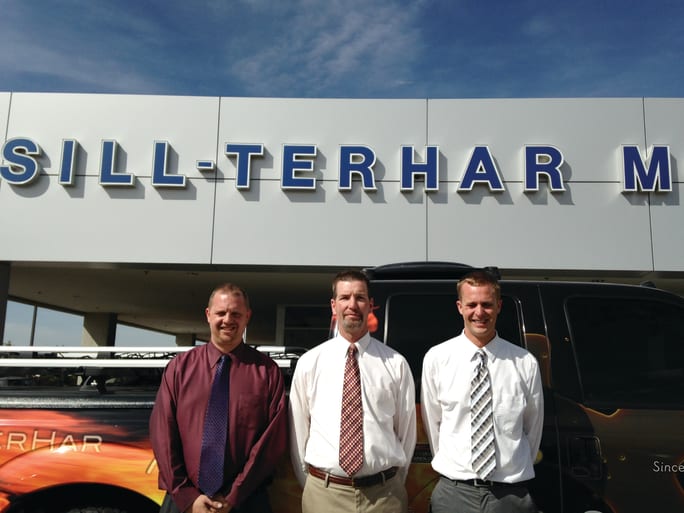
Bryan Reese, special finance director at Sill-TerHar Motors in Broomfield, Colo., says customers who recently filed for bankruptcy are a safer bet than those with other types of credit issues. “They don’t owe anybody money, and they can’t just file for bankruptcy again,” he says. “They pay their bills but something happened. It could be a divorce, loss of job or a medical issue.”
Sill-TerHar moves upward of 40 special finance units each month, most of which are BKs. Reese partnered with Chandler, Ariz.-based OnlineBKManager.com to funnel leads to the store. That company’s president, Robert Davies, says those deals get funded for one simple reason: Finance companies know they’ll bolster their loan portfolios, and that increases their access to capital.
That wasn’t always the case, however, particularly after the 18-month credit freeze that followed the burst of the housing bubble. Subprime mortgages, not auto loans, were to blame, but dealers and car buyers suffered. By the time capital began to flow back into the market, Davies says investors had come to their senses.
“In 2009, Prestige Financial became the first to do a securitization,” he notes. “It was small, about a $150 million portfolio. But it showed the world that subprime automotive works.”
Sources and options for financing have multiplied ever since, and Davies says there is no shortage of customers looking for dealers who will work with them. His sources report a steady flow of 25,000 to 28,000 new bankruptcy filings and discharges each week this year.
Skip Cowan has been financing bankruptcy customers at Rock Honda in Fontana, Calif., since 1994. Today, that’s all he does, and his four-man department closes 35 to 45 deals every month. His title is “VIP services director.”
“That’s how we look at those customers,” he says. “We really think they are VIPs.” Cowan makes a personal investment in each customer. He believes that people who are dealing with personal issues shouldn’t be subjected to the standard sales process. Much of his time with customers is spent explaining how the deal they get today will lead to more favorable terms in the future.
“I believe I have the highest repeat and referral rate in the store,” Cowan says. “My customers move on to other departments once their credit is better.”
Building a Reputation
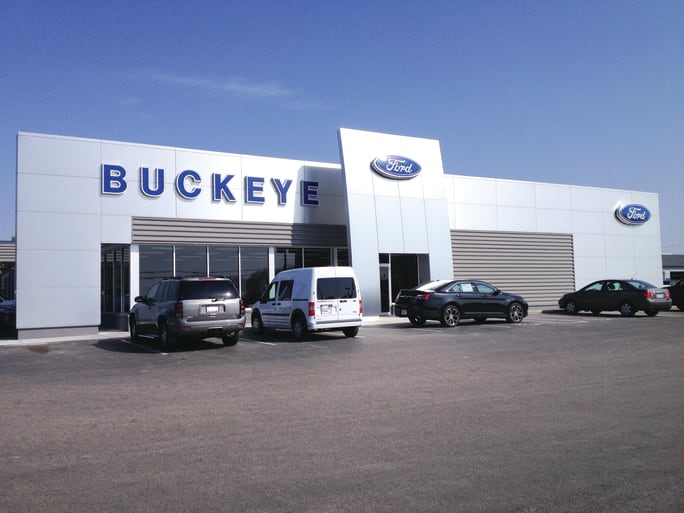
PJ Taylor, F&I director at Buckeye Ford in London, Ohio, says that 25 percent of his business is repeat customers or referrals. He stands behind Buckeye’s special finance expertise and never hesitates to ask car buyers to refer their family or friends. “They might not be a BK, but there’s a good chance they’re subprime,” he says.
Taylor uses a combination of radio, TV and direct mail to advertise his services. He also relies on referrals from local bankruptcy attorneys, but he cautions that not all attorneys are aware of the options available to their clients.
“They have the option of keeping their car in the bankruptcy,” Taylor says. “So they include a $13,000 [obligation] that’s only worth $8,000. That’s $5,000 in negative equity, and that puts them in a bad position.” He would advise the same customer to let their old vehicle go and start over with something they know will last.
“If the income is there, we can put them in a new Ford,” Taylor adds.
Dave Klaiber is a partner with Carolina Auto Pros LLC, a North Carolina-based firm that helps dealers set up programs for bankruptcy customers. He has worked in the segment for 15 years in multiple states. Klaiber agrees that attorneys are a good source of leads, but dealers must be prepared to fill in the gaps.
“You’d better know the laws before you talk to customers,” he says. “You’ve got to educate them. ‘Pay your loan on time, don’t get anything negative, come back and cut your rate in half.’”
Klaiber says his primary goal is to create a lifelong customer. To do that, he says, you have to give them a fair price to counter the steep interest rate. “The interest rate is determined by the bank. Don’t bury them in [the deal]. Get them halfway through their term. After 12 or 24 months, now their rate can drop from 18 or 20 percent to 12 or 13 percent.”
Klaiber speaks from experience. Several years ago, following a contentious divorce, he filed for Chapter 7 bankruptcy. He gave up his car and, rather than pulling a replacement from his inventory, financed a year-old Honda Accord coupe. He then made a year’s worth of payments before refinancing. “I’ve got a story to tell,” he says. “I rebuilt my credit.”
Searching the Inventory
Bankruptcy customers who are surprised to learn they can get financing have another surprise waiting at the dealership: a better selection of vehicles than most special finance customers are afforded.
“Two weeks out of BK, you can get zero percent on a new Ford,” says Sill-TerHar Motors’ Reese. “That’s zero down, no payments for 45 days. But when you come back, you’ll have to put money down.” Reese adds that not every BK customer qualifies for zero percent, but those who do are “quite happy.”
Rock Honda’s Cowan says “pretty much anything” can be a BK unit, including new cars and late-model used cars — as long as they have less than 120,000 miles on the odometer. Klaiber said recent deals have included a 2010 Toyota Rav4 with 6,000 miles and a good-as-new 2012 Nissan Altima SE-R.
“A lot of people are uninformed as to their options,” Taylor says. “You can get a better vehicle.” The quality of the vehicles available to Buckeye Ford’s BK customers speaks to their experience in the F&I office.
“They’re going into bankruptcy for a reason,” Taylor adds. “Get them while they’re still in it. Help them get out.”
OnlineBKManager’s Davies agrees. Since he focused his 17-year-old business on bankruptcy leads five years ago, his confidence in the segment has grown. “I look at the service we’re providing,” he says. “The dealer makes money. The lender makes money. … If dealers don’t want to sell BKs, they should shut their doors. The inability to work with those people means closing themselves off to a big piece of the market.”
Reese advises dealers who do enter the segment to give BK customers “the red-carpet treatment.”
“You’ve got to treat these folks right,” he says. “It’s a chance to make somebody happy.”
Tariq Kamal is a media consultant based in Los Angeles. Contact him at tariq.kamal@bobit.com.
More Dealer Ops

Dealer Debrief: August Auto Sales
Gas-powered engines still dominate the U.S. vehicle market, but hybrids are gaining ground as consumers look for ways to cut their gas costs.
Read More →
Dealership Profits Decline
While new and used retail sales stagnated, dealerships have been particularly supported by fixed operations and finance-and-insurance profits, according to a new report.
Read More →
Dealer Debrief: Defection Data & EV Updates
In this week's debrief, host Lauren Lawrence discusses how to use defection data to your advantage and the latest on EV sales and charging infrastructure.
Read More →

How Defection Data is Bridging the Dealership Conversion Gap
Lead volume is flat, cross-shopping is up and brand loyalty is in retreat. As confident sales teams keep losing buyers they thought they had, daily industry sales data is showing dealers exactly where their funnel is breaking and how to fix it without buying a single new lead.
Read More →
Dealer Debrief: Where are you losing customers?
In this week's debrief, host Lauren Lawrence discusses the hidden leaks in dealerships where you might be losing customers without even realizing it.
Read More →
Dealer Debrief: Improving Your Inventory Management
In this week's debrief, host Lauren Lawrence covers a new survey that shows what service technicians really want and two launches that could help improve your inventory and vehicle life cycle management.
Read More →
Ladies and Gentlemen, This Is a Dealership: Why the Fundamentals Still Decide Who Wins
A teaching moment by a legendary football coach happens to apply perfectly in the auto retail space. Learn what it is and how to use it to your store’s advantage.
Read More →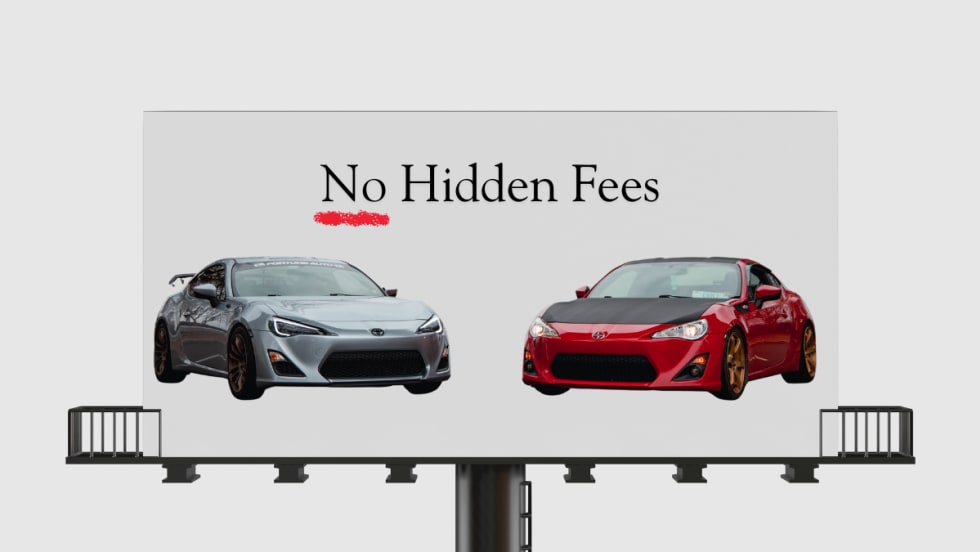
Dealer Ads and the FTC
The agency has made it clear in recent enforcement actions and warnings, in auto retail and other industries, that advertised prices must include all nonoptional costs to the consumer.
Read More →
Used Autos Supply Dwindles
The March shopping surge, despite high prices, cut into inventory by the most since the thick of the pandemic, Cox Automotive analysts calculated.
Read More →
Managing Risk Effectively Through Changing Times
The variables influencing risk pricing have changed significantly over the past five years. Being proactive and responsive to emerging trends is not optional but essential.
Read More →