



Best Practices to Market Used Inventory Online
Technology expert Ali Amirrezvani offers a number of tips for effectively marketing your used inventory online.

According to NADA Data, most dealerships get twice as much gross profit from their used vehicle sales than from their new unit sales. Because there is so much gross profit in a used car, it is extremely important to effectively market your used inventory, particularly online, where over 90 percent of your shoppers are researching their next purchase. Here are some best practices to effectively market your used inventory.
1. Effectively Market Your New Inventory
Remember that almost half of the customers who submit a new vehicle lead end up buying a used car. The more effectively you market your new car inventory, the more traffic you’ll get to your showroom, and the more leads your Internet sales team will have to put into a car, new or used. Almost all of the tips below can be applied to new or used vehicles, so use them for both sides of your inventory to maximize your sales.
For new inventory in particular, don’t be afraid to adopt a pricing model that allows you to merchandise a coupon or offer on your website and in your advertising. While your competitor may have the same OEM inventory that you do, consumers don’t fully understand the numerous permutations of the same model (trim line, option packages, etc.). What consumers do understand is getting a coupon or incentive to buy a vehicle from your dealership (as opposed to a competitor); it can increase your website’s conversion rate by 50 percent or more if used effectively.
2. Optimize Your Used Inventory for Google’s Organic Results
It can be difficult to get your used vehicles to index and rank on Google, since your vehicles are going in and out of your inventory (and on and off of your website) every 60 days or so. Don’t make it even harder by skipping any of these steps:
• Make sure that every vehicle in your inventory has its own page and URL. It needs to be included in both your regular sitemap and the XML sitemap for your website.
• Optimize your vehicle pages around the year, make, model and geographic areas your dealership covers. In terms of on-site SEO, the title tags, URL and the on-page content should all reflect these four pieces of information that consumers use to search for used vehicles.
• Create a great used vehicle search page that can index for terms like the manufacturer’s name, “used,” “pre-owned” and “certified” and the geographic keyword terms your dealership uses. This is important because this page won’t cycle off of your site like your individual used vehicle pages will.
• Blog about your used inventory. Your used vehicles may turn over, but if you’ve got a blog (ideally incorporated within your dealership’s website), you’ve got a great place to build permanent, optimized content around important keywords that can link to your used inventory.
3. Use Google AdWords to Merchandise Your Used Inventory
Create ads and campaigns for every used vehicle in your inventory. Remember that a used vehicle generates a higher gross profit, so if you’re tracking your paid search for used vehicles, remember that you can afford a higher cost per lead for a used car. Also, make sure you track your calls; we’ve seen that email leads only account for a minority of the leads from a paid search campaign.
4. Create a Great Vehicle Details Page for your Used Inventory
At DealerOn, we’ve created the M.A.S.T.E.R. website optimization framework. Here’s how to apply it to a used vehicle details page:
• Motivation – Provide a consumer who lands on your used vehicle details page a reason to submit a lead. Instead of the call to action for your lead form being “Request Information,” make it “Request Sale Price.” Give them a reason to provide you their contact information.
• Action – Provide a clear, obvious and relevant call to action. Don’t give them five competing choices right next to each other (e.g., Request Information, Request Trade-in, Calculate Payment, Get Pre-Approved, Request Test Drive).
• Simplicity – Keep it simple. Limit the fields you require on the form; don’t ask for any fields you’re not going to use. If you require any fields besides name, phone number and email, make sure you have a valid reason for doing so.
• Trust – Consumers do business with companies they trust. Give them reasons to trust you on your vehicle details page. Include your 10 most recent positive reviews on your vehicle details page, so customers can see that people who were going through the car-buying process a few months ago made the decision to buy from your dealership and are very happy about having done so. If your dealership is a President’s Award Winner, put that on the vehicle details page. It is the most effective place on your site to use your positive reviews and validation.
• Education – Make sure you have all important buying-decision information on the vehicle details page, particularly any information related to:
• Risk Reduction – This is huge! If a vehicle has a CARFAX, if it is a CARFAX One-Owner vehicle, if it’s a CPO, if it has a 30,000-mile warranty, etc., make sure the customer has this information in plain view on the vehicle details page. Each one of these items reduces the risk for a consumer.
Vol. 9, Issue 7
More Dealer Ops
How to Avoid Phone Scams | Dealer Debrief 09/10/2026
Are you taking the necessary steps to protect your dealership and customer data from phone-based scams? This week's Dealer Debrief breaks down how!
Read More →
Dealer Debrief: August Auto Sales
Gas-powered engines still dominate the U.S. vehicle market, but hybrids are gaining ground as consumers look for ways to cut their gas costs.
Read More →
Dealership Profits Decline
While new and used retail sales stagnated, dealerships have been particularly supported by fixed operations and finance-and-insurance profits, according to a new report.
Read More →
Dealer Debrief: Defection Data & EV Updates
In this week's debrief, host Lauren Lawrence discusses how to use defection data to your advantage and the latest on EV sales and charging infrastructure.
Read More →
How Defection Data is Bridging the Dealership Conversion Gap
Lead volume is flat, cross-shopping is up and brand loyalty is in retreat. As confident sales teams keep losing buyers they thought they had, daily industry sales data is showing dealers exactly where their funnel is breaking and how to fix it without buying a single new lead.
Read More →
Dealer Debrief: Where are you losing customers?
In this week's debrief, host Lauren Lawrence discusses the hidden leaks in dealerships where you might be losing customers without even realizing it.
Read More →
Dealer Debrief: Improving Your Inventory Management
In this week's debrief, host Lauren Lawrence covers a new survey that shows what service technicians really want and two launches that could help improve your inventory and vehicle life cycle management.
Read More →
Ladies and Gentlemen, This Is a Dealership: Why the Fundamentals Still Decide Who Wins
A teaching moment by a legendary football coach happens to apply perfectly in the auto retail space. Learn what it is and how to use it to your store’s advantage.
Read More →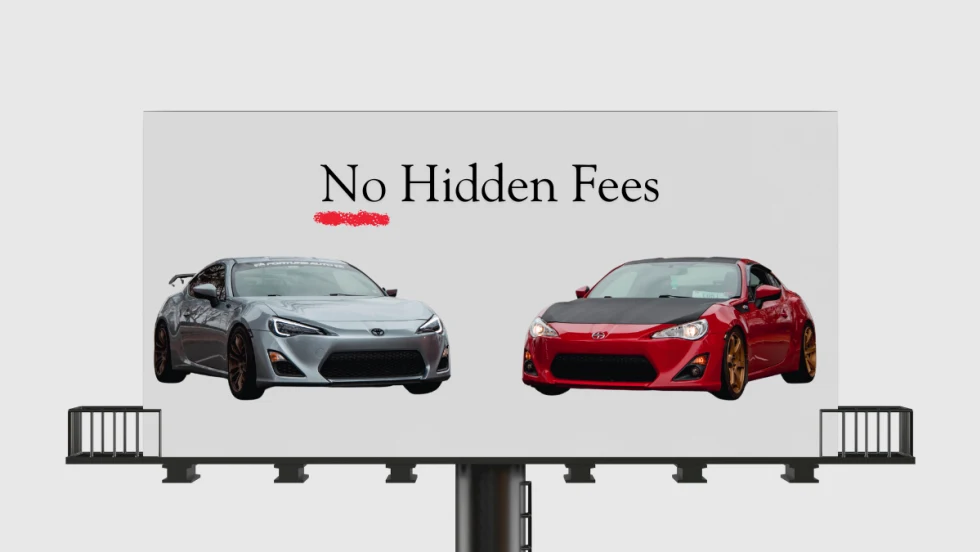
Dealer Ads and the FTC
The agency has made it clear in recent enforcement actions and warnings, in auto retail and other industries, that advertised prices must include all nonoptional costs to the consumer.
Read More →
Used Autos Supply Dwindles
The March shopping surge, despite high prices, cut into inventory by the most since the thick of the pandemic, Cox Automotive analysts calculated.
Read More →