



Change How You Interact with Service Customers: The Future Depends On It
David Boyle - Why is it with all the advances in technology and processes, the way we sell service and interact with our customers hasn't changed in decades?...

Change is inevitable. Truer words were never spoken. If you’ve ever had the privilege to work in the auto industry, you’ve likely dealt with many changes. If you have been around as long as I have, you have seen the transition from handwritten repair orders to service advisors not being able to do anything without a computer. We have gone from skilled technicians who could rebuild a carburetor to skilled technicians who can diagnose and replace one of the many on-board computers in today’s automobiles.
Why is it that, with all the advances in technology and processes, the way we sell service and interact with our customers hasn’t changed in decades? “Bring it in early; we will check it out and call you if it needs anything.” Sound familiar? It’s the mantra of almost every service advisor.
Adapting for Customers
There are not too many retail businesses today that haven’t adapted their processes to handle e-commerce, electronic communication and other forms of technology to advance the consumer experience. I’m not just talking about a Web site. I’m referring to implementing technology in processes across the entire spectrum of customer handling. Not only will you be more desirable to do business with, but it can also have a huge impact on your future profitability.
I recently ordered flowers for Mother’s Day. I used an online company to make my purchase (I’m so glad I don’t have to set foot in a flower shop anymore). About an hour after I placed my order, I received a response on my BlackBerry. They captured my e-mail address during the transaction and asked permission to use this method to communicate with me. I gladly gave them my permission as e-mail has been my preferred method of communication for a long time. In their e-mail message, they apologetically informed me that they were unable to fulfill my order and explained why.
In the same e-mail, they proactively offered me three alternatives in the same price range and included pictures so I could view my options. About 20 minutes after selecting my alternative, I received a second e-mail confirming my order change. All very convenient, and I loved the fact that I could do this on my BlackBerry while I was in a meeting. I should also add that I was dealing with a real person; at one point, I replied to an e-mail with a question about delivery. I was surprised to get a personalized response from a customer service rep who provided her direct e-mail address if I had any further questions. Great service, so easy and most importantly, the way I wanted it.
Customer Interaction
Do you interact with your customers the way they want? Do you even ask if they have a preferred method of communication? Is it easy for your service advisors to send e-mail? Can they include an attachment or is your firewall too restrictive to easily allow that type of communication with customers? It’s time that we as an industry get out of the dark ages and start to act like a 21st-century business.
A recent article in USA Today stated over one billion Americans have a PC and over three billion have a mobile phone, most of which are able to receive text and e-mail messages. If that assessment is correct, why must our service advisors be limited to the same old method of contact, which often results is seemingly endless games of phone tag with customers? Customers must be refusing to provide their e-mail addresses and prefer to be contacted only by phone, right? At least, that’s what many service managers tell me. However, I don’t think that’s true.
Now this is hardly scientific, but recently I took a poll. I asked 20 people in my office if they would prefer receiving an e-mail about the status of their vehicle rather than a call, and 100 percent said they’d prefer e-mail. I also asked if they would give their e-mail addresses to the dealership for that purpose, and again, all said yes. Most went on to elaborate that if it was explained to them that the e-mail would be used for this purpose and not for a spam campaign, they would gladly provide it and would be motivated to keep that address up to date if it should change.
Have a process during write-ups to educate the customer and give them choices of how you can contact them with a status update or an estimate. There is perceived value and benefit in this for the customer, and this value outweighs the e-mail privacy risk. They will likely grant permission for you to use their e-mail for this purpose. Selling service when the customer is not in front of you is always more challenging, but if the customer is looking at a very professional e-mail that clearly explains what they need, that conversation is much easier and much more effective.
Household Purchase Decision
Many industries use this term; however, the automotive service industry typically does not. The term has to do with understanding the buying behavior of your customer. The consumer electronics industry is particularly good at this. They acutely understand that buying a $2,000 HDTV is not an impulse purchase and as a result have built processes and supporting tools to educate the consumer, realizing that the transaction will not likely be a one-stop shop. They even promote shopping around and have perfected the art of bringing the customer back with things like price match guarantees.
We have not adopted this method in service, as our selling process is geared toward the person who brought the car in and focuses on same-day or on-the-spot decision making. A major factor that enters into a “household purchase decision” is cost. The price of some products makes their purchase a joint (husband and wife) decision, regardless of who the end user is. The cost of vehicle ownership has increased, and I’m not talking about $4+ a gallon for gas. As vehicles have become more technologically advanced, the price of maintenance and repairs has skyrocketed. Spending $800 or $1,000 per visit is common these days. This means it is much more likely that spending money for automotive service will be a household purchase decision.
Do we really think that a customer who brings their car in for service and receives an inspection and estimate for $1,000 is going to make that decision while standing in your service drive? Consumer experts will tell you the answer is almost never. Oftentimes, a lot of thought is required by the customers to determine how they are going to pay for it. Once, when picking my car up at the dealership, I watched the customer in front of me pay his $900 repair bill with a combination of two credit cards and cash. Repairs are expensive these days and we can’t afford to take that fact for granted.
If we understand this, then shouldn’t we have recommendation processes and then allow a customer to leave to think about? For years, we have frowned upon this because, “Once they leave they are gone,” was the adage we managed and trained by. A mark of a good service advisor is one who sells a lot, right? We measure up-sells and add-on lines, but nowhere do we measure how many customers left to think about it and later returned. I would argue that the advisor who excels in this area is even more skilled than one who sells a lot.
You must have the ability to explain the needed services in a low-pressure environment and give customers the option to leave and get back with you. You must give them documentation explaining the needed service that will continue to sell for you after they leave. You must have the ability to track if they return; if they don’t, take further action. Technology will allow this to happen. Your customers will thank you for it and you will sell a lot more service as well.
Empower Your Customers
Put a consumer in a position to buy rather than be sold and they will spend more—a lot more. Good retail salespeople have known this for years. Your dealership probably has many vehicle salespeople who have mastered this skill. Again, technology can give this skill even to the weakest-selling service advisor. Educate the customer, give them options and let them tell you how they want to spend their money.
We need to be rid of the days of telling customers, “Your evaporator valve needs to be replaced, and it’s around $350. Do you want me to do that for you?” We need to clearly explain in writing what’s needed, what the necessary part/service does, why the customer needs/wants it and the cost. If there are multiple things on an estimate, you need to give them options like: “The evaporator valve should be done today. However, the AC condenser could wait, although I would get it done before summer.”
The good news for many service advisors is if this is done, they will no longer be under the pressure to sell. A good “recommender” (not seller) who involves customers in the decision process will outsell just about anyone. Take a look at your service selling process. Is it all verbal? Do you give detailed pricing? What tools do your service advisors have to work with? Below is a list of a few things that you must have as part of a good recommendation process.
All estimates must be in writing and presented to the customer.
Every item must be priced separately.
If you can, use props or pictures to educate customers on what they are buying.
Give them options if there are things that can wait.
If something is declined (because of a household purchase decision), make sure that is noted and when the customer leaves, send information with them that will sell for you. (This is not something typed in shorthand on their invoice.)
Most importantly, keep all your estimates. When they do come back for the work, nothing is more frustrating for a consumer than having to start all over again
The Future
A century ago, Henry Ford considered the idea of giving cars away and making his money by capturing all the repair business. For over a decade now, I have been listening to dealers pay lip service to the idea that service is the future. Well, the future is now, and it’s time to get serious.
Most dealers could be wildly profitable if they just captured a fraction of the service business that is walking out their door every day, so take your cue from other retail industries. Become the consumer retailer that they want and watch the revenue and profits roll in.
Vol 5, Issue 9
More Dealer Ops
How to Avoid Phone Scams | Dealer Debrief 09/10/2026
Are you taking the necessary steps to protect your dealership and customer data from phone-based scams? This week's Dealer Debrief breaks down how!
Read More →
Dealer Debrief: August Auto Sales
Gas-powered engines still dominate the U.S. vehicle market, but hybrids are gaining ground as consumers look for ways to cut their gas costs.
Read More →
Dealership Profits Decline
While new and used retail sales stagnated, dealerships have been particularly supported by fixed operations and finance-and-insurance profits, according to a new report.
Read More →
Dealer Debrief: Defection Data & EV Updates
In this week's debrief, host Lauren Lawrence discusses how to use defection data to your advantage and the latest on EV sales and charging infrastructure.
Read More →
How Defection Data is Bridging the Dealership Conversion Gap
Lead volume is flat, cross-shopping is up and brand loyalty is in retreat. As confident sales teams keep losing buyers they thought they had, daily industry sales data is showing dealers exactly where their funnel is breaking and how to fix it without buying a single new lead.
Read More →
Dealer Debrief: Where are you losing customers?
In this week's debrief, host Lauren Lawrence discusses the hidden leaks in dealerships where you might be losing customers without even realizing it.
Read More →
Dealer Debrief: Improving Your Inventory Management
In this week's debrief, host Lauren Lawrence covers a new survey that shows what service technicians really want and two launches that could help improve your inventory and vehicle life cycle management.
Read More →
Ladies and Gentlemen, This Is a Dealership: Why the Fundamentals Still Decide Who Wins
A teaching moment by a legendary football coach happens to apply perfectly in the auto retail space. Learn what it is and how to use it to your store’s advantage.
Read More →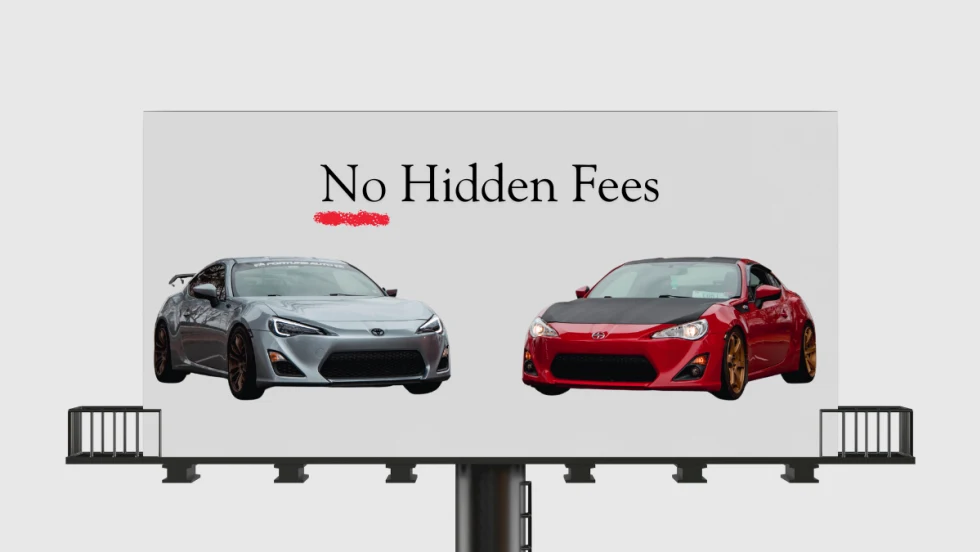
Dealer Ads and the FTC
The agency has made it clear in recent enforcement actions and warnings, in auto retail and other industries, that advertised prices must include all nonoptional costs to the consumer.
Read More →
Used Autos Supply Dwindles
The March shopping surge, despite high prices, cut into inventory by the most since the thick of the pandemic, Cox Automotive analysts calculated.
Read More →