



Five Steps To Structuring Special Finance Deals
Greg Goebel - Gross profit makes the world go ‘round. You can’t spend a “unit,” a “deal,” or any other measurement——it all revolves around the gross. What then, does it take to earn that gross, and what exactly should our target be?...

The seventh in a series on the Ten Critical Components of Special Finance Success
Special Finance involves Ten Critical Components. We have spent the last six articles detailing the steps necessary to build a foundation for the department and to process customers through the door. It is all for naught if we can’t structure the car deal to maximize the opportunities for gross profit. Gross profit makes the world go ‘round. You can’t spend a “unit,” a “deal,” or any other measurement—it all revolves around the gross. What then, does it take to earn that gross, and what exactly should our target be?
First, a sidebar. When discussing gross profit, remember all references are to general ledger gross profit. You must add back in any soft packs (amounts added to the true inventory cost of the vehicle to reduce commissions payable) to determine these. General ledger gross profit is the number actually reported on the financial statements.
Next come the targets. For franchise and independent dealers, the target for front-end (vehicle) gross profit is the same, with $2,625 being the 75th percentile guide. For Special Finance dealers, average is $2,008. On the other hand, because independent dealers have fewer finance companies available, the guides for back-end (finance and insurance) gross profit are not the same. The guide for franchise dealers is $785, while it drops to $740 for independents.
So, how do we reach and exceed these targets? There are five steps to follow after the appropriate finance company has been determined during the sales process.
Step number one, you must expect and believe you can attain these gross profits. Don’t set your standard for a “bell-ringer” deal at $3,000 or $3,500. Instead, set it for $5,000, $6,000 or more. Don’t rationalize smaller numbers. I assure you these are very real. The guide is based on the 75th percentile, which by definition means that one in four dealers is performing even better, while three in four do worse. I have worked with many dealers that would be sorely disappointed to settle for these targets.
In step two, we begin to calculate the deal. Think “Bottoms Up!” No, that does not have anything to do with consuming something purchased in the form of a six-pack (although there are times when short deals might lead someone to doing so). Bottoms Up simply means starting the deal at the bottom rather than at an advertised price.
For example: After reviewing the customer statement and credit information, you feel certain that your buyer will only qualify through a finance company that will advance 115 percent of invoice or NADA trade value for the vehicle, and 135 percent of the NADA trade including tax, tags and after-sale products. Additionally, the finance company will cap the payment at no more than 15 percent of the buyer’s monthly income. This isn’t a problem if you are aware of it in advance, but if you have a customer sold on a vehicle and need to finance MSRP or more, you are obviously in big trouble.
First, we must determine the maximum monthly payment allowed by the finance company. We simply multiply the buyer’s monthly income by 15 percent, and we immediately know what the largest monthly payment will be.
Time to involve step three—inventory. It is important to ensure that the vehicles you suggest will work within both the buyer’s and the finance company’s budget. Metaphorically speaking, don’t try to put size 13 feet into size 10 shoes. You want to select vehicles that can be sold at full-maximum gross profit, as opposed to one where the finance company will cap the sale price due to advance or maximum allowed monthly payment. You should have your vehicles already booked out and sorted by monthly payment (or should be using software that performs that function quickly). This allows you to know which vehicles will (at full-gross-profit opportunity) fit into applicable payment range.
Then, direct the buyer to three vehicles that will all fit inside the monthly payment cap set by the finance company. My stores would select the highest potential gross profit, the oldest unit and a vehicle slightly less expensive than the other two.
Once the buyer has selected a vehicle, the maximum advance available on that vehicle from the chosen finance company is determined by using the NADA book and multiplying the Average Trade Value by 115 percent (the maximum allowed by the finance company in this example). Adding the available down payment to the maximum vehicle advance provides the maximum sale price available. This will give you the maximum vehicle gross profit that can be financed by this finance company. Since this is the maximum allowed, you wouldn’t want to negotiate a deal resulting in a higher sale price, as you know in advance that the finance company would not fund it.
Finally, multiply the same book value by 135 percent. This amount will be the maximum amount that can be advanced for the entire deal. To determine how much room there is for back-end product, we subtract the 110 percent amount from the 135 percent amount, then any monies required to cover tax, title and tags (since we have to record perfect a lien). The remainder is the amount of money available to sell a service contract, GAP, credit life or any other back-end product.
Using this process, you have now a structured a deal that when contracted will fall within the finance company’s guidelines and provide the maximum gross profit available on the deal. It also staves off the dangerous situation requiring you to bring the customer back to the dealership and re-contract, which always has the potential to unwind the deal…or worse.
Time for step number four—down payment. When it comes to down payment, you simply must not be afraid to ask for it. The highest grossing Special Finance dealers consistently average higher down payments. The reason this is important is when working deals from the bottom up, down payments become additional gross profit. If you start a deal using the finance company’s minimum required down payment to make a deal, it will be difficult to raise it during negotiations. As a result, you will be leaving significant gross profit on the table.
Step number five involves good relationships with the finance company and the “art” of rehashing deals. Most finance companies have “wiggle” room, which will give them some flexibility to help put deals together. Don’t be afraid to ask for a rate concession or reduced discounts on deals already approved, signed, sealed and delivered. Just keep in mind, “Pigs get fat and hogs get slaughtered.” Don’t be too greedy.
The process and deal structure can be summarized by a few simple but vital steps. To maximize gross, make sure that you work the deal backwards, have the customer directed toward the proper inventory, obtain as much down payment as possible and rehash deals, when possible, with your finance companies.
For one in 10 dealerships, this is a routine process that is an everyday occurrence. The other nine out of 10 should give it a try. It will be an opportunity to add both additional deals and significant gross profit to the bottom line.
Next month we will discuss the eighth critical component, Marketing and Advertising. Until then, Good Selling!
Vol 5, Issue 7
More Dealer Ops
How to Avoid Phone Scams | Dealer Debrief 09/10/2026
Are you taking the necessary steps to protect your dealership and customer data from phone-based scams? This week's Dealer Debrief breaks down how!
Read More →
Dealer Debrief: August Auto Sales
Gas-powered engines still dominate the U.S. vehicle market, but hybrids are gaining ground as consumers look for ways to cut their gas costs.
Read More →
Dealership Profits Decline
While new and used retail sales stagnated, dealerships have been particularly supported by fixed operations and finance-and-insurance profits, according to a new report.
Read More →
Dealer Debrief: Defection Data & EV Updates
In this week's debrief, host Lauren Lawrence discusses how to use defection data to your advantage and the latest on EV sales and charging infrastructure.
Read More →
How Defection Data is Bridging the Dealership Conversion Gap
Lead volume is flat, cross-shopping is up and brand loyalty is in retreat. As confident sales teams keep losing buyers they thought they had, daily industry sales data is showing dealers exactly where their funnel is breaking and how to fix it without buying a single new lead.
Read More →
Dealer Debrief: Where are you losing customers?
In this week's debrief, host Lauren Lawrence discusses the hidden leaks in dealerships where you might be losing customers without even realizing it.
Read More →
Dealer Debrief: Improving Your Inventory Management
In this week's debrief, host Lauren Lawrence covers a new survey that shows what service technicians really want and two launches that could help improve your inventory and vehicle life cycle management.
Read More →
Ladies and Gentlemen, This Is a Dealership: Why the Fundamentals Still Decide Who Wins
A teaching moment by a legendary football coach happens to apply perfectly in the auto retail space. Learn what it is and how to use it to your store’s advantage.
Read More →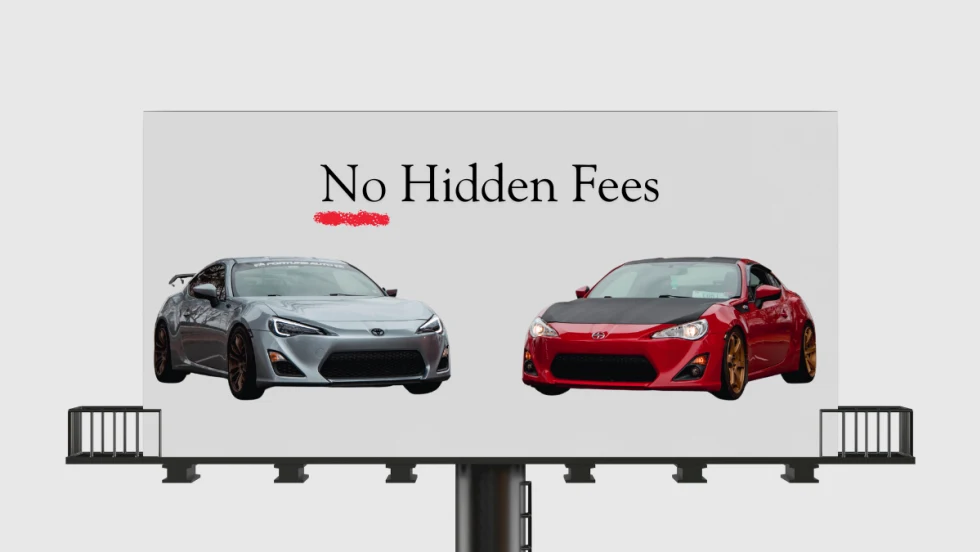
Dealer Ads and the FTC
The agency has made it clear in recent enforcement actions and warnings, in auto retail and other industries, that advertised prices must include all nonoptional costs to the consumer.
Read More →
Used Autos Supply Dwindles
The March shopping surge, despite high prices, cut into inventory by the most since the thick of the pandemic, Cox Automotive analysts calculated.
Read More →