



Five Tips for a Stronger Dealership Website
Technology Expert Allen Dobbins shares five tips for dealers who want a strong Web presense.

Recently, an acquaintance of mine took his car to a local mechanic to have the fuel pump repaired. The establishment decided to use refurbished parts from a junkyard instead of new parts because it was cheaper. A few months later, his car broke down and he had to pay an additional $1,700 to fix it. Being 2011, he immediately got on Facebook to express his frustrations and warn his friends about this underhanded mechanic.
Social media plays as much of a role in your business as your website. In this day and age, we rarely purchase anything, try new restaurants or see new movies without asking our friends on Facebook or Twitter for their opinions or surfing the Web for reviews. It is imperative that you maintain a positive brand on the Internet. We all know that one bad review from someone we trust will influence the decision about whether or not to spend our hard-earned money.
At this point, we cannot ignore the reality that having a strong Web presence is as important as having a quality product. I personally am more likely to buy something from a store that does not have a website than from a store with a bad website. These tips will help you to ensure that your presence is not only strong but also appealing.
1. Don’t be fooled by the $1 solid gold watch.
The old saying is true. You have to spend money to make money. I am not suggesting that you take out a loan to have a website designed. I am saying do your homework. Look at your direct competition. You want your site to be well designed and well maintained. You can’t stand out in your industry if your site looks like everyone else’s. There are several “design” companies that offer a cheap website for your business, but that is exactly what you will end up with.
2. Bad spellers of the world untie!
This may seem like a small thing, but the spelling and grammar of your content is vital. Any misspelled word will be a red flag to customers. It suggests a lack of intelligence, interest and professionalism. Hire a copywriter to review your entire site before you go live. Do not allow your website to be a joke. When potential clients visit your site, it’s like they are essentially visiting your store. You must make a great first impression.
3. Who are you?
Your brand should be clear. Your logo and corporate colors should be represented. Customers should know it is you. If your colors are blue and green, why is your website red and white? Also, make sure that your contact information is clearly placed and available on every page of your website. Don’t make prospective clients search for it. Trust me, they won’t.
4. Just give the facts.
Don’t clutter your site with superfluous information. Look at the content from a consumer prospective. Does the information have any effect on the success of your product? It’s great that you have a dog named Max, but that does not really make me want to buy a car from you. Make sure that the information is cleanly presented. Don’t squeeze content that should fill two pages on one. You have a website not a webpage.
5. Have an objective.
What’s the objective of your website? In our industry, the objective of most websites is to get a prospect to view your inventory, complete a credit application, come to your location and drive away with a car. Does your website cause these to be the next steps? Do you have chat pop-ups so prospects can instantly communicate with salespeople? Use your website as a sales tool. If you don’t, your competitors will benefit!
The Internet is here, and it is not going to go away, but if you don’t have a quality Web presence, your business just might.
Vol. 8, Issue 5
More Dealer Ops
How to Avoid Phone Scams | Dealer Debrief 09/10/2026
Are you taking the necessary steps to protect your dealership and customer data from phone-based scams? This week's Dealer Debrief breaks down how!
Read More →
Dealer Debrief: August Auto Sales
Gas-powered engines still dominate the U.S. vehicle market, but hybrids are gaining ground as consumers look for ways to cut their gas costs.
Read More →
Dealership Profits Decline
While new and used retail sales stagnated, dealerships have been particularly supported by fixed operations and finance-and-insurance profits, according to a new report.
Read More →
Dealer Debrief: Defection Data & EV Updates
In this week's debrief, host Lauren Lawrence discusses how to use defection data to your advantage and the latest on EV sales and charging infrastructure.
Read More →
How Defection Data is Bridging the Dealership Conversion Gap
Lead volume is flat, cross-shopping is up and brand loyalty is in retreat. As confident sales teams keep losing buyers they thought they had, daily industry sales data is showing dealers exactly where their funnel is breaking and how to fix it without buying a single new lead.
Read More →
Dealer Debrief: Where are you losing customers?
In this week's debrief, host Lauren Lawrence discusses the hidden leaks in dealerships where you might be losing customers without even realizing it.
Read More →
Dealer Debrief: Improving Your Inventory Management
In this week's debrief, host Lauren Lawrence covers a new survey that shows what service technicians really want and two launches that could help improve your inventory and vehicle life cycle management.
Read More →
Ladies and Gentlemen, This Is a Dealership: Why the Fundamentals Still Decide Who Wins
A teaching moment by a legendary football coach happens to apply perfectly in the auto retail space. Learn what it is and how to use it to your store’s advantage.
Read More →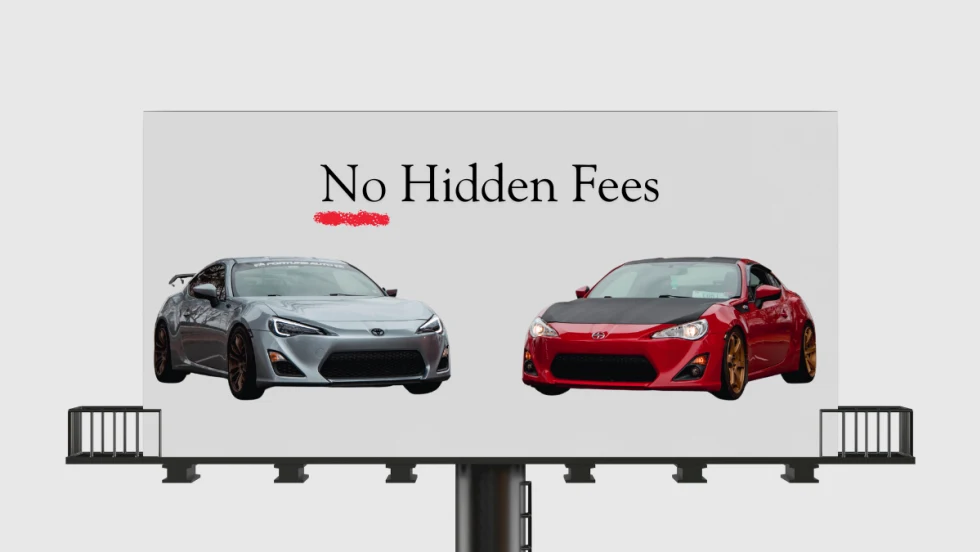
Dealer Ads and the FTC
The agency has made it clear in recent enforcement actions and warnings, in auto retail and other industries, that advertised prices must include all nonoptional costs to the consumer.
Read More →
Used Autos Supply Dwindles
The March shopping surge, despite high prices, cut into inventory by the most since the thick of the pandemic, Cox Automotive analysts calculated.
Read More →