



How to Calculate Your Parts Turn
Analytics expert helps determine your gross inventory turnover, true turnover, and fill rate.

Getty Images
When a customer brings a car in for service, they want it repaired as quickly as possible. For this reason, your parts department requires timely access to inventory, generally without question. Parts is one of the only profit centers within a dealership which has unlimited access to funds and, due to the time-sensitive requirements of their customers, are at liberty to make purchases that do not require authorization prior to ordering.
What does this mean?
As the parts department is viewed as a necessary component of fixed operations, and typically employs a formulaic profit margin, dealers and controllers are more focused on vehicle sales and variable operations and do not question the details of fixed operations, especially the parts department. Many do not have a significant understanding of the parts department, how the inventory and billing systems are set up and managed, or how it really works, so questioning the process is unlikely.
Dealers are more likely to know the age of the used cars on the lot, but not the obsolescence of the parts carried in the parts inventory. Many know how many deals went unclosed on the sales floor from the last weekend, but have no idea how many lost sales have happened over the last six months in the parts department.
This is significant. While we trust our parts department to properly manage their areas of responsibility and serve the best interests of the dealership, there may be instances of mismanagement, unforeseen circumstances that affect overall sales, and missed opportunities to cut costs or better manage your inventory. As a best practice, there should always be internal controls in place to review and understand cost areas, like parts, and a means to identify problem areas before they start to cost you money and cut into your profits.
Start reviewing the inventory turns in the parts department. Some DMS providers may be able to put some key indicators on your “dashboard” that pertain to the parts department for your daily review alongside your new- and used-vehicle sales. If this is not available, take a look at the monthly analysis on a regular basis. At a minimum, dealers and controllers should be aware of several key performance indicators with regards to inventory turns:
1. Gross Inventory Turnover
Gross turnover is represented by the ratio of the cost of goods sold, to the average inventory value, over a certain period of time. To calculate gross turnover, divide the cost of goods sold by average inventory value. If, for example, the cost of goods sold is $750,000, and the average inventory value over 12 months is $125,000, the gross turnover ratio would be 6.0, or six times per year.
Using this “gross turns” method represents all parts inventory, including special orders and emergency purchases, so it doesn’t give a true picture of the parts departments’ efficiency — the return on the investment of the parts department isn’t truly calculated using this method. We suggest using another measurement, “true turns,” as well.
2. True Turnover
True turnover or “true turn” represents a clearer picture of the return on investment of the parts inventory. It is the best indicator on how the managed inventory is meeting the needs of the customers, whether they be counter retail, wholesale or service customers, since it uses only parts sold from stock to calculate the true turn of the inventory.
Gross turns include emergency purchases, which may fill an immediate need, but in the long run increase the acquisition costs of parts, reduce your earned discount amount and does not add to your return reserve you are earn from the manufacturer. Therefore, parts sold from stock generate higher gross profit margins, which translates to higher net profits. True inventory turns, consequently, are a good measure of how profitable the dealership’s inventory investment really is.
The preferred formula for calculating the true turn is to multiply the stock order performance (percentage) by the gross turnover. To calculate your stock order performance, divide your stock order purchases by your total purchases.
A parts department that has stock order purchases of $400,000 out of a total inventory of $500,000 is said to have a stock order performance of 80%. Hence, you could calculate true turns either by dividing $400,000 (stock orders) by $125,000 (average inventory value) to get a true turn of 3.2. Or you could multiply 80% (stock order performance) by 4.0 (gross) turns to get the same number: 3.2.
Although you do not have to calculate this ratio yourself — your DMS should be able to calculate it for you — it is a good idea to understand where the numbers come from and what they mean.
Aim for a stock order performance of 75% to 85% for weekly stock order deliveries and 85% to 95% for daily stock order deliveries. A good ratio to have as your true turn is six or more with a daily stock order and four to five with a weekly stock order.
3. Fill Rate
Fill rate is an important metric because it tells you the sales that come from your inventory vs. all the requested parts. For example, if you had a demand for a part 100 times and you can go to the bin and pull that part without having to order is 80 times, you have a fill rate of 80%. It is recommended that you have a fill rate of at least 90% in your parts department.
Knowing these numbers, what can a dealer or controller do? To begin, make sure that the parts manager has policies and procedures in place that ensure the on-hand counts recorded in you DMS are correct. They should be spot-checking bins on a regular basis to keep an accurate and perpetual inventory year-round, not just annually. Ask your parts manager if lost sales are being recorded properly — and review together what is a “lost sale” so there is no doubt.
Review the monthly analysis with the parts manager and address any areas that need to be improved. Are the true turns within an acceptable guideline? What is the fill rate? Review stocking levels and phase-in and phase-put criteria that is set up in the DMS. Do these need to be tweaked?
It is also recommended that the controller review the parts inventory investment amount (the “parts pad” amount) to the general ledger on a monthly basis, noting any variances that occur from work in progress, unposted transactions such as invoices, appreciation and depreciation, and in-transit parts. If a significant variance still exists, it should be investigated and a physical inventory should be done by an outside vendor.
Jill Pastore is a senior at Citrin Cooperman, a full-service accounting, tax and consulting firm. Contact her at jill.pastore@bobit.com.
More Training

Parts Specialist Certification Updates Urged
ASE's certification is valid for five years, after which parts specialists must retest to maintain their certification status.
Read More →
RockEd, DriveCentric Combine AI-Run Performance, Training, Compliance
The partnership is intended to tap employee performance data to help auto dealerships analyze performance and focus training on sales operations weak spots.
Read More →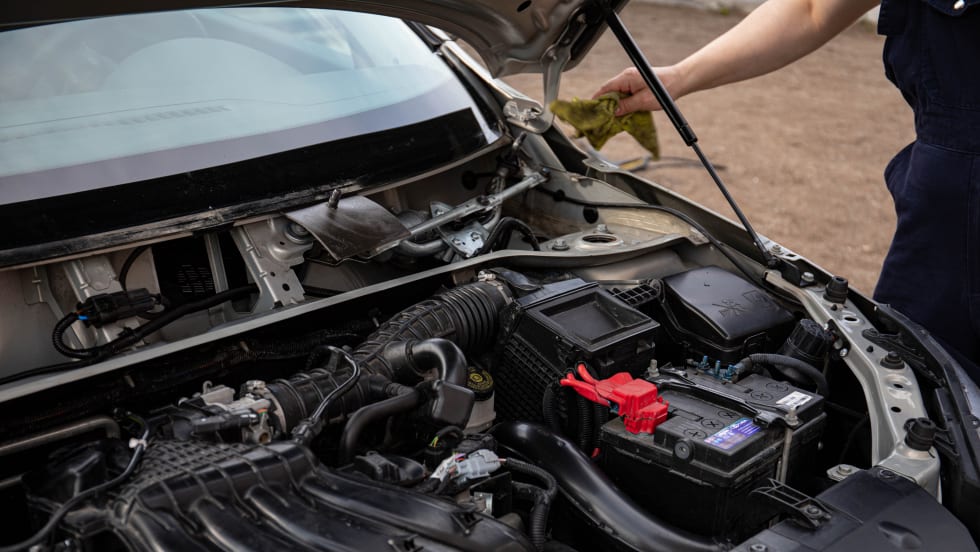
ASE Gets $25 Million for Tech Apprenticeships
The four-year U.S. Department of Labor initiative pays for employers to hire and keep new auto, collision and truck technicians to grow the workforce.
Read More →
The Hidden Leaks
Data show where automotive dealers are losing buyers before the sale and how they can effectively stem the tide to increase business.
Read More →
ASE Developing ADAS Calibration Credential
The National Institute of Automotive Excellence said its intent with the new technician program is to prioritize practical application and operational understanding over deep electrical diagnostics.
Read More →
Apply by March 31 for Automotive Scholarships
UAF is accepting applications for more than $900,000 in automotive and heavy-duty scholarships for the 2026-27 school year.
Read More →
Combatting the Technician Shortage
RockED and TruVideo have launched a free video inspection certification for automotive schools.
Read More →
The F&I Agent's Roadmap: Mastering the Cold In-Store Visit
Register for Allstate's FREE webinar on Oct. 21
Read More →
APCO Holdings Acquires DealerPRO Training
The addition expands company's footprint in fixed ops training
Read More →
Auto Dealership Training Program Expands
Protective Asset Protection offering is AI-driven.
Read More →