



Impatient Consumer Loses Right to Revoke Acceptance of RV
Hudson recounts a case that was decided in an Illinois dealer’s favor and tested the limits of the federal Magnuson-Moss Warranty Act and the Uniform Commercial Code.


Failure on the customers’ part to allow a “reasonable time to cure” was among the factors that decided a recent court case in an Illinois RV dealer’s favor.
Photo by Farknot_Architect via Getty Images
Consumers who buy goods that are subject to the federal Magnuson-Moss Warranty Act and the Uniform Commercial Code who feel that the goods are defective have rights and remedies for pressing their claims. Those rights and remedies, however, impose some duties on the buyers and provide some protections for the seller. A recent Illinois case illustrates these points.
It’s Leaking Again
In April 2014, Kimberly Accettura and Adam Wozniak bought a new recreational vehicle from Vacationland Inc. in Big Rock, Ill. In June 2014, they discovered water leaking into the RV, and Vacationland repaired the leak at no charge.
On July 14, 2014, they brought the RV to Vacationland to have a different leak repaired. Vacationland sent it to the manufacturer for repair. On August 2, 2014, Wozniak verbally revoked acceptance of the RV. The manufacturer had the RV for repair from approximately Aug. 4 through Sept. 23.
On September 28, 2014, Accettura and Wozniak’s attorney sent Vacationland a letter revoking acceptance of the RV, but Vacationland refused to return their money. Accettura and Wozniak sued Vacationland for revocation of acceptance under the Magnuson-Moss Warranty Act, breach of the implied warranty of merchantability under the MMWA, and revocation of acceptance and cancelation of the contract under the Illinois version of the Uniform Commercial Code.
The trial court granted summary judgment for Vacationland. The plaintiffs appealed. The Appellate Court of Illinois affirmed.
First, the plaintiffs to the appellate court argued that an issue of fact existed as to whether Vacationland had a reasonable opportunity to cure and, therefore, the trial court erred in finding for Vacationland with respect to the MMWA claims. The appellate court noted that the MMWA does not define “reasonable opportunity to cure.” Therefore, it looked to state law, specifically Section 3(b) of the New Vehicle Buyer Protection Act, for guidance.
Section 3(b) of that act provides: “A presumption that a reasonable number of attempts have been undertaken to conform a new vehicle to its express warranties shall arise where, within the statutory warranty period, (1) the same nonconformity has been subject to repair by the seller, its agents, or authorized dealers during the statutory warranty period, four or more times, and such nonconformity continues to exist, or (2) the vehicle has been out of service by reason of repair of nonconformities for a total of 30 or more business days during the statutory warranty period.”
The appellate court found that the plaintiffs did not establish facts that would satisfy their burden of showing that they provided Vacationland with a reasonable opportunity to cure. The plaintiffs could not show that their revocation of acceptance on Aug. 2, approximately two weeks after asking Vacationland to repair the RV on July 14, was reasonable. Because the undisputed facts showed that the plaintiffs failed to provide a reasonable opportunity to cure, the trial court properly entered summary judgment for Vacationland on to the MMWA claims.
The appellate court rejected the plaintiffs’ argument that the NVBPA’s standards do not define “reasonableness” for claims that do not involve the NVBPA. The appellate court noted that, when interpreting a statute, it is appropriate to refer to another statute by analogy. The NVBPA and the MMWA both address buyers and sellers of new motor vehicles and the remedies available to buyers when vehicles fail to conform. The appellate court observed that the trial court’s reference to Section 3(b) of the NVBPA by analogy was appropriate.
Be Reasonable
Next, the plaintiffs argued that the trial court erred in finding that they were required to provide Vacationland with an opportunity to cure prior to revoking acceptance under Section 2-608(1)(b) of the UCC. Section 2-608(1)(a) expressly requires an opportunity to cure; however, Section 2-608(1)(b) does not specify whether the seller has a right to cure prior to a proper revocation of acceptance. The appellate court concluded that the seller has a right to cure before the buyer revokes acceptance under Section 2-608 of the UCC.
Because the plaintiffs asked Vacationland to cure the RV’s defects on July 14, and the plaintiffs revoked acceptance about two weeks later while knowing that the RV was going to the manufacturer to be repaired, the appellate court concluded that the plaintiffs did not allow Vacationland a reasonable time to cure before their revocation of acceptance. Accordingly, the trial court properly granted summary judgment for Vacationland on the UCC Section 2-608 claim.
Although there’s no assurance that courts in other states would hash out these provisions in the same way, you might want to clip this article out and stick it in your “When We Get Sued” file.
Thomas B. Hudson Esq. was a founding partner of Hudson Cook LLP and is now of counsel in the firm’s Maryland office. He is the CEO of CounselorLibrary.com LLC and is a frequent speaker and writer on a variety of consumer credit topics. Contact him at tom.hudson@bobit.com. HC No. 4851-2627-597
More Compliance

RockED Offers Free FTC Pricing Education Series for Dealerships
The program is designed to help dealers, managers and front-line teams get more information about Federal Trade Commission pricing enforcement, advertising transparency and evolving regulation.
Read More →
Dealer Ads and the FTC
The agency has made it clear in recent enforcement actions and warnings, in auto retail and other industries, that advertised prices must include all nonoptional costs to the consumer.
Read More →
AAMS Training and Mosaic Compliance Services Merge
The strategic combination is intended to expand technology-driven compliance solutions for the automotive industry.
Read More →
The Jurisprudence of Pricing
Legal concept helps make sense of California’s recently passed version of the failed federal CARS legislation.
Read More →
Trump 2.0 and Enforcement Priorities
The upshot is don’t relax, because regulation indeed continues.
Read More →
June Is Automotive Service Professionals Month
Observance is opportunity to thank technicians for their crucial role in auto retail.
Read More →
Cox Automotive Releases Compliance Guide
New edition walks auto dealers through relevant regulations for 2025.
Read More →
Trump 2.0 and Retail Automotive
Administration’s plans should generally bode well for the industry.
Read More →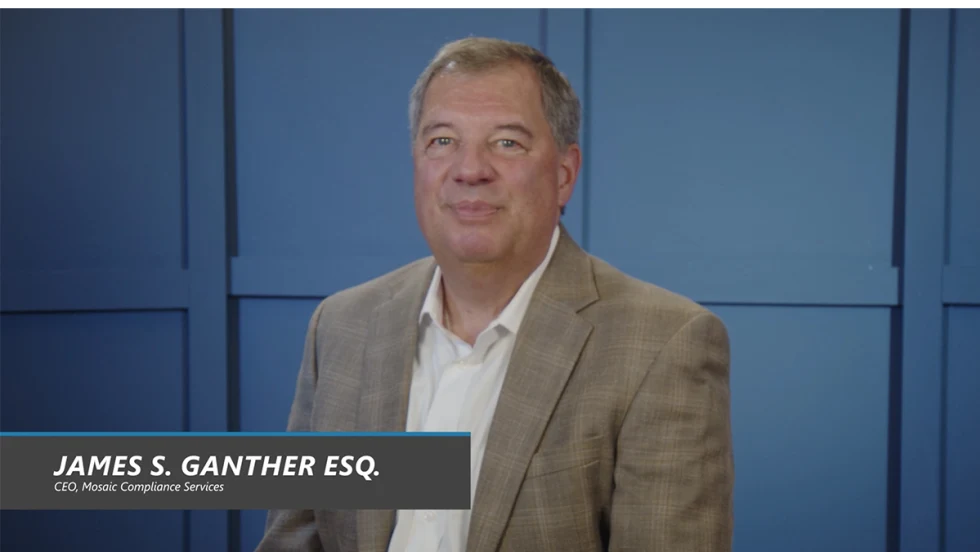
CARS Rule Update: 5th Circuit Oral Arguments Recap
In this video, Jim Ganther of Mosaic Compliance Services, recaps the key takeaways from the oral arguments in the critical CARS Rule case, including potential outcomes and what dealers should do to stay ahead of compliance changes.
Read More →
State of the CARS Rule, Part 3
The players in the automotive industry should coordinate their responses to this pending regulation.
Read More →