



Influence is The Key to Cooperation
Author Kirk Manzo discusses how developing relationships and becoming a more influential person can positively impact all aspects of a dealer's operation, from departmental cooperation to customer relations.

The challenge for many dealerships today is how to achieve high levels of productivity from every department while keeping cost of operations in check. The classic performance model typically incorporates a series of carrots and sticks to encourage employee engagement and proper focus on business outcomes.
This approach, while popular, has some real limitations with today’s workforce. Imagine, if you could, the need to produce high levels of output from your team (F&I, sales, etc.) while being restricted from utilizing the incentive of money and/or the consequence of termination. How much harder would it be to run your dealership?
Fundamentally, it would mean gaining cooperation based on your team executing a plan not because they have to but because they want to. This is a tall order in anyone’s book, yet represents an accurate reflection of your store’s culture and business philosophy.
Influence is, after all, the ability to gain voluntary cooperation versus the use of coercion or manipulation. Yet our industry is filled with messages that say, “Well, just do so because I said so,” rather than taking the time explain the “why” behind the purpose of executing the plan in a particular way.
The interesting thing about developing a strategy to become a more influential person is that it will positively impact all aspects of your operation.
When an F&I manager is trying to gain the cooperation of the salesperson to support the turnover to F&I and set up the sale of aftermarket products, he or she must influence the salesperson in order to effectively increase penetrations. The same holds true for the interaction with the desk manager and ultimately the customer.
The idea that all coverage and protection programs are optional is fundamental to the success of presenting any F&I menu. The moment customers feel excessive pressure, they will either resist by digging in their heels, or worse, they will simply disengage completely by retreating from the purchase of the vehicle altogether.
So how can influence be increased and thus cooperation gained? In a word, relationship.
In order to achieve greater influence and thus cooperation, a connection between both parties must be present. The need to make a human connection with sincere rapport that communicates, “I want to serve you at the highest level,” is paramount.
The customer interview must then become the foundation of establishing this rapport to tailor the protection packages on the menu and build a bridge of trust before entering the F&I office. Presenting the menu not from the perspective that customers don’t have to buy these protection packages, but rather by explaining why they would want to reduce risks by protecting their investment, is significantly more effective.
The conversation between the business manager (F&I) and the salesperson/desk manager should be the same. It starts first with a relationship (investing the time to get to know them personally), and follows with the reasons why these protection packages will benefit the customer. The increased retention that results from the customer purchasing the VSC or prepaid maintenance program may be obvious to the dealership, but not so obvious to each salesperson.
After all, when the customer does return to purchase the next vehicle from the dealership, who will receive the commission?
The disappointing aspect for many within the automotive industry is that they were often subjected to a philosophy of persuasion that thinks it’s somehow OK if the person in charge walks around with a hammer in their hands, since everything and everyone is simply a nail! A heavy-handed approach has limitations in that your people will only do what they have to. Delivering the type of inspired performance that you or customers desire will mean connecting on a much deeper level both internally (with staff) and externally (with customers).
One suggestion for achieving a real connection with your staff is to order a set of Values Cards for each of your managers from JohnMaxwell.com. The instructions for how to use the cards are included in the package. If you would like to discuss how to best introduce this tool at your store(s), please feel free to email me.
Good luck and good selling!
Vol. 9, Issue 7
More Dealer Ops
How to Avoid Phone Scams | Dealer Debrief 09/10/2026
Are you taking the necessary steps to protect your dealership and customer data from phone-based scams? This week's Dealer Debrief breaks down how!
Read More →
Dealer Debrief: August Auto Sales
Gas-powered engines still dominate the U.S. vehicle market, but hybrids are gaining ground as consumers look for ways to cut their gas costs.
Read More →
Dealership Profits Decline
While new and used retail sales stagnated, dealerships have been particularly supported by fixed operations and finance-and-insurance profits, according to a new report.
Read More →
Dealer Debrief: Defection Data & EV Updates
In this week's debrief, host Lauren Lawrence discusses how to use defection data to your advantage and the latest on EV sales and charging infrastructure.
Read More →
How Defection Data is Bridging the Dealership Conversion Gap
Lead volume is flat, cross-shopping is up and brand loyalty is in retreat. As confident sales teams keep losing buyers they thought they had, daily industry sales data is showing dealers exactly where their funnel is breaking and how to fix it without buying a single new lead.
Read More →
Dealer Debrief: Where are you losing customers?
In this week's debrief, host Lauren Lawrence discusses the hidden leaks in dealerships where you might be losing customers without even realizing it.
Read More →
Dealer Debrief: Improving Your Inventory Management
In this week's debrief, host Lauren Lawrence covers a new survey that shows what service technicians really want and two launches that could help improve your inventory and vehicle life cycle management.
Read More →
Ladies and Gentlemen, This Is a Dealership: Why the Fundamentals Still Decide Who Wins
A teaching moment by a legendary football coach happens to apply perfectly in the auto retail space. Learn what it is and how to use it to your store’s advantage.
Read More →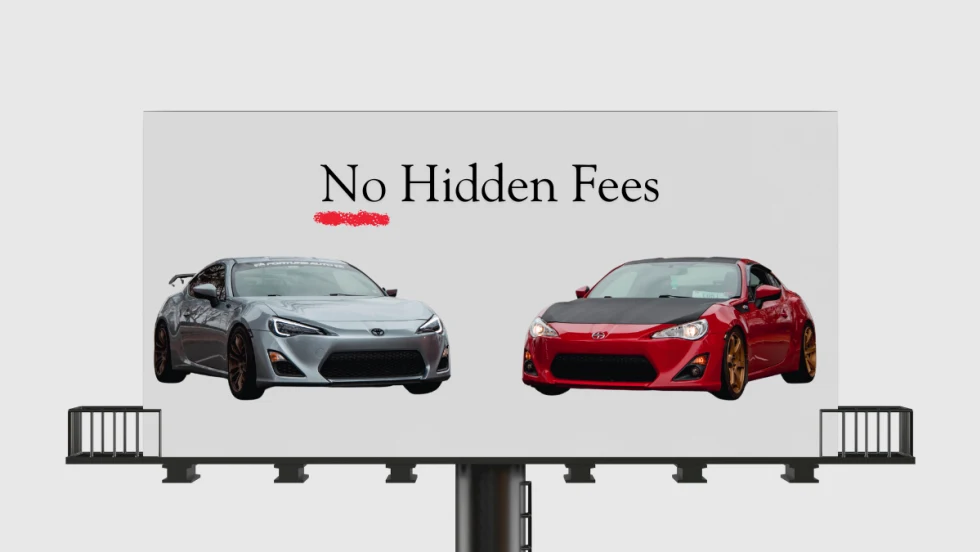
Dealer Ads and the FTC
The agency has made it clear in recent enforcement actions and warnings, in auto retail and other industries, that advertised prices must include all nonoptional costs to the consumer.
Read More →
Used Autos Supply Dwindles
The March shopping surge, despite high prices, cut into inventory by the most since the thick of the pandemic, Cox Automotive analysts calculated.
Read More →