



Make Sure Your Advertising Will Pass Muster in Your State
The primary responsibility for truthful and non-deceptive advertising rests with the dealer, not outside vendors or agencies. Jim Radogna offers several examples of advertising rules dealers should pay close attention to.

Recently, regulators in several states have been scrutinizing dealer advertising practices as a result of concerns about business practices by TrueCar and other companies. This is a good wake-up call for dealers to be diligent about understanding, and following, each state’s unique guidelines. The primary responsibility for truthful and non-deceptive advertising rests with the dealer, not outside vendors or agencies. While state advertising regulations vary, there are a number of common themes throughout. Dealer associations are good sources of information on state-specific advertising regulations. Here are some examples of advertising rules that many states enforce.
Availability of Vehicles
Advertised vehicles should be in the possession of the dealer and willingly shown and sold as advertised. If a specific advertised vehicle is not immediately available, the advertisement should clearly state that the vehicle is available only by order or is located elsewhere. Advertising goods or services with the intent not to sell them as advertised is considered to be "bait" advertising, which is an unfair and deceptive practice.
Duty to Sell at Advertised Price
Some states require that advertised vehicles be sold at or below the advertised price regardless of whether or not a customer has knowledge of the advertised price. These policies apply to all forms of advertising, including radio, television, print, electronic, direct mail, flyers, billboards, showroom and other dealership displays, and the Internet.
Disclosures
All disclosures must be made in a clear and conspicuous manner to minimize the possibility of misunderstanding by the consumer public. The use of any print in type-size so small as to be not easily readable is likely to be deemed misleading or deceptive. Any qualifying statements made on television and radio should be of sufficient content, clarity and length to be easily understood. Asterisks or other reference symbols should not be used as a means of contradicting or substantially changing the meaning of any advertised statements. The use of any unexplained abbreviation, term or jargon which is not readily understood by the general public, such as OAC or TT&L, is not allowed in many states.
Credit Advertising
When credit terms are advertised, they must comply fully with the specific disclosure requirements of the Federal Consumer Truth in Lending Act (TILA) and Regulation Z. Leases must comply with Lease Advertising provisions of TILA and Regulation M.
Trade-in Advertisements
Many states disallow the advertising of minimum or guaranteed trade-in allowances. In these states, dealers should not use terms such as “guaranteed trade-in,” or “Push It, Pull It, Tow It In.”
Pictures of Vehicles
Several states prohibit the use of inaccurate photographs or illustrations when describing specific vehicles. Photos should always accurately depict the overall appearance of the vehicles actually offered for sale. Such terms as “pictures for illustration only” or similar disclaimers should be avoided.
Down Payment Advertising
In several states, the phrases "No Money Down" or “Zero Down” may not be used if any charges, including tax or license fees, rebates, or trade-in equity, are to be paid by the consumer at the time the contract is signed.
Guaranteed Credit Approval
Term such as "Guaranteed Credit Approval" or "Everyone Approved" should not be used unless there are absolutely no credit qualifications needed to obtain financing and the dealer is willing to finance anyone, regardless of their ability to pay.
Underselling Claims
Ads that claim a company policy of matching or beating a competitor’s pricing should only be used if the claims are verifiable. Terms such as, “We will beat any dealer’s price,” or, "We won't be undersold," may be deemed to be deceptive unless the advertisement clearly and conspicuously discloses a price-matching policy and does not require the presentation of any evidence which places an unreasonable burden on the consumer.
Creating a False Sense of Urgency
Advertising the words "sale," "price cut," "reduced," "clearance" or "tent sale" may be deemed to be deceptive unless the current selling price of the vehicle is reduced by a reasonable amount from the vehicle's former (regular) price. False price comparisons on vehicles, such as “was___, now___,” should not be used.
Terms such as “Liquidation Sale” or “Going Out of Business Sale” should not be used unless such a sale is required by law or by impending cessation of the dealer’s business.
Terms such as “Authorized Distribution Center,” “Factory Outlet” or “Factory Authorized Sale” imply that the dealer has an exclusive or unique relationship with the manufacturer and should not be used unless the advertising dealer has received a unique authorization from the manufacturer and such authorization is in addition to their normal authority to act as a franchisee of the manufacturer.
Invoice Advertising
Some states do not allow dealers to advertise the terms "dealer cost," "invoice price" or similar terms.
Rebates
In many states, dealers may not offer any rebates or cash back, unless it is from a manufacturer. When limited rebates (first-time buyers, college graduates, military personnel, etc.) are advertised, the terms and limitations should be clearly and conspicuously disclosed.
Advertising violations are very easy for regulators to find and very difficult for dealers to defend. It’s vitally important for any dealership employee or vendor tasked with creating advertisements to be aware of all state-specific requirements.
Vol. 9, Issue 3
More Dealer Ops
How to Avoid Phone Scams | Dealer Debrief 09/10/2026
Are you taking the necessary steps to protect your dealership and customer data from phone-based scams? This week's Dealer Debrief breaks down how!
Read More →
Dealer Debrief: August Auto Sales
Gas-powered engines still dominate the U.S. vehicle market, but hybrids are gaining ground as consumers look for ways to cut their gas costs.
Read More →
Dealership Profits Decline
While new and used retail sales stagnated, dealerships have been particularly supported by fixed operations and finance-and-insurance profits, according to a new report.
Read More →
Dealer Debrief: Defection Data & EV Updates
In this week's debrief, host Lauren Lawrence discusses how to use defection data to your advantage and the latest on EV sales and charging infrastructure.
Read More →
How Defection Data is Bridging the Dealership Conversion Gap
Lead volume is flat, cross-shopping is up and brand loyalty is in retreat. As confident sales teams keep losing buyers they thought they had, daily industry sales data is showing dealers exactly where their funnel is breaking and how to fix it without buying a single new lead.
Read More →
Dealer Debrief: Where are you losing customers?
In this week's debrief, host Lauren Lawrence discusses the hidden leaks in dealerships where you might be losing customers without even realizing it.
Read More →
Dealer Debrief: Improving Your Inventory Management
In this week's debrief, host Lauren Lawrence covers a new survey that shows what service technicians really want and two launches that could help improve your inventory and vehicle life cycle management.
Read More →
Ladies and Gentlemen, This Is a Dealership: Why the Fundamentals Still Decide Who Wins
A teaching moment by a legendary football coach happens to apply perfectly in the auto retail space. Learn what it is and how to use it to your store’s advantage.
Read More →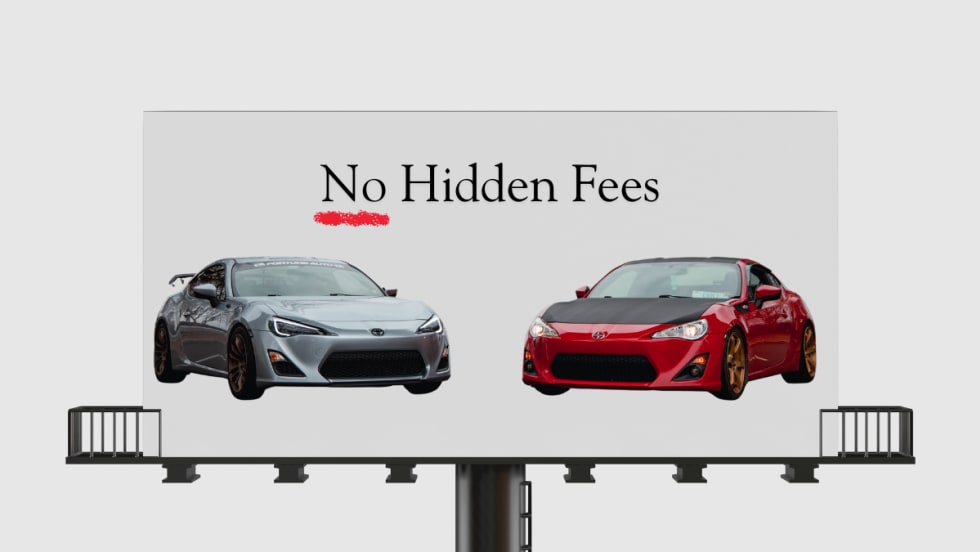
Dealer Ads and the FTC
The agency has made it clear in recent enforcement actions and warnings, in auto retail and other industries, that advertised prices must include all nonoptional costs to the consumer.
Read More →
Used Autos Supply Dwindles
The March shopping surge, despite high prices, cut into inventory by the most since the thick of the pandemic, Cox Automotive analysts calculated.
Read More →