



Million-Dollar Attitude
Jim Jackson - My dictionary states a “personal view of something, an opinion or general feeling about something.” It does not state that it is good or bad, just an opinion about something. So, when and how does it become positive or negative?

An attitude takes the blame for our shortcomings. Just blame it on attitude if you are not achieving the results you desire. Using attitude as permission to be mediocre has all too often become the in-vogue statement of not meeting objectives.
What are attitudes?
My dictionary states a “personal view of something, an opinion or general feeling about something.” It does not state that it is good or bad, just an opinion about something. So, when and how does it become positive or negative? There is another definition: “Orientation of aircraft’s axes.” In aviation terms, it is the angle of an aircraft in relation to the direction of the airflow or to the horizontal plane. Very simply put, it is the direction in which you (or the plane) are leaning. If we lean toward a goal, it is said that we have a positive attitude. If we lean away from a goal, it is referred to as a negative attitude.
When is an attitude positive or negative? It is positive or negative only when a goal or outcome is affected by the attitude. For example, I could have an attitude about public speaking—it is the number-one fear for many people. My attitude may be of total fear and anxiety about speaking in front of people. This attitude is not positive or negative until I am faced with the challenge of actually speaking in front of people, then it becomes a negative attitude. By contrast, if I have a job counting polar bears at the North Pole, then my attitude about speaking in front of people is not even relevant.
Now, let’s say I love to speak in front of people; then, working in the North Pole would not be a good outlet for my love-of-speaking attitude. It may be fair to say that I can’t keep quiet, and as a result, if I don’t scare the polar bears off, they come looking for me as dinner! It is the way we lean that determines if our attitude is positive or negative.
In sales, our attitude is critical to the desired outcome. If I have an attitude of dislike about cold-calling for new customers, it is only relevant if my job is to make calls daily for new prospects. Then this attitude of disliking cold-calls leans me away from being successful on the phone. This is where salespeople exercise creative avoidance. They will find anything else to do (like washing or moving cars) to avoid making calls.
When you find successful salespeople who do not depend on “ups,” their attitude is of great satisfaction and enjoyment when making calls. You could say they have a positive attitude about calling. In fact, the people who are really good at calling and finding deals on the phone don’t call it cold-calling, they call it “dialing for dollars.” In other words, their attitude is leaning them toward success and, as a result, they have a positive attitude. They see calling as a key to success.
I was working with a certain client in South Dakota. His sales staff was not very effective using the phone. He asked me to talk with the sales team to see if we could change their attitude as it pertained to making outgoing calls. After some intense questions on my part, their responses (i.e., excuses) reflected that most of the team had a strong resistance to making outgoing calls.
Maybe you have heard some of their excuses: “It’s hard getting rejected all day long,” or “When I call, people get mad and demand that I not call them any more.” Or my personal favorite: “These leads didn’t buy when they were here the first time; why would they buy when I called?” The list of reasons went on and on as to why they believed working the phones was a bad idea.
As a test, I asked them to think about what they were doing from a different point of view. I told them that I would give each team member $1 million cash with no stings attached and I would even pay the taxes if they could get 10 great leads or opportunities from the phone in 48 hours. One more thing—they could not share the money or tell anyone that they would get $1 million if they achieved the goal.
A silence fell on the room as each one of them thought of what they would do via of the phone to get 10 solid leads. Within in a few minutes each one on them said they could make it happen, and if they didn’t, they sure as heck would die trying. They said they would do whatever it took to get those customers excited about coming to their dealership and buying a car. One man even said he would have to hear “no” 100 times before he moved on, and even then he would try one more time to close them. A “no” was not even an option.
Now, what changed? All that changed was the opinion of the value of making outgoing phone calls. Their attitude changed instantly; nothing else changed.
The whole point of the million-dollar offer was to get them to realize that a positive or negative attitude is a choice. We can choose to change our attitude if the goal or outcome far outweighs the consequence of not changing. As a leader, you do not need to use money to motivate people, but you do need to know the goal of each person who’s working for you. Then you ask: Does this person’s attitude or opinion move them closer to their goal or further away?
Help people see the benefit to having a different perception about achieving their goals. Take a few minutes and show them the way around the obstacles. Model the way by making some calls yourself. Great coaches believe they can win because they have the best team. Even if they don’t have the best team, their attitude is “I have the best team in the country,” and as a result, they coach their people to win, even on the phone.
Vol 5, Issue 7
More Dealer Ops

How to Avoid Phone Scams | Dealer Debrief 09/10/2026
Are you taking the necessary steps to protect your dealership and customer data from phone-based scams? This week's Dealer Debrief breaks down how!
Read More →
Dealer Debrief: August Auto Sales
Gas-powered engines still dominate the U.S. vehicle market, but hybrids are gaining ground as consumers look for ways to cut their gas costs.
Read More →
Dealership Profits Decline
While new and used retail sales stagnated, dealerships have been particularly supported by fixed operations and finance-and-insurance profits, according to a new report.
Read More →
Dealer Debrief: Defection Data & EV Updates
In this week's debrief, host Lauren Lawrence discusses how to use defection data to your advantage and the latest on EV sales and charging infrastructure.
Read More →
How Defection Data is Bridging the Dealership Conversion Gap
Lead volume is flat, cross-shopping is up and brand loyalty is in retreat. As confident sales teams keep losing buyers they thought they had, daily industry sales data is showing dealers exactly where their funnel is breaking and how to fix it without buying a single new lead.
Read More →
Dealer Debrief: Where are you losing customers?
In this week's debrief, host Lauren Lawrence discusses the hidden leaks in dealerships where you might be losing customers without even realizing it.
Read More →
Dealer Debrief: Improving Your Inventory Management
In this week's debrief, host Lauren Lawrence covers a new survey that shows what service technicians really want and two launches that could help improve your inventory and vehicle life cycle management.
Read More →
Ladies and Gentlemen, This Is a Dealership: Why the Fundamentals Still Decide Who Wins
A teaching moment by a legendary football coach happens to apply perfectly in the auto retail space. Learn what it is and how to use it to your store’s advantage.
Read More →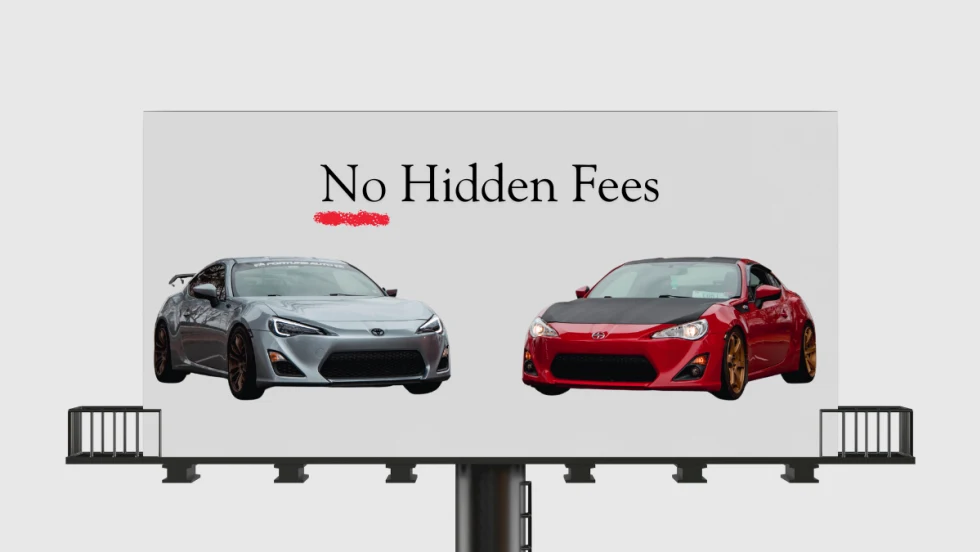
Dealer Ads and the FTC
The agency has made it clear in recent enforcement actions and warnings, in auto retail and other industries, that advertised prices must include all nonoptional costs to the consumer.
Read More →
Used Autos Supply Dwindles
The March shopping surge, despite high prices, cut into inventory by the most since the thick of the pandemic, Cox Automotive analysts calculated.
Read More →