



Rebranding and Repositioning
Jennifer Murphy - For most, rebranding or repositioning a business is a choice. Today for some dealers, there isn’t much of a choice involved in their rebranding and repositioning efforts. With the bankruptcies of two domestic automakers, well over 2,000 franchise signs had to be taken down.

A Necessary Evil for Many Dealers Today
For most, rebranding or repositioning a business is a choice. Today for some dealers, there isn’t much of a choice involved in their rebranding and repositioning efforts. With the bankruptcies of two domestic automakers, well over 2,000 franchise signs had to be taken down.
Although some dealers decided to close down shop at the devastating news that their manufacturers were stripping them of their franchises, many dealers quickly let their communities know they were staying open for business as independent dealers. While some prefer to stay independent, others hope to acquire another franchise.
Dealers who incorporated vehicle makes into their dealership name (e.g., Smith Chrysler Jeep) are required to rebrand their store with a new moniker. Dealers who did not include the manufacturer’s name (e.g., ABC Motor Co.) in their dealership name can continue under the same name, but they’ll likely reposition their brand through advertising and marketing so it coincides with their new operation.
What Does it Mean?
Branding is the “entire process involved in creating a unique name and image for a product (good or service) in the consumers' mind, through advertising campaigns with a consistent theme. Branding aims to establish a significant and differentiated presence in the market that attracts and retains loyal customers,” according to BusinessDictionary.com.
A brand should be a reflection of a company, not just a projection of what management wants it to be, wrote John Williams, an image and branding columnist for Entrepreneuer.com and president of LogoYes.com, in an article entitled, “Make Over Your Business’s Image.” A customer’s experience needs to equal the customer’s expectation, he continued, “or no amount of image revamping will work—at least in the long run.”
As the first step in rebranding, dealers should consider to what extent they’ll rebrand, according to, “The Art of Rebranding,” another article by Williams. His article names two types of rebranding: partial and total.
Partial rebranding is ideal when only tweaking is necessary, like “when a brand has been firmly established yet is simply outdated or needs to be refreshed due to the addition of new products or services.” Williams continued, “In these cases, you don’t want to eliminate the brand value that’s been developed over the years, but merely make subtle changes to update it or make it representative of an expanded offering.” For example, some dealerships go through a partial rebrand when they add new franchises to their businesses, and instead of calling the dealership Smith Ford, they may refer to their dealership as Smith Auto Company, especially if they’re planning to add more franchises in the future.
Total rebranding is used when “the intent is to erase any previous brand identity and replace it with completely new imagery and messaging,” wrote Williams. It’s appropriate when corporations merge, a company fails to establish a brand or a company needs to improve its image. One well-known company that rebranded was Phillip Morris. The company rebranded as Altria in 2003 and launched the Altria Code of Conduct for Compliance and Integrity in an effort to shed its negative image.
Another company, Signature Keepsakes, rebranded for a positive reason: the original company name, “I Do” Engravables, limited the company’s brand to the wedding market. However, according to, “New Directions” on Entreprenuer.com, when customers were requesting the products for things like graduations and retirement parties, the owners decided it was time rebrand so they could expand.
Similarly, a business can partially or totally reposition. Positioning is a “marketing strategy that aims to make a brand occupy a distinct 'position,' relative to the competing brands, in the mind of the customer,” according to BusinessDictionary.com.
Famous retailer Abercrombie & Fitch (A&F) successfully repositioned in the early 1990s, according to the company’s profile on MarketWatch, “as a more fashion-oriented casual apparel business … with a product assortment reflecting a youthful lifestyle based upon an East Coast heritage and Ivy League traditions.” The target audience: 18- to 22-year-old male and female college students.
The A&F brand was originally created in 1892 and was well-known for “rugged, high-quality outdoor gear” and “outfitting the safaris of Teddy Roosevelt and Ernest Hemingway.” Today, however, when you walk into an A&F store or watch its commercials, there’s no trace of a rugged, outdoor image. The company works very hard to ensure their décor and marketing appeal to its target audience, maintaining an Ivy League feel.
While A&F took on a total reposition, going after an entirely new market, Walmart opted for a partial repositioning by updating its slogan from “Always Low Prices,” to “Save Money. Live Better.” Clearly, the new slogan, which was updated in September 2007, conveyed that the store still had low prices, but it also incorporated the message to, “Live Better.”
In the summer of 2008, the company logo was updated as a “continuing effort to update its once-dowdy image,” according to the Wall Street Journal. The new logo dropped the hyphen and added a yellow starburst, and the company went to using more of a sky blue color instead of the navy blue that was once a staple of the brand.
Where to Begin?
Williams stated that a “valid time to consider a brand makeover is if your company is headed in a new direction—either due to new technology, new industry trends, new markets, or a new product launch.” Certainly, the industry trends have caused some dealers to rethink their market (e.g., those dealers solely serving the subprime market), in addition to dealers who’ve shed vehicle makes from their names.
While rebranding does mean new signage, it also means that everything with your former logo needs updated—from Web sites, business cards, letterheads, e-mail signatures, and advertisements to uniforms and any paraphernalia like pens or license plates used for marketing purposes. While the cost involved in updating all these can be steep, experts suggest updating them all at once if possible. Willaims suggested, “If you can only afford to change one thing at a time, focus on your customer’s typical first point of contact.”
Gregory Pollack, president of PBM Marketing Solutions (a company that specializes in brand positioning and repositioning), suggested, “To move forward, companies and brands need to first take a look at their current brand positioning,” in his article, “The Power of Brand Repositioning: A Four-Phase Process.”
Pollack’s four-phase repositioning process is:
1. Determining the current status of the brand
2. What does the brand stand for today?
3. Developing the brand positioning platforms: Where can we take it tomorrow to grow the brand?
4. Refining the brand positioning and management presentation
You can find his detailed article at TinyURL.com/PollackArticle. It provides an in-depth explanation of the four phases, as well as food for thought for business owners considering or about to undergo rebranding or repositioning.
As you’ve probably guessed, proper rebranding or repositioning a dealership isn’t completed overnight. To rebrand and reposition is like giving your business a makeover, according to Williams. While some dealers may not think they need to go to the extent of rebranding and/or repositioning because the business will be in the same community, these dealers will likely be serving a new market (a new franchise) or refocusing on a market that was once only a portion of their business (the used car market).
Consider the target market adjustment for a dealer going from a Pontiac/GMC dealership to a Toyota or Kia dealership. Also, a significant adjustment is in order for the now-independent dealer whose business was once 75 percent new car sales.
Pitfalls of Rebranding/Repositioning
If rebranding or repositioning isn’t necessary – if you haven’t lost or switched franchises or been forced into a new market because of the economy – think twice before undertaking rebranding or repositioning efforts because they can be risky. “There are times when rebranding is crucial, and times when it’s nothing short of perilous,” Williams stated.
In “Big Brands, Big Trouble,” author Jack Trout warns against entering a market late because you’ll have to do battle with large, well-established companies. Successful rebranding/repositioning means differentiating your brand.
Williams advised, “You should keep in mind that the more dramatically you change your brand, the more likely you’ll lose your current customers.” He added losing customers shouldn’t worry you if you “keep your brand promise” to your new target customers. However, many dealers who’ve created personal relationships with hundreds of people in their community should be in a better position to rebrand/reposition. While it is inevitable that some customers will go elsewhere, dealers undergoing a rebrand have a database of past customers to which they can market in accordance with their new brand or position.
For example, if John Doe Pontiac/Buick/GMC was known for great customer service, a laid-back sales environment and the best deals on new GM products, the new dealership, John Doe’s Quality Motors, can market themselves in a similar manner. It still prides itself on providing great customer service, a laid-back sales environment and the best deals in town, but now the deals are on late-model, low-mileage pre-owned vehicles that come with a warranty.
For dealers who are rebranding and/or repositioning their dealerships, use the resources available to you. The aforementioned articles provide great insight and can at least help you get started. They can easily be found online. Some other helpful resources for dealers include advertising and marketing 20 groups and both franchise and independent dealer associations at the state and national levels.
Vol. 6, Issue 10
More Dealer Ops
How to Avoid Phone Scams | Dealer Debrief 09/10/2026
Are you taking the necessary steps to protect your dealership and customer data from phone-based scams? This week's Dealer Debrief breaks down how!
Read More →
Dealer Debrief: August Auto Sales
Gas-powered engines still dominate the U.S. vehicle market, but hybrids are gaining ground as consumers look for ways to cut their gas costs.
Read More →
Dealership Profits Decline
While new and used retail sales stagnated, dealerships have been particularly supported by fixed operations and finance-and-insurance profits, according to a new report.
Read More →
Dealer Debrief: Defection Data & EV Updates
In this week's debrief, host Lauren Lawrence discusses how to use defection data to your advantage and the latest on EV sales and charging infrastructure.
Read More →
How Defection Data is Bridging the Dealership Conversion Gap
Lead volume is flat, cross-shopping is up and brand loyalty is in retreat. As confident sales teams keep losing buyers they thought they had, daily industry sales data is showing dealers exactly where their funnel is breaking and how to fix it without buying a single new lead.
Read More →
Dealer Debrief: Where are you losing customers?
In this week's debrief, host Lauren Lawrence discusses the hidden leaks in dealerships where you might be losing customers without even realizing it.
Read More →
Dealer Debrief: Improving Your Inventory Management
In this week's debrief, host Lauren Lawrence covers a new survey that shows what service technicians really want and two launches that could help improve your inventory and vehicle life cycle management.
Read More →
Ladies and Gentlemen, This Is a Dealership: Why the Fundamentals Still Decide Who Wins
A teaching moment by a legendary football coach happens to apply perfectly in the auto retail space. Learn what it is and how to use it to your store’s advantage.
Read More →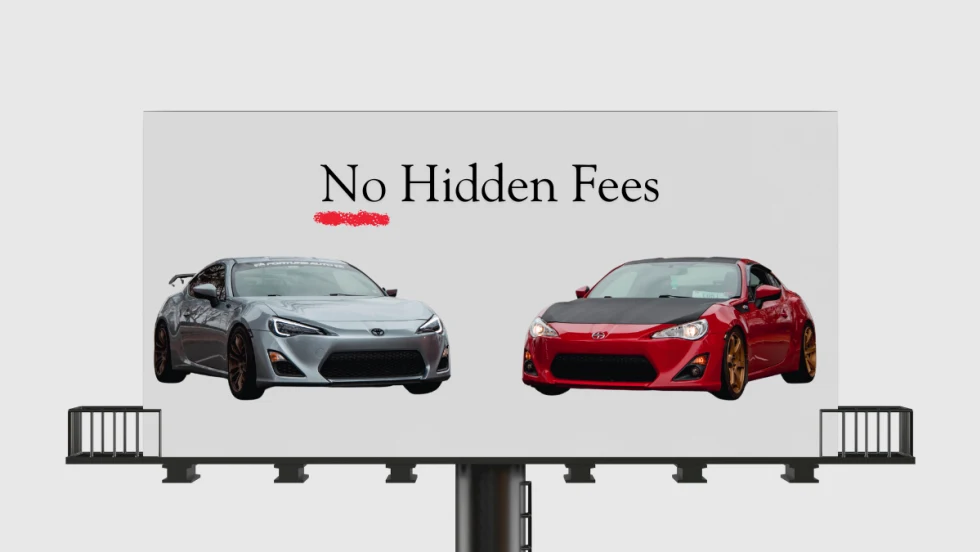
Dealer Ads and the FTC
The agency has made it clear in recent enforcement actions and warnings, in auto retail and other industries, that advertised prices must include all nonoptional costs to the consumer.
Read More →
Used Autos Supply Dwindles
The March shopping surge, despite high prices, cut into inventory by the most since the thick of the pandemic, Cox Automotive analysts calculated.
Read More →