



Strengthen Your Team
Jim Jackson - T.E.A.M. has six key components. No one component is more important than another, but if you don’t have them all in place, you’ll be out of balance ... The six components are:

When traveling around the United States, I’m often asked, “What business are you in?”
I’m in the business of helping average teams become high-performance teams. My team and I take a group of people who are not working well together and help them align their energies for quality and high-performance results. This is done with all types of teams, in all kinds of companies, all across the country.
“Yeah, right. You don’t know our organization.” Maybe. But, you know what? I know people. I understand business and social cultures and how they work (or sometimes how they don’t work). What I use and what those high-performance teams now use is the “Team Effectiveness Action Model,” or T.E.A.M.
It doesn’t make any difference whether you are talking about a church, a group of volunteers, a car dealership, IBM executives or astronauts. We all work together toward a common goal, vision and purpose. And, whether we know it or not, we do it using the Team Effectiveness Action Model.
T.E.A.M. has six key components. No one component is more important than another, but if you don’t have them all in place, you’ll be out of balance. It’s kind of like the spokes on a wheel – if one is loose, the tire begins to wobble. The six components are: purpose, vision, goals, processes, roles and responsibilities, and relationships.
1. Purpose
We all need to have a sense of purpose. Why do we exist? What is my purpose? What’s the purpose of a team? Most people will say something like, “Well, our purpose is to produce gadgets.”
Is that really what your purpose is? When you sit back and think about it, is that what it really is? When we ask people to spend some time seriously thinking about what their purpose is, they might, for example, say something like, “No, that’s not what it’s about. Our purpose is to make the best quality syringe in the world which allows people to save lives.”
2. Vision
Next, you need a vision, and it has to be something grand. I mean, a VISION. Where are you going? What are you after? What is it you are trying to accomplish? What’s the big banana in the sky? What is your Super Bowl? Your vision will drive your purpose.
When John F. Kennedy was president, he gave the country a fantastic vision of a man traveling to the moon and then safely back to earth. At that time, we didn’t know how we were going to do it, but man, it was a big vision. It was grand. It was huge. It was so inspirational, it fired up an entire nation to enter the space race and put a man on the moon and bring him back home safely. And so we did it.
Successful athletic teams have a big vision. “Win the college championship!” “Win the NBA championship!” “Win the World Series!” “Win the Super Bowl!” You may not be headed for the Super Bowl, but you do need to have a big vision of whatever you’re working toward.
3. Goals
Goals are actions, objectives. Your goals are the actions that will help you accomplish your vision.
Every high-performance team has one or more goals. Envision yourself playing in the next Super Bowl. What goals or actions will you need? Well, obviously, you have to have a winning season. What are some other goals? A good quarterback? A fast wide receiver? How about a defense? You have to have coaches, a stadium to play in and grass on the field. There are all kinds of goals and objectives that have to happen to bring your vision, or any vision, to reality.
Think about who and what you want to be (purpose), what is it you want to accomplish (vision), and how you will get to those successful accomplishments (goals).
4. Roles and Responsibilities
Who is accountable for what? You? Me? That other fella? One of the greatest weaknesses of any team is lack of accountability and/or lack of responsibility. It’s all too easy to just leave all the decision-making and heavy lifting up to the manager. After all, he’s in charge. Sound familiar? In other words, “It’s not my problem.” The weakest link in any team is the one who doesn’t care.
High-performance teams divvy up the responsibilities. Instead of one person being in charge, there are facilitators for specific tasks. You might be the wide-receiver coach or you might be the offensive coordinator. Everyone has a stake. It lightens the load for any one person and, instead of trying to realize just the manager’s (just one person’s) vision or goal, the visions and goals are multiplied by the number in your team. Group effort, group accountability and group responsibility equal group success. Everybody wins.
5. Processes
So, how do you know what’s going on in your team? How do you know everyone is being accountable and responsible? Easy—you have a team meeting. How will decisions for the team be made? Have a team meeting. How are you going to track your goals? How will you benchmark your goals? You have a team meeting and talk to each other.
Process is defined as “something going on.” Team meetings are where conflicts are aired, where questions are asked, where grievances are shared, where successes are applauded, where decisions are voted on and made, where bottom lines are studied, and where goals and visions are re-defined and re-emphasized.
Will there be disagreements and conflicts? Sure. It’s impossible for a team to get together and have a unanimous decision, at least the first time around. Disagreement is healthy. Acceptance of all points of view is respectful.
So what processes do you have in place for the disagreements, grievances and successes of your team members? What processes do you have in place to be able to make sure you’re on the right track with your vision?
You and your team have purpose, vision and the goals to get you there. You’ve defined everyone’s roles and responsibilities and provided a process (the team meeting) as an outlet for sharpening and honing those responsibilities and goals.
6. Relationships
Last, but not least (and maybe most interesting), is the final component: relationships. Anyone who has ever been in any type of relationship knows there are risks involved.
Simply put, this is about how we relate to each other. You need to decide what is mandatory for your team’s behavior and code of conduct. Your relationships with each other tell the world who you are and what you stand for. Honesty, integrity, respect, trust and tolerance are a few traits that should be in your code—maybe forgiveness, too.
Every high-performance team – whether it’s the Green Berets, the Atlanta Falcons or the President’s Cabinet – has a code of team behavior. Some of it is written down and some of it is not, but every team needs a code of behavior.
How is it where you work? Have you been on the same track too long and you’re wondering how to get off? I’m here to tell you, if you put the Team Effectiveness Action Model into practice every day, you can change your performance. You can change your team from an average team into a high-performance team. I’ve seen it happen at companies again and again. I know it works. It can work for you and your team.
Vol 5, Issue 8
More Dealer Ops
How to Avoid Phone Scams | Dealer Debrief 09/10/2026
Are you taking the necessary steps to protect your dealership and customer data from phone-based scams? This week's Dealer Debrief breaks down how!
Read More →
Dealer Debrief: August Auto Sales
Gas-powered engines still dominate the U.S. vehicle market, but hybrids are gaining ground as consumers look for ways to cut their gas costs.
Read More →
Dealership Profits Decline
While new and used retail sales stagnated, dealerships have been particularly supported by fixed operations and finance-and-insurance profits, according to a new report.
Read More →
Dealer Debrief: Defection Data & EV Updates
In this week's debrief, host Lauren Lawrence discusses how to use defection data to your advantage and the latest on EV sales and charging infrastructure.
Read More →
How Defection Data is Bridging the Dealership Conversion Gap
Lead volume is flat, cross-shopping is up and brand loyalty is in retreat. As confident sales teams keep losing buyers they thought they had, daily industry sales data is showing dealers exactly where their funnel is breaking and how to fix it without buying a single new lead.
Read More →
Dealer Debrief: Where are you losing customers?
In this week's debrief, host Lauren Lawrence discusses the hidden leaks in dealerships where you might be losing customers without even realizing it.
Read More →
Dealer Debrief: Improving Your Inventory Management
In this week's debrief, host Lauren Lawrence covers a new survey that shows what service technicians really want and two launches that could help improve your inventory and vehicle life cycle management.
Read More →
Ladies and Gentlemen, This Is a Dealership: Why the Fundamentals Still Decide Who Wins
A teaching moment by a legendary football coach happens to apply perfectly in the auto retail space. Learn what it is and how to use it to your store’s advantage.
Read More →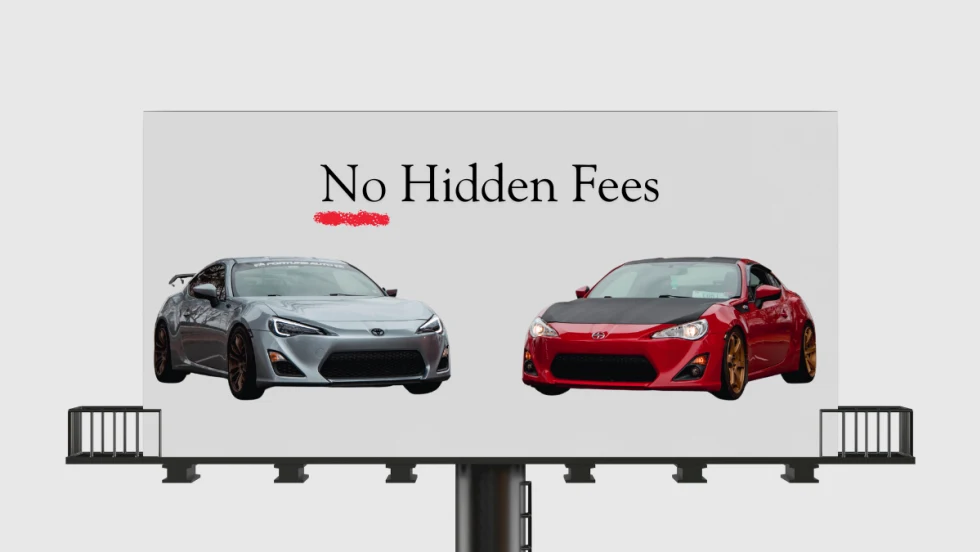
Dealer Ads and the FTC
The agency has made it clear in recent enforcement actions and warnings, in auto retail and other industries, that advertised prices must include all nonoptional costs to the consumer.
Read More →
Used Autos Supply Dwindles
The March shopping surge, despite high prices, cut into inventory by the most since the thick of the pandemic, Cox Automotive analysts calculated.
Read More →