



Tesla vs. Franchise: Weighing the Pros and Cons
Todd Bryant ponders the implications of Tesla’s direct-sales model for car buyers and their communities, both of which have benefited from the franchise model.

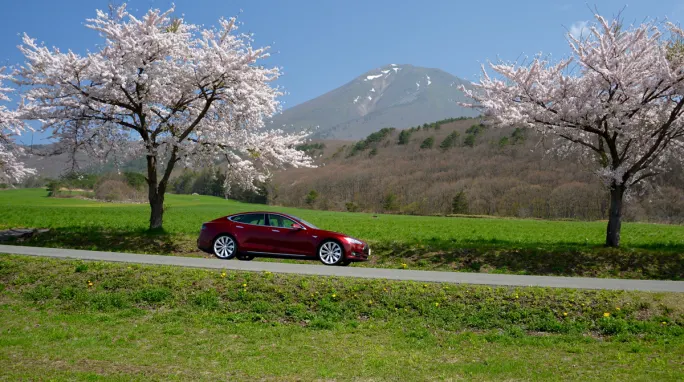
Tesla is locked in an ongoing battle with dealer associations and competitors fighting to preserve the franchise model. Photo of Tesla Model S by Raneko
For decades, auto dealers across the U.S. have taken the role of franchises for vehicle manufacturers. Tesla Motors is trying to change the existing model. They are pushing for the right to sell directly to their customers.
In its efforts to bypass the franchise dealership model, the electric carmaker is already battling with dealer associations and local manufacturers in a number of states. The company’s directors have worked with state legislators to adapt relevant laws, but they have not always succeeded.
Arizona, Connecticut, Michigan, Texas, Utah and Missouri are among the states that have banned the direct sales option for Tesla due to demands from industry organizations and other OEMs. Still, Tesla has managed to open stores in 23 states and in the District of Columbia, as well as in 20 foreign countries.
They are also hitting back with a federal lawsuit, which would clarify whether such bans are lawful for all states. In some cases, states have not allowed Tesla to register both as a manufacturer and as a dealer, as this contradicts their current legislation. It remains to be seen how the case would develop on the federal level, and whether Tesla will be able to use a 2013 federal appeals court ruling in its favor.
So why does Tesla insist so much on selling directly to customers?
Dealer Protection and Licensing
The longstanding franchise model definitely brings a number of advantages. It has been the preferred way of doing business in our industry for a plethora of reasons.
Laws protecting independent dealers’ interests have been the status quo in the United States since the 1950s. They were needed to prevent manufacturers from randomly closing stores and pushing dealers out of the market. The legislation was created to protect small and family-owned dealerships from manufacturers who could potentially monopolize the market.
Besides boosting dealership growth and fueling a whole section of the car industry, the franchise model provides additional security for car buyers. Dealers are allowed to operate only after obtaining a proper state license, which requires a number of safety nets, including auto dealer bonds.
The licensing and bonding mechanism provides extra security that sellers will follow applicable legislation and grants options for reimbursement. Dealers are also seen as more invested in their communities, which enriches local economies by creating jobs and tax revenue.
Opponents of the franchise model claim that it brings additional costs and increases the end price for car buyers. That’s also one of the main arguments of Tesla against using the franchise system.
Many believe the existing model is bound to change. After all, the traditional role of the auto dealer is shifting. The dealership used to be the only destination for car buyers seeking counseling, insurance and repairs. Some of these services are now handled remotely, a natural extension of today’s customers’ desire to complete the majority of their research online. However, the final stages of the purchase are always done at the dealership.
The Cost of Convenience
As for the direct sales model preferred by Tesla, the main positives, according to proponents, include a lower end price for buyers and a closer connection between carmakers and end users. It also translates into increased profit for car manufacturers at the expense of dealers.
For its much-anticipated Model 3, the electric carmaker has taken deposits directly from buyers amounting to $400 million, with a full refund for anyone who changes their mind. These transactions were completed online or through the manufacturer’s direct store.
While direct sales by manufacturers offer convenience and potentially lower end prices, they don’t yet offer the same level of protection as the tools used in franchising. In some cases, this is because the carmaker often cannot register as a licensed dealer, and thus cannot be held accountable under the licensing criteria. Other times, it’s because sales are conducted online via factory websites.
An additional point against direct sales from manufacturers is the assumption that dealers could be more likely to report issues leading to recalls. The reasoning is that they may make a profit from repairs, while recalls are always a losing game for manufacturers.
What’s your take on the battle between the franchised model and Tesla’s direct sales alternative, and which side do you believe will prevail? Please share your views in the comments below.
Todd Bryant is the president and founder ofBryant Surety Bonds. He is a surety bonds expert with years of experience in helping auto dealers get bonded and start their business. Contact him at todd.bryant@bobit.com.
More Dealer Ops
How to Avoid Phone Scams | Dealer Debrief 09/10/2026
Are you taking the necessary steps to protect your dealership and customer data from phone-based scams? This week's Dealer Debrief breaks down how!
Read More →
Dealer Debrief: August Auto Sales
Gas-powered engines still dominate the U.S. vehicle market, but hybrids are gaining ground as consumers look for ways to cut their gas costs.
Read More →
Dealership Profits Decline
While new and used retail sales stagnated, dealerships have been particularly supported by fixed operations and finance-and-insurance profits, according to a new report.
Read More →
Dealer Debrief: Defection Data & EV Updates
In this week's debrief, host Lauren Lawrence discusses how to use defection data to your advantage and the latest on EV sales and charging infrastructure.
Read More →
How Defection Data is Bridging the Dealership Conversion Gap
Lead volume is flat, cross-shopping is up and brand loyalty is in retreat. As confident sales teams keep losing buyers they thought they had, daily industry sales data is showing dealers exactly where their funnel is breaking and how to fix it without buying a single new lead.
Read More →
Dealer Debrief: Where are you losing customers?
In this week's debrief, host Lauren Lawrence discusses the hidden leaks in dealerships where you might be losing customers without even realizing it.
Read More →
Dealer Debrief: Improving Your Inventory Management
In this week's debrief, host Lauren Lawrence covers a new survey that shows what service technicians really want and two launches that could help improve your inventory and vehicle life cycle management.
Read More →
Ladies and Gentlemen, This Is a Dealership: Why the Fundamentals Still Decide Who Wins
A teaching moment by a legendary football coach happens to apply perfectly in the auto retail space. Learn what it is and how to use it to your store’s advantage.
Read More →
Dealer Ads and the FTC
The agency has made it clear in recent enforcement actions and warnings, in auto retail and other industries, that advertised prices must include all nonoptional costs to the consumer.
Read More →
Used Autos Supply Dwindles
The March shopping surge, despite high prices, cut into inventory by the most since the thick of the pandemic, Cox Automotive analysts calculated.
Read More →