



The Future of Special Finance
Tom Herald - In order to gain a more clear vision of the future, we must first have a solid understanding of our past.

Has Anything Been Learned From the Past?
In order to gain a more clear vision of the future, we must first have a solid understanding of our past. During the mid-1950s, a car loan was only available to qualified applicants with near-perfect credit, and even then, the maximum term was only 30 months with one-third down. If a consumer lacked the ability to obtain financing, they only had three choices: walk, save up enough cash to buy the car or search around for a used car dealer willing to tote the note.
By the early 1970s, buy here pay here dealers found they were competing with large, regional finance companies that were willing to take a chance on people without credit. Mercury Finance, Jayhawk, Credit Acceptance, Household and several others stormed onto the scene; carving out the distinctive niche we now call subprime, or special finance. Ironically, in those days, the term “subprime” was actually used for customers with strong credit histories. It meant they were worthy of a below-prime interest rate.
As the industry continued to evolve and the ability to distinguish a consumer’s creditworthiness improved, special financing became more and more lucrative, and the need for it increased. Even some of the largest banks were lured into the mix due to the high-yielding interest rates and huge discount fees being generated. Large and small finance companies alike began providing indirect finance options for people with bad credit. Creative financing was making it possible for people without credit to buy a more expensive vehicle and these consumers suddenly had more options than ever before.
Over the next several years, the price of automobiles inflated much faster than the average wage across the country, mainly because of the demands from Washington for improved safety, efficiency and pollution standards. As the price of vehicles increased and competition intensified, the only remaining variable that could make more expensive loans possible to finance was increasing the term. Terms for automobile loans quickly advanced from 36 months to 42, to 48, to 60, and so on until 72- and 84-month terms were offered, even to non-prime borrowers.
Competition among finance companies was fierce, and for several years dealers reaped the rewards. I remember several of us joking at one of my first 20-group meetings, we didn’t want too many members to join our group for fear that the secret of special finance profitability would leak out. To us, it was like shooting fish in a barrel and we didn’t want to share. If you weren’t averaging over $3,000 per deal on non-prime financed used cars, you were at the bottom of the class.
However, the secret did leak out, and dealers throughout the country jumped onboard and started offering their version of guaranteed financing. The special finance segment quickly became the fastest growing in the industry, but there were definitely some cracks in its foundation.
Underwriting guidelines became too lax. Several underwriting exceptions were made by companies in order to compete for originations. Some of the largest would even waive income proof requirements just to get the loan. There was also an element of fraud by a few dealers who knew how to work the system.
Repossessions and credit defaults were no longer as significant to the approval process. Even with a fresh repo, a buyer could get into a new car with as little as $500 down. Dealers were able to sell more vehicles by absorbing the negative equity in customers’ trades and/or put a customer into a vehicle that was more expensive than they could actually afford. Sales volume increased, as did the size of the loans, but gross per vehicle retailed decreased.
Prudent non-prime lenders earned huge profits, but the earnings for those companies that took chances and were willing to overlook key underwriting elements were even larger, initially. The focus was more on short-term profits than on originating collectable loans because cash from asset-backed securities was plentiful. Just like in the mortgage industry, this was the ultimate version of OPM (other people’s money).
So, where does that leave us today? Although automotive special finance had its own version of a credit bubble, it is still a major segment of the industry that will continue to expand as consumer credit scoring and technology improves. However, instead of just being a secret profit center for knowledgeable car dealers, it has become a necessity to survive for many.
The future is still unwritten, but it’s waiting for entrepreneurs with a vision of what people want and need. It belongs to dealers and finance companies that understand the history and can improve upon best practices, but more importantly, learn from the mistakes made by others throughout the years. As George Santayana, American philosopher, said, “Those who cannot learn from history are doomed to repeat it.”
Vol. 6, Issue 9
More Dealer Ops

How to Avoid Phone Scams | Dealer Debrief 09/10/2026
Are you taking the necessary steps to protect your dealership and customer data from phone-based scams? This week's Dealer Debrief breaks down how!
Read More →
Dealer Debrief: August Auto Sales
Gas-powered engines still dominate the U.S. vehicle market, but hybrids are gaining ground as consumers look for ways to cut their gas costs.
Read More →
Dealership Profits Decline
While new and used retail sales stagnated, dealerships have been particularly supported by fixed operations and finance-and-insurance profits, according to a new report.
Read More →
Dealer Debrief: Defection Data & EV Updates
In this week's debrief, host Lauren Lawrence discusses how to use defection data to your advantage and the latest on EV sales and charging infrastructure.
Read More →
How Defection Data is Bridging the Dealership Conversion Gap
Lead volume is flat, cross-shopping is up and brand loyalty is in retreat. As confident sales teams keep losing buyers they thought they had, daily industry sales data is showing dealers exactly where their funnel is breaking and how to fix it without buying a single new lead.
Read More →
Dealer Debrief: Where are you losing customers?
In this week's debrief, host Lauren Lawrence discusses the hidden leaks in dealerships where you might be losing customers without even realizing it.
Read More →
Dealer Debrief: Improving Your Inventory Management
In this week's debrief, host Lauren Lawrence covers a new survey that shows what service technicians really want and two launches that could help improve your inventory and vehicle life cycle management.
Read More →
Ladies and Gentlemen, This Is a Dealership: Why the Fundamentals Still Decide Who Wins
A teaching moment by a legendary football coach happens to apply perfectly in the auto retail space. Learn what it is and how to use it to your store’s advantage.
Read More →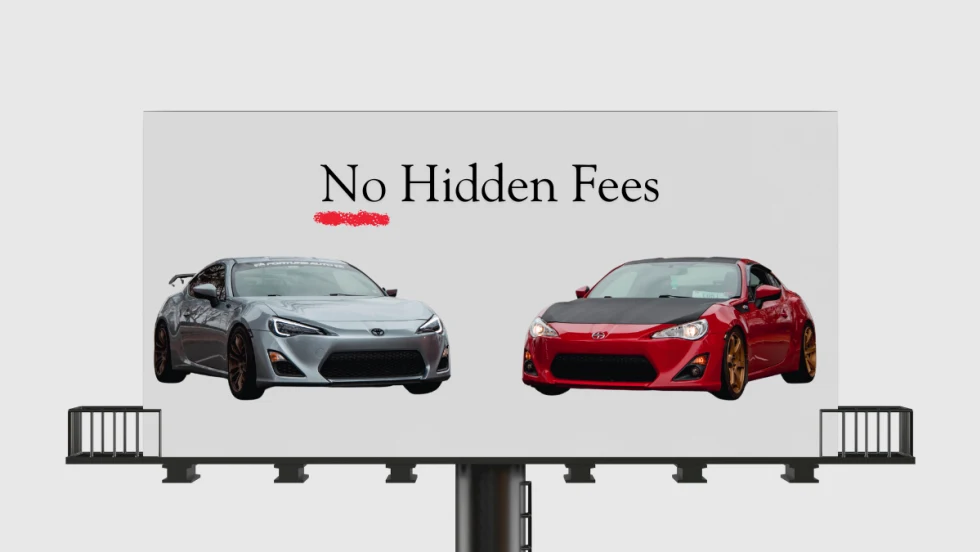
Dealer Ads and the FTC
The agency has made it clear in recent enforcement actions and warnings, in auto retail and other industries, that advertised prices must include all nonoptional costs to the consumer.
Read More →
Used Autos Supply Dwindles
The March shopping surge, despite high prices, cut into inventory by the most since the thick of the pandemic, Cox Automotive analysts calculated.
Read More →