



To Much Of A Good Thing Can Be Really Bad
Greg Goebel - Dealers often get blinded by the increase in units, or increase in gross profits. Those increases are only a small part...

My column this month has been stirred by conversations with a number of friends that are dealers as well as clients. In some fashion, the subject of growth is weighing heavily on their minds. They essentially fall into two camps. Either they have enjoyed a successful run of business in the first half of this year and want to take their dealership operations to another level or they are struggling with the havoc created by those thoughts from a year or two past.
As a 20 Group moderator, trainer and consultant, I am constantly working with dealers who are looking to be on the cutting edge. If their current success is “X”, then it should be easy to achieve the 2X or 3X level. All you need to do is increase sales.
The worrisome part is increasing sales may be a relatively easy affair. Depending on the existing size of the organization and the abilities of the sales team, a sales spike of 20 percent may be quickly achieved in any given month. By changing marketing strategies, inventory mix, and applying a consistent and sound sales process, a well-capitalized organization may be able to even continue the increased sales rate over a sustained period of time. Notice the word “capitalized” preceded by the word “well?” Why is that so important? Simply put, growth takes an investment of resources. Resources such as people, facilities and liquid assets, to name a few.
Dealers often get blinded by the increase in units, or increase in gross profits. Those increases are only a small part of the picture. An increase in sales should certainly increase the gross profits of your variable operations. But what part of that really makes it to your bottom line? The Retail 20 Groups Benchmark for Net Profit as a percentage of Gross Profit (including dealer salary and excluding income tax) is approximately 37.5 percent. What does that mean? It means that if you are currently selling 75 retail units per month, an increase of 20 percent, or 15 vehicles at $3000 per unit (near the benchmark gross profit level), would add an additional $45,000 of gross profit in a month.
Let’s say this same dealer is operating at an existing net to gross level of 25 percent. Since it is going to take more advertising, more training, and more commissions it is reasonable to conclude that the dealer will bring 25 percent of the increase in gross profits to the bottom line. In this example, that would be an additional $11,250.
Since Uncle Sam is going to want his fair (?!) share, at just a 29 percent tax rate, the dealer nets an additional $8000 per month after tax, or nearly $100,000 if sustained over 12 months to put in his pocket – or to fund growth.
Fund growth? What else is there? That is the problem. Most often, funding growth isn’t considered.
Having been a dealer for 18 years, I can tell you that the first thing that occurs when your sales rise is that your vehicle inventory increases, whether necessary or not. For dealers that have an unlimited liquidity or a flooring line with no limit, that means little. However, for many small to medium sized franchise dealers, and medium to large sized independents (especially the latter), they do not have this luxury.
If the sales increase is to come from used vehicles and the average cash value of used vehicles in inventory is just $10,000, it is going to take some significant capital to increase the inventory. At a 45 day inventory level, a sales increase of 15 units would likely require $220,000 or more. This is an investment that is required up front – not after you have earned the profits over a period of time.
It doesn’t stop there. Most likely, to sell more vehicles, the dealer will arrange financing of more vehicles. That means there will be an increase in Contracts in Transit (CIT) as well. More frozen capital. If this same dealer maintains an average of $200,000 in CIT for 75 retail units in sales, an increase in sales of 20 percent will likely yield an increase of at least $40,000. With $220,000 in increased inventory and $40,000 in increased CIT, suddenly this dealer needs to have $260,000 to invest in his business to fund growth. Just as suddenly, that $8000 monthly increase in after-tax net profit doesn’t look as big, as it will take over two and a half years of increased net profits just to offset the capital investment required. That is also how the dealer suddenly wakes up to “the shorts”…aka “Where did all my cash go?” The worst part of this scenario (besides the fact it happens too often) is the discovery that the dealer can’t just sell their way out of the situation. That realization usually
comes only after the dealer has made a significant commitment in facilities, location or people.
The preceding example is just a smidgen of what must be considered for growth. It hasn’t even brought to light the employee factor, a whole column by itself.
So am I saying growth is bad; for heavens sake, no! But what I am saying is that it can be deadly if most or all facets of growth are not contemplated at the onset. What I suggest, to all of my friends that I talk with, is to resist the temptation of growing without planning. Grow up before you grow out.
Look at your vehicle sale gross profits. It doesn’t require any significant investment to increase them; meaning most of it goes to your bottom line. If they are not at benchmark, focus on getting them to that level as much, if not more, than adding volume. Reduce your expenses to benchmark. Hire good people, then train, train and retrain them to create a solid team.
Once that is accomplished, you will likely have created a solid foundation of assets of both capital and people. Then go to work on volume.
Certainly growth is good. It always comes with a price, and sometimes, like many other things in life, that price isn’t always obvious at the onset. Growth is part of the entrepreneurial vision and the American Dream … just don’t let it become a nightmare.
Vol 1, Issue 4
More Dealer Ops
How to Avoid Phone Scams | Dealer Debrief 09/10/2026
Are you taking the necessary steps to protect your dealership and customer data from phone-based scams? This week's Dealer Debrief breaks down how!
Read More →
Dealer Debrief: August Auto Sales
Gas-powered engines still dominate the U.S. vehicle market, but hybrids are gaining ground as consumers look for ways to cut their gas costs.
Read More →
Dealership Profits Decline
While new and used retail sales stagnated, dealerships have been particularly supported by fixed operations and finance-and-insurance profits, according to a new report.
Read More →
Dealer Debrief: Defection Data & EV Updates
In this week's debrief, host Lauren Lawrence discusses how to use defection data to your advantage and the latest on EV sales and charging infrastructure.
Read More →
How Defection Data is Bridging the Dealership Conversion Gap
Lead volume is flat, cross-shopping is up and brand loyalty is in retreat. As confident sales teams keep losing buyers they thought they had, daily industry sales data is showing dealers exactly where their funnel is breaking and how to fix it without buying a single new lead.
Read More →
Dealer Debrief: Where are you losing customers?
In this week's debrief, host Lauren Lawrence discusses the hidden leaks in dealerships where you might be losing customers without even realizing it.
Read More →
Dealer Debrief: Improving Your Inventory Management
In this week's debrief, host Lauren Lawrence covers a new survey that shows what service technicians really want and two launches that could help improve your inventory and vehicle life cycle management.
Read More →
Ladies and Gentlemen, This Is a Dealership: Why the Fundamentals Still Decide Who Wins
A teaching moment by a legendary football coach happens to apply perfectly in the auto retail space. Learn what it is and how to use it to your store’s advantage.
Read More →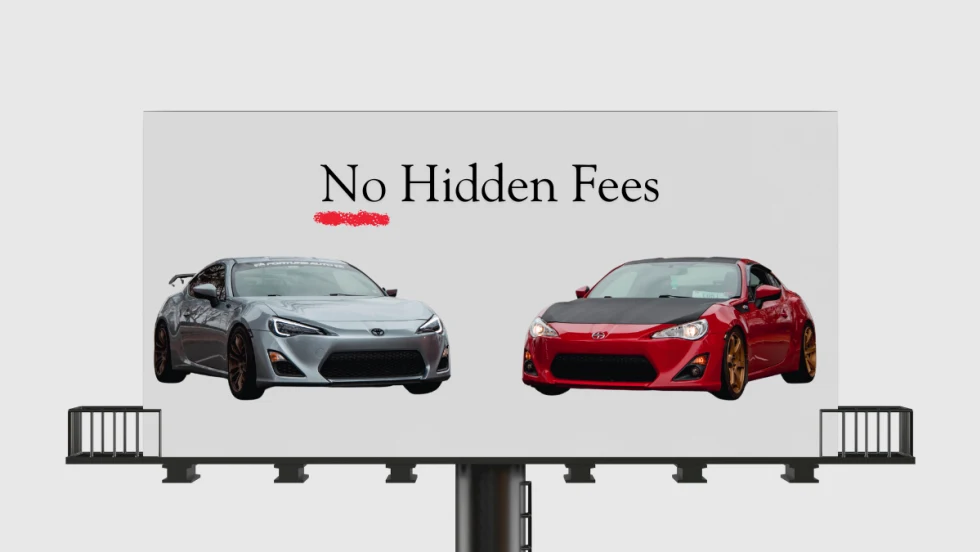
Dealer Ads and the FTC
The agency has made it clear in recent enforcement actions and warnings, in auto retail and other industries, that advertised prices must include all nonoptional costs to the consumer.
Read More →
Used Autos Supply Dwindles
The March shopping surge, despite high prices, cut into inventory by the most since the thick of the pandemic, Cox Automotive analysts calculated.
Read More →